


Cooking Christmas dinner for someone with coeliac disease? Don’t panic! I’ve written this for anyone who’s new to a gluten-free diet or has a gluten-free guest coming and is wondering how their usual Christmas dinner will work. It’s the perfect guide to send to someone cooking for you for the first time. If that’s you doing the cooking, then hello!
This short guide covers the whole meal in 5 steps: from what goes in the trolley to what happens in the kitchen and at the table. I’ve based it on the moments where food inevitably pops up across the entire day… everything from the stuffing and gravy to the crackers that come out with the cheeseboard.
Where do I even start?
Go through the menu with your guest before you shop, right down to the stuffing, gravy and pudding. Ask them to send links to any products they usually buy, and check whether they have any other dietary requirements. It’s a much easier conversation to have before there’s a turkey in the oven!
The first time I hosted Christmas at mine, I made the whole dinner gluten-free. I’d wondered whether my family would mind. Nobody thought twice about it, and I finally felt like I could sit down and enjoy my dinner too. So that’s definitely a route worth considering… and believe it or not, can often be less stressful when the big day arrives! Remember, this is not an exhaustive list of every possible scenario, though I have tried to list as many common ones as possible to draw attention to common pitfalls.
And remember: people with coeliac disease need a gluten-free diet – it’s not their choice! Crumbs, shared utensils and used cooking oil can transfer gluten to food you’ve made with gluten-free ingredients. That’s why your guest might ask about the cooking method as well as the gravy granules. If you’ve never heard of coeliac disease before, feel free to read the NHS guidance on coeliac disease and the gluten-free diet first.
Jump to a step
1. Shopping for gluten-free ingredients and products
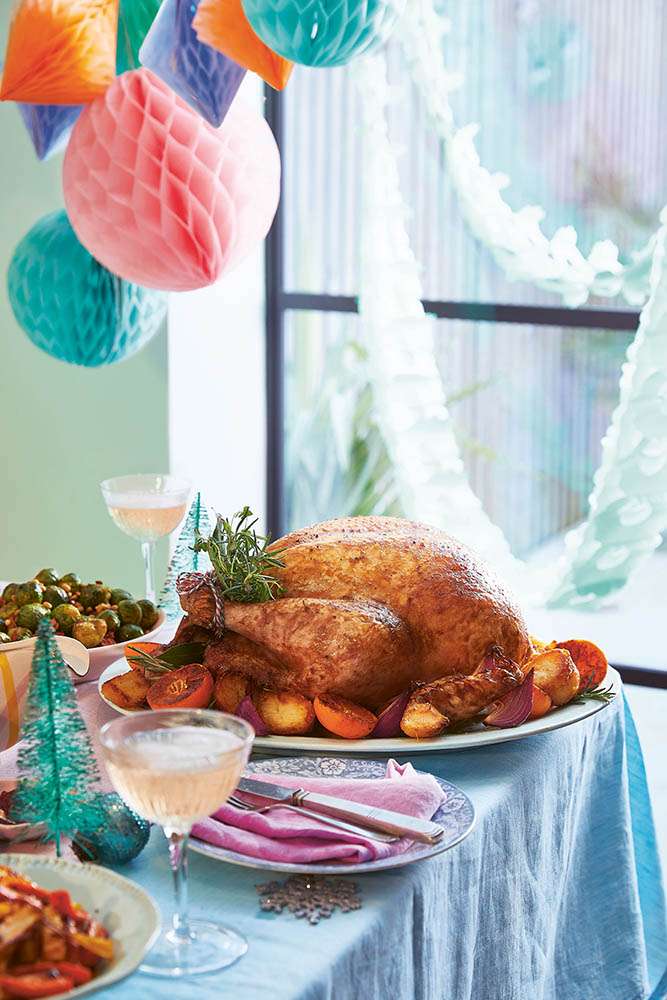
Plain turkey, potatoes and vegetables are naturally gluten-free. Once you start adding glazes, seasoning mixes and all the trimmings, it’s time to start reading ingredients lists. I’d run through the meal in the order you’ll serve it, including any nibbles and drinks. See Coeliac UK’s guide to choosing ingredients.
- Check the turkey or ham for added stuffing, marinades and glazes. Check any sauce or gravy sachet that comes with it too.
- Pick gluten-free stuffing and pigs in blankets. If you’re making your own, check the breadcrumbs, sausages and any seasoning you use. You can easily find gluten-free versions of both in most supermarkets.
- Check gravy granules, stock cubes, sauces and ready-to-roast sides. I make my gluten-free gravy on the hob, so I can get it going while the roast finishes, but you’ll also find gluten-free gravy granules in supermarket free from aisles. For gluten-free stock cubes, check the regular stock aisle as well as the free-from section.
- Plan Yorkshire puddings, nibbles and dessert as well. Think about what goes alongside them, including crackers for the cheese and anything snacky that goes into bowls. Don’t forget to check the chilled and frozen sections for gluten-free Yorkshire puds.
I like to mix shop-bought bits with the things I’m happy to make. If I’ve got a special gluten-free pudding or dessert in the oven already for example, I’m quite happy to have others bits and pieces ready to heat/plate up form the supermarket. They just make life much easier and are readily available these days so take advantage of them!
Some products will be clearly labelled as gluten-free on the front, but not all. Read the ingredients and any ‘may contain’ warnings on the pack each time you shop, checking for sources of gluten, wheat, barley, rye, oats or spelt. Send your guest a photo of the full label if you’re unsure. Some foods labelled gluten-free contain specially processed wheat starch, so ask about a wheat allergy separately. Coeliac UK’s guide to food labels covers the details, including gluten-free wheat starch and gluten-free oats too.
For drinks, Coeliac UK lists wine, cider and spirits as gluten-free. Choose beer labelled gluten-free and check the labels on mixers and ready-made cocktails. See Coeliac UK’s alcohol guide.
See my gluten-free Christmas supermarket guides below for lists of gluten-free products you can head out and buy…
ALL MY 2026 GLUTEN-FREE XMAS SUPERMARKET GUIDES 👇🏻


2. Storing them: keep the packets and label what you put away
Once you’ve gone through the effort of sourcing gluten-free products, your job from then on is to keep them that way! Starting with storing them separately from gluten-containing products and also in airtight containers once opened.
And after preparation or cooking has started, keep the packaging or take clear photos of the labels before you recycle them! If you make anything ahead or take it out of its packet, put it in a clean, covered container and label it.
I once turned down party food that a well-meaning host had told me was gluten-free. The packet had already gone, so neither of us could check it. I found the exact product in the supermarket later. It was vegan and unsuitable for me. A photo of the ingredients and any allergen warnings would have settled it there and then!
3. Preparing them: clear a safe space to prepare the gluten-free food
Wash your hands, clear away crumbs and wipe down the worktop with hot soapy water. Give the bowls, pans, boards and utensils you’re using a thorough wash. Your usual washing-up liquid or dishwasher is fine for cleaning cookware.
If you’re slicing both kinds of bread for example, give the gluten-free bread its own board and clean knife and keep them as far apart as reasonably possible. Establishing a ‘gluten-free zone’ in your kitchen (no matter how small) is a great way to start. See Coeliac UK’s advice on avoiding cross-contamination at home.
If you’re cooking both gluten-free food and gluten-containing food in the same space, I’d prepare all the gluten-free dishes first and cover them/store them elsewhere before the other gluten-related prep starts.
4. Cooking them: give the gluten-free food their own trays, pans and utensils
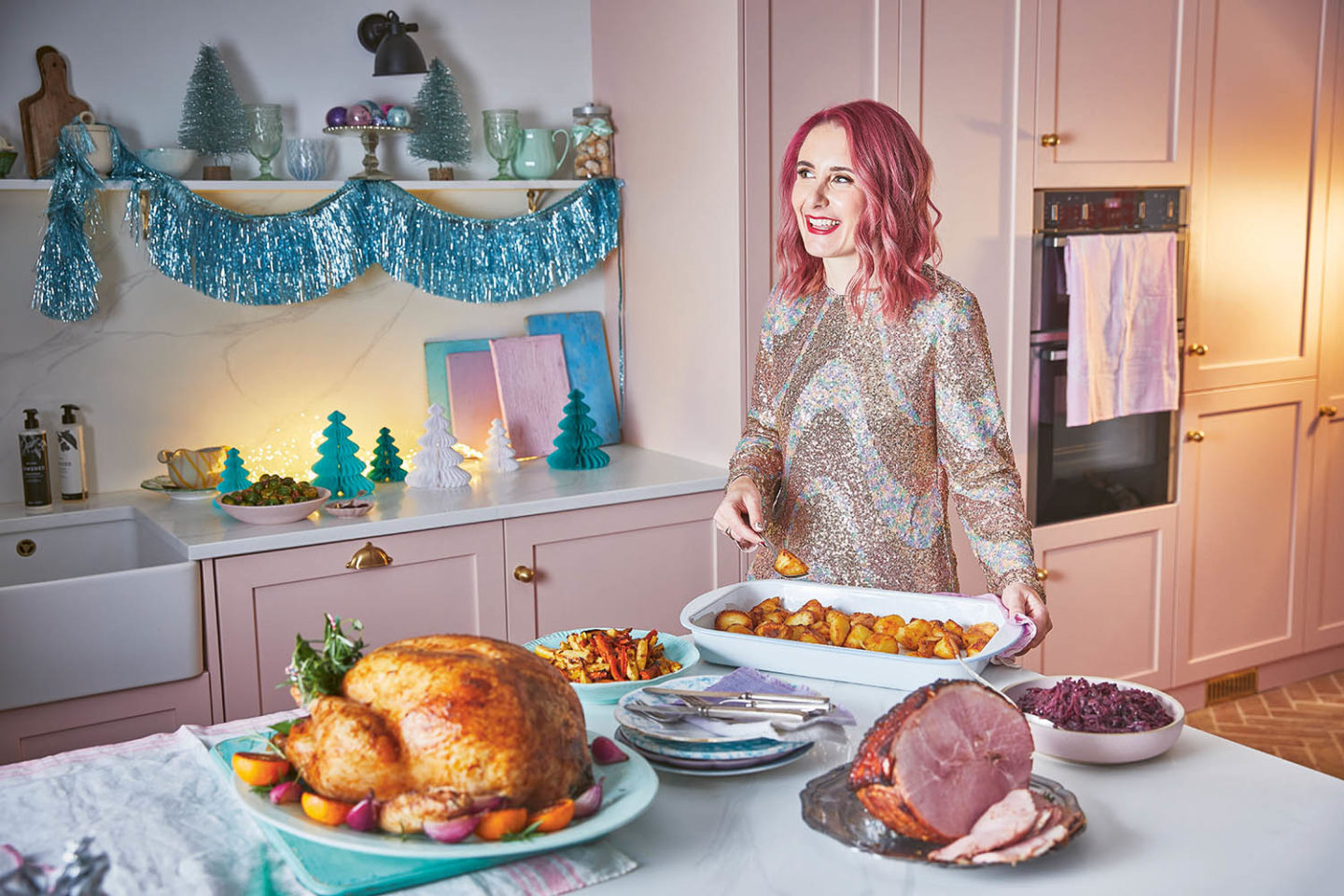
Use separate clean trays, pans and utensils for the gluten-free dishes on a mixed menu. If the stuffing or sausages contain gluten, keep them in a separate tin from the potatoes and any meat you’re serving to your guest. If you’re frying, use clean oil in a clean pan or a separate fryer. Coeliac UK has more tips on cooking equipment and oil.
Can I use the same oven?
If both kinds of food are in the oven at the same time, Coeliac UK’s catering guidance puts the gluten-free dishes on clean trays above the dishes containing gluten. In a fan oven, cook them in separate batches if flour or flakes of pastry could be blown around. Read Coeliac UK’s guidance on oven cooking.
5. Serving them: give the gluten-free food its own clearly identifiable plate/jug/serving utensils
If you’ve made two gravies for example, use separate jugs and ensure everyone knows which is which visually (i.e. put the gluten-free one in a colourful jug and tell gluten-free guests of this). Scenarios like this are where just doing gluten-free gravy for everyone can make life much simpler!
If you’re putting everything out for people to help themselves, keep the gluten-free dishes as far away from gluten as realistically possible and clearly labelled (or on agreed colourful plates) with their own clean serving utensils. The NHS explains how shared serving utensils can transfer gluten.
For a cheeseboard or buffet, set aside some cheese, chutney and gluten-free biscuits on a clean, clearly identifiable plate before the ordinary crackers go out. If putting out plates/bowls of nibbles or crisps etc, either ensure they’re all gluten-free (just easier!) or ensure those plates or bowls are clearly identifiably different from those which contain gluten.

Don’t let the above overwhelm you. It really all boils down to this…
I hope that wasn’t too overwhelming! It really does come down to two things. Check that the ingredients you buy for your guest’s meal are gluten-free, then keep their food that way until it’s on their plate. Give the gluten-free dishes their own space away from crumbs, flour and drips, and use clean trays and utensils right through to serving. Then comes the best bit: sitting down to Christmas dinner together.
A handy message you can send your host
If you’re the guest, you can send this page with a note like this.
“Thanks so much for cooking! Could we go through the menu before you shop? I can send links for the stuffing and gravy I usually buy. It would really help if you could keep the packets so we can check them together. Let’s work out if there’s anything I can bring to make things easier.”
My gluten-free Christmas cookbook

If you fancy cooking one gluten-free dinner for everyone, there’s a whole Christmas lunch chapter in my book. It’s got Dad’s turkey, Mum’s red cabbage and all the trimmings I’d want on my plate. Take a look inside Gluten-free Christmas.
For more first-Christmas advice, have a look at my guide to your first free-from Christmas and the Christmas survival tips shared by my gluten-free readers.
Needless to say, I hope that anyone reading this has a fab gluten-free Christmas!
Becky x