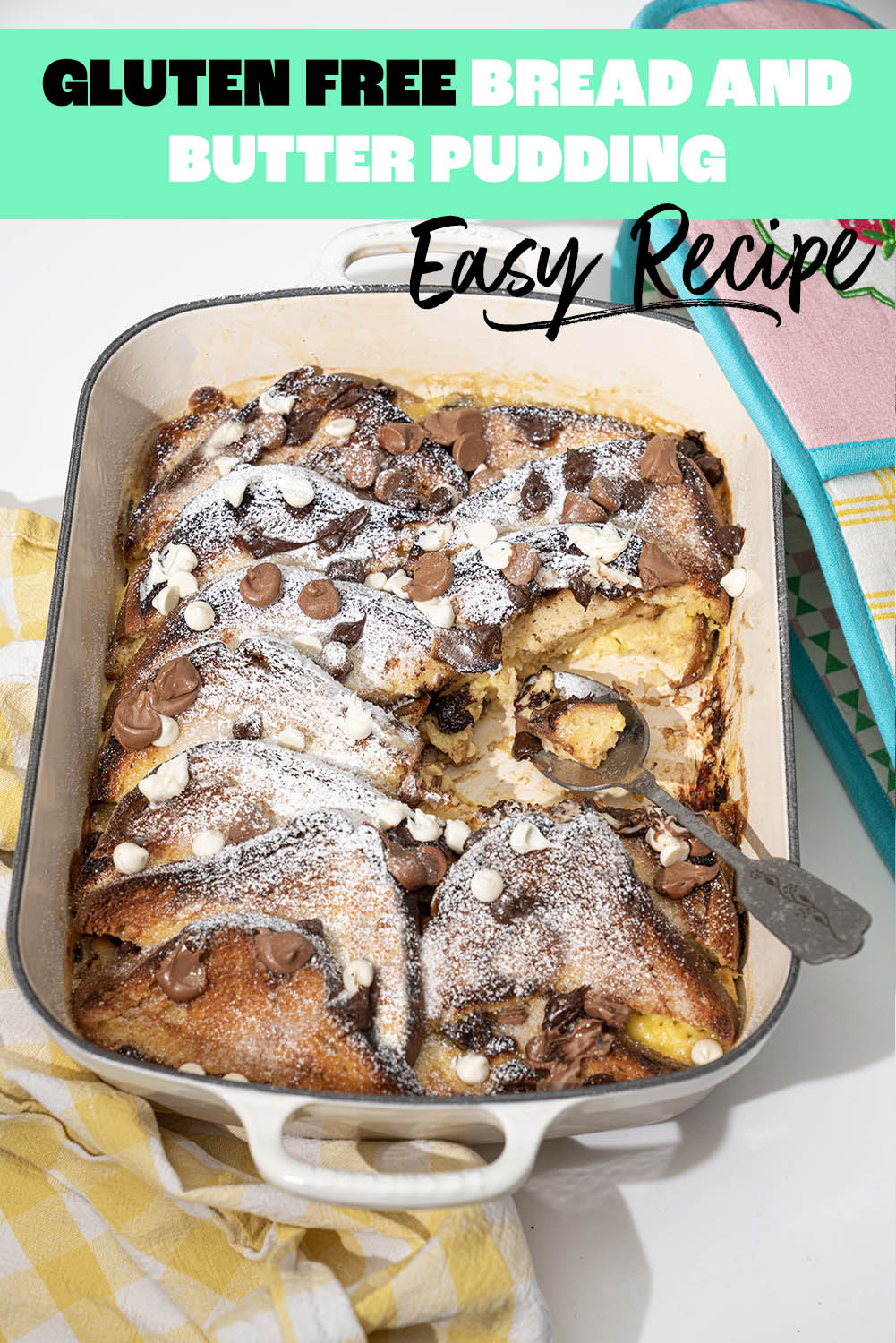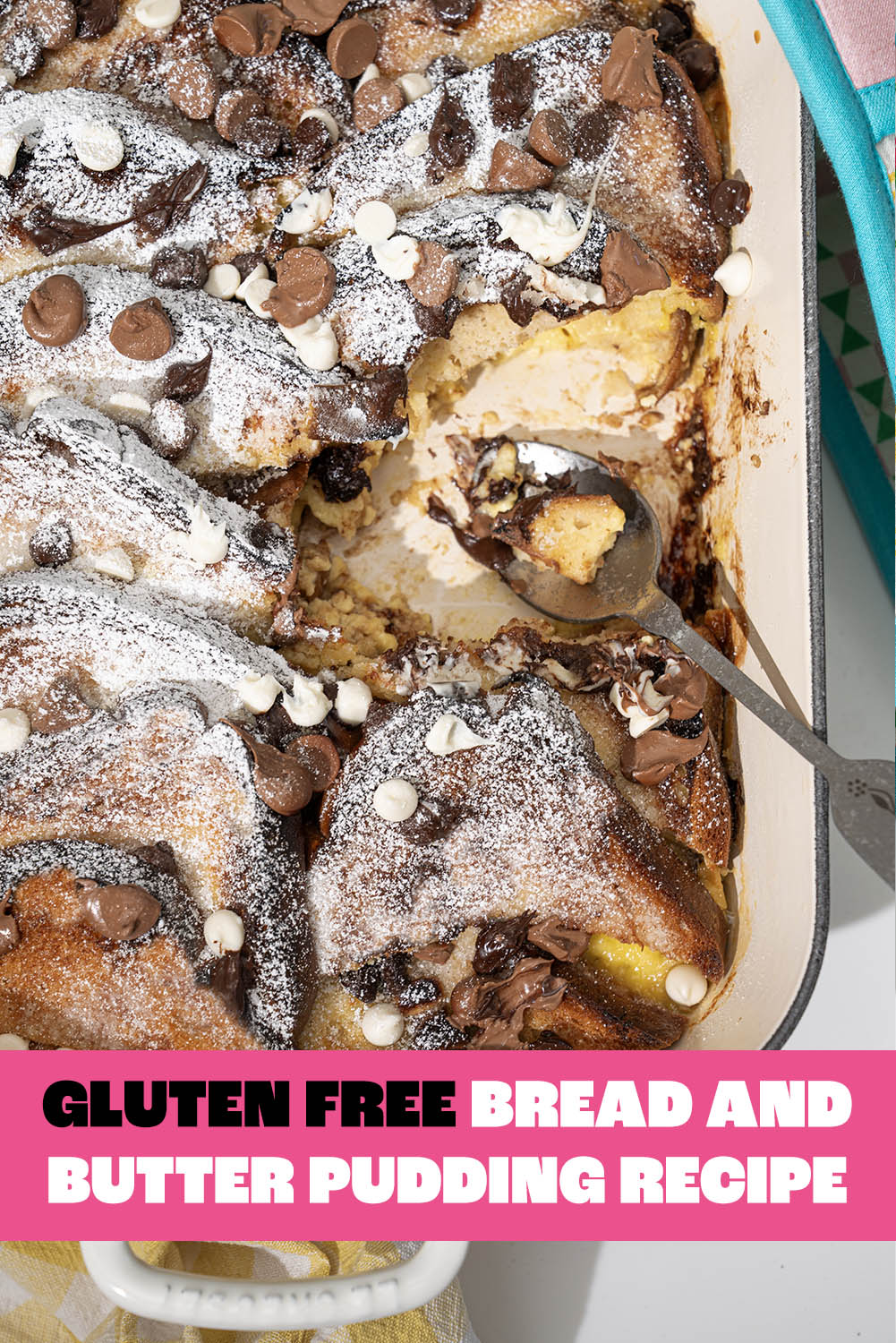

Here’s my nostalgic Gluten-free Bread and Butter Pudding recipe, 3 ways! Coeliac-friendly, easy to make and packed with proper creamy custard. See FAQ section for advice on making this dairy-free.
My gluten-free bread and butter pudding has layers of buttery bread soaked in a rich vanilla custard made with egg yolks, double cream and milk, all finished with a crisp, caramelised top. And because raisins and sultanas aren’t exactly everyone’s cup of tea, you can make it three ways: classic raisins and sultanas, triple chocolate or raspberry and white chocolate. The choice is yours!
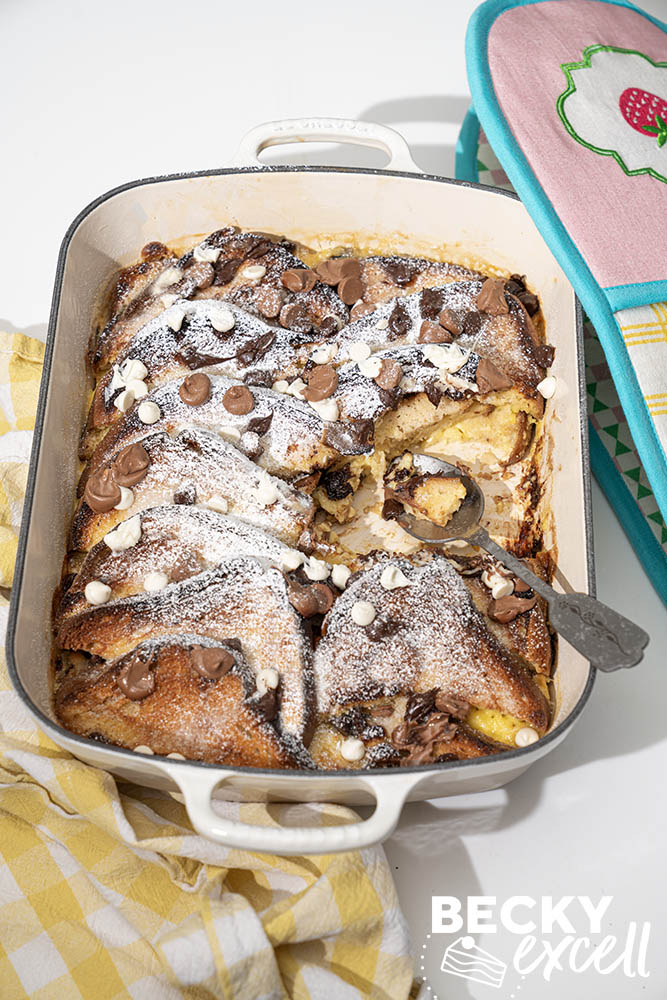
Welcome back to the fifth instalment of ‘How To Make Bake Off Gluten-free’! Episode 5 was Dessert Week and, as soon as bread and butter pudding appeared as the Technical Challenge, I already knew exactly what I wanted to make. Especially as I’ve already made so many gluten-free fondants, lava cakes and self-saucing puddings on the blog and in my books already!
Basically, bread and butter pudding was a dessert I grew up with. My Mum always used the late Gary Rhodes’ recipe and there’s no other version I’d ever want to eat. Much like everything else she made regularly when I was younger, there were a couple of practical little changes she made along the way. So this recipe is partly inspired by Gary’s classic version and partly by how I remember my Mum actually making it at home. Obviously my version is gluten-free, which neither Gary’s nor my Mum’s version was!
Gary Rhodes’ version used an incredibly rich custard made with egg yolks, equal parts double cream and milk and vanilla, which I’ve very deliberately kept. But my Mum certainly wasn’t getting a blowtorch out after dinner, so the caster sugar topping went under the grill instead. She didn’t bother with a water bath either, so I’ve adapted the oven temperature and cooking time accordingly to make this much more practical in a normal kitchen.
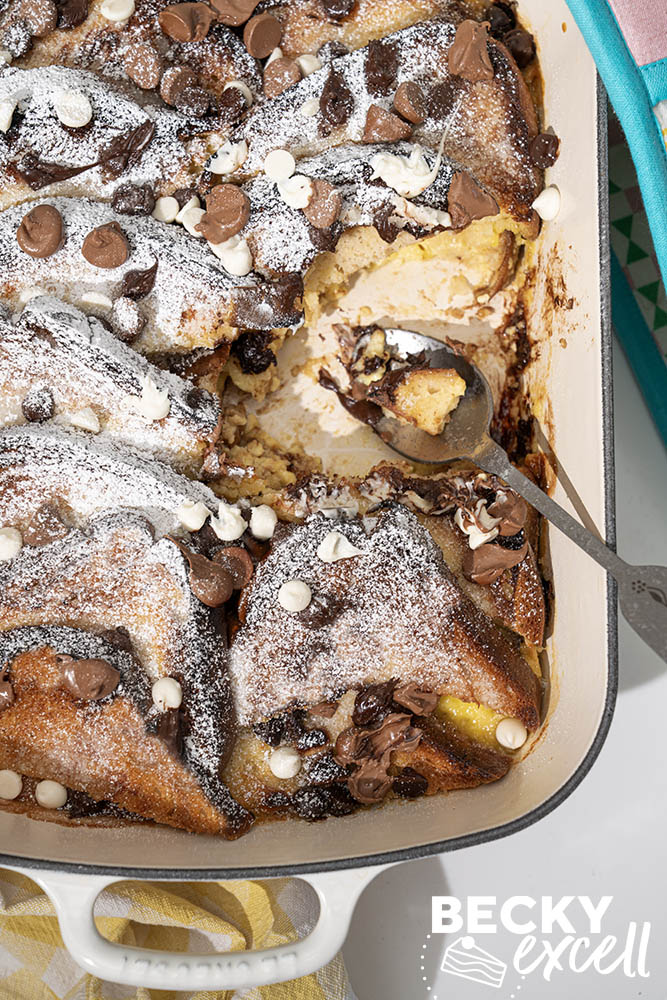
And then I’ve taken one additional liberty of my own: the three variations! You can keep things properly traditional with Gary’s classic raisins and sultanas version, copy my photographed choice of milk, dark and white chocolate, or make my personal wildcard version with raspberries and white chocolate. Same creamy gluten-free bread and butter pudding underneath, three very different ways to finish it.
Why you’ll love my Gluten-free Bread and Butter Pudding
- That custard is ridiculously creamy. Eight egg yolks, double cream and milk give you a rich, softly set vanilla custard that soaks right through the bread without turning into scrambled egg!
- You can make it three completely different ways. Stick with classic raisins and sultanas, swap them for triple chocolate, or go for raspberry and white chocolate. So even the dried fruit haters are invited.
- No water bath or blowtorch required. I’ve adapted the cooking temperature and time so it can bake directly in the oven, then the caster sugar topping gets caramelised beneath the grill just like my Mum always did it.
- It’s proper nostalgic comfort food, just gluten-free. Soft custardy bread underneath, crisp golden edges and a caramelised top. Nobody needs to know the loaf came from the Free From aisle!
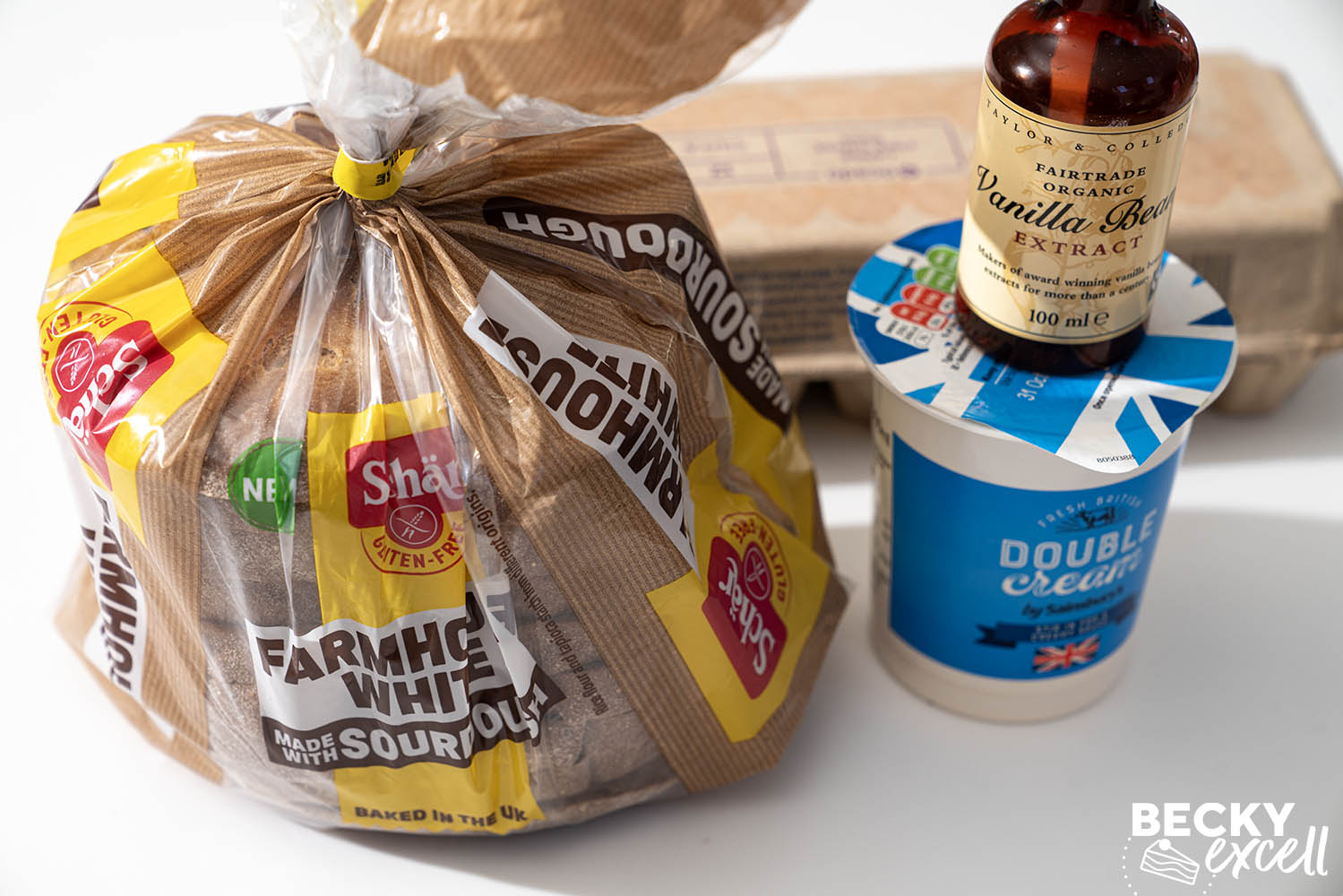
Ingredients for my Gluten-free Bread and Butter Pudding
For the bread, you’ll need one 500g loaf of gluten-free white bread, which should give you around 12 decent-sized slices. There’s no need to hunt down anything particularly fancy here – a standard sliced gluten-free white loaf is exactly what you want. See the FAQ section for which I specifically used, but as long as it’s white, any GF loaf works fine.
You’ll also need softened butter for spreading over every slice before cutting the bread into triangles. Apart from adding flavour, those buttery edges are one of the best bits once they start turning golden in the oven!
For the custard, you’ll need double cream, milk, egg yolks, caster sugar and vanilla. And yes, there really are eight egg yolks in there! That’s what gives this particular style of bread and butter pudding such a rich, smooth custard instead of something more firmly set and eggy.
Then simply choose which direction you’re heading in. For the classic version, you’ll need raisins and sultanas. For the triple chocolate version, you’ll need milk, dark and white chocolate baking chips. Or for the raspberry and white chocolate version, you’ll need fresh raspberries and white chocolate baking chips.
I used Guittard baking chips for the chocolate versions. For the triple chocolate version, simply mix all three varieties together in a bowl at the start and treat them as one mixture from there. Most get tucked between the bread, whilst a few are saved to scatter over the hot pudding at the very end.
You’ll also need a little extra caster sugar for the top. This gets grilled at the end until melted and caramelised, giving you that lovely crisp finish against all the soft custard underneath.
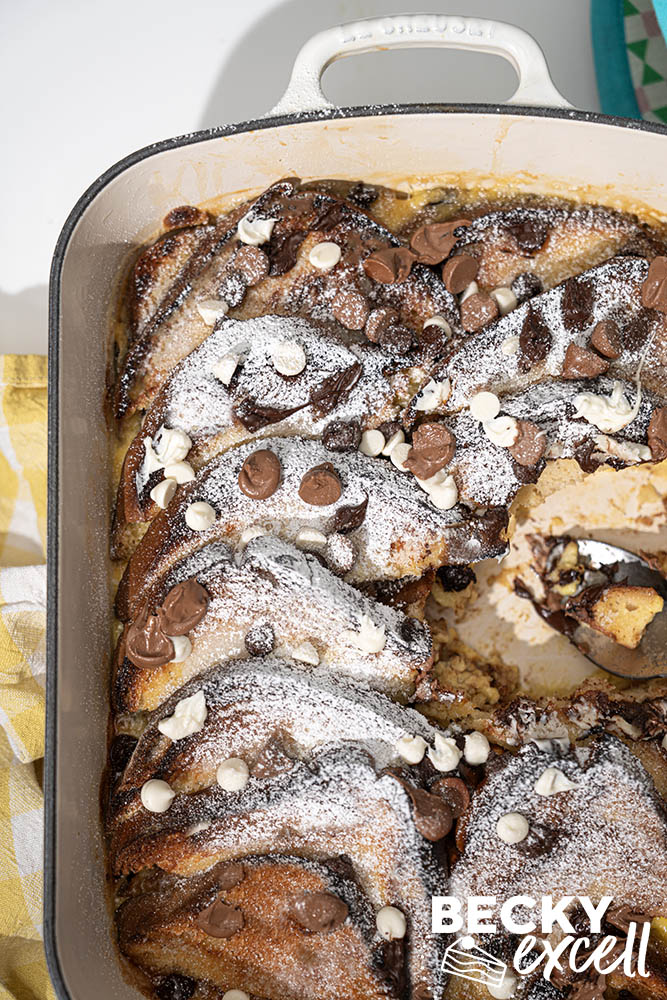
How to make my Gluten-free Bread and Butter Pudding
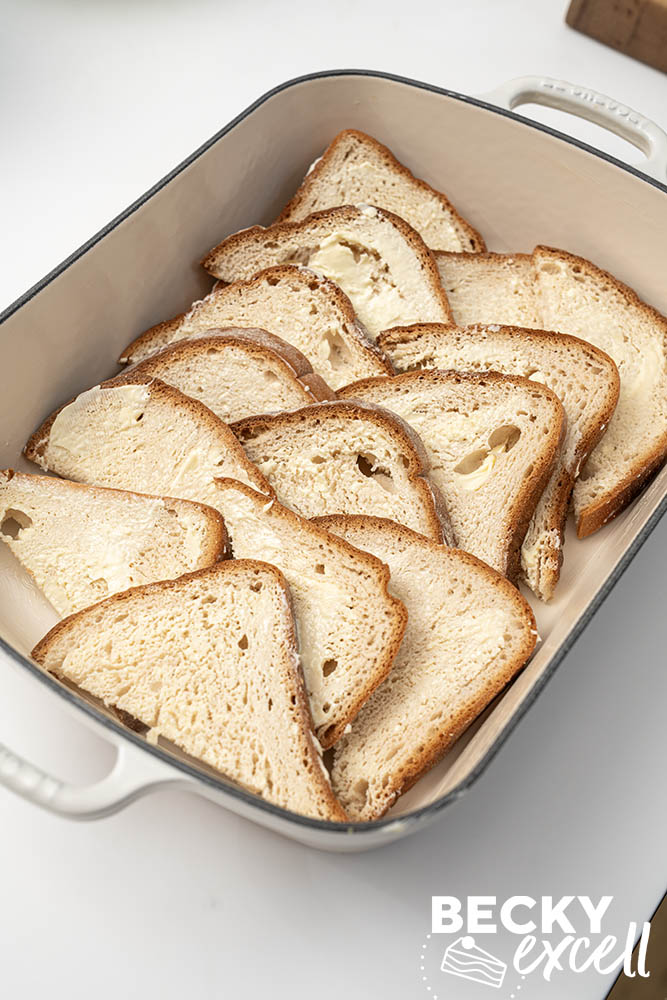
- Butter the gluten-free bread and cut it into triangles. Arrange the first layer in a 1.8-litre ovenproof dish, roughly 25-30cm x 15-20cm, then start adding whichever filling you’ve chosen between the layers.
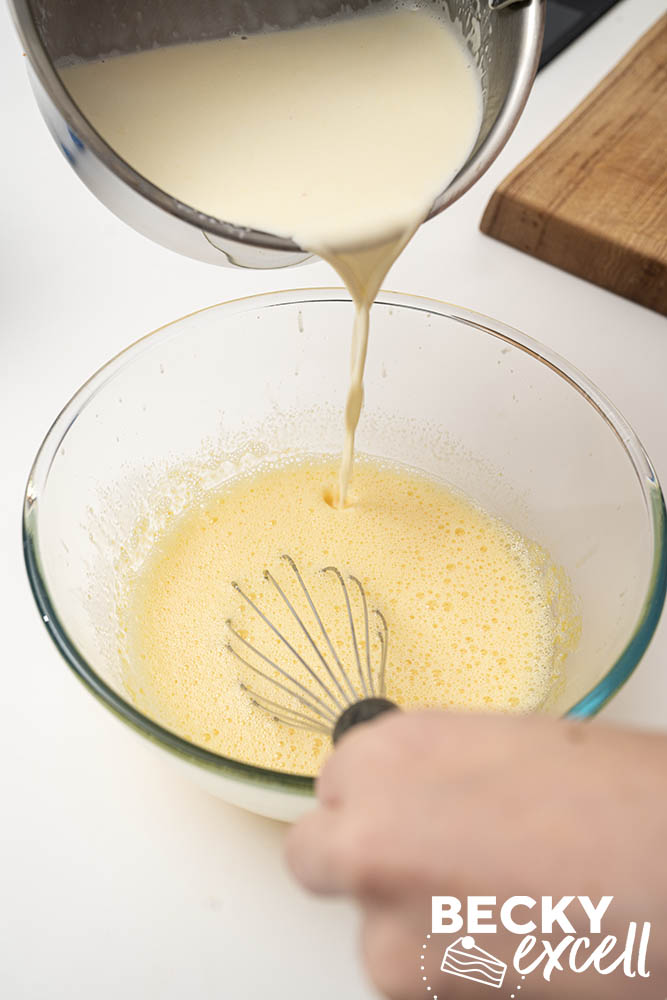
- Make the vanilla custard. Heat the double cream, milk and vanilla until hot and steaming but not boiling. Whisk the egg yolks and caster sugar separately, then gradually pour in the hot cream mixture whilst whisking continuously.
- Finish layering the bread and pour over the custard. Keep dried fruit and most of the chocolate tucked beneath the top layer so nothing burns later. Gently press the bread into the custard and leave everything to soak for 20-30 minutes.
- Bake at 140°C fan / 160°C for around 35-40 minutes. There’s no water bath needed here. The bread should be a pale golden colour and no more. Don’t keep baking until it’s deeply golden or you’ll lose that lovely creamy custard texture.
- Remove from the oven and switch the oven to a medium-high grill. Whilst the grill heats up, generously sprinkle an even layer of caster sugar all over the top.
- Once the grill is hot, place the pudding on an upper shelf and grill for around 2-3 minutes, until the sugar has melted and the top is golden and caramelised. Keep a close eye on it as it can colour quickly.
- For the chocolate versions, scatter the reserved chocolate chips over the top as soon as the pudding comes out from under the grill. The residual heat will soften them slightly without risking them catching beneath the grill. Allow the pudding to stand for 5-10 minutes, then dig in!
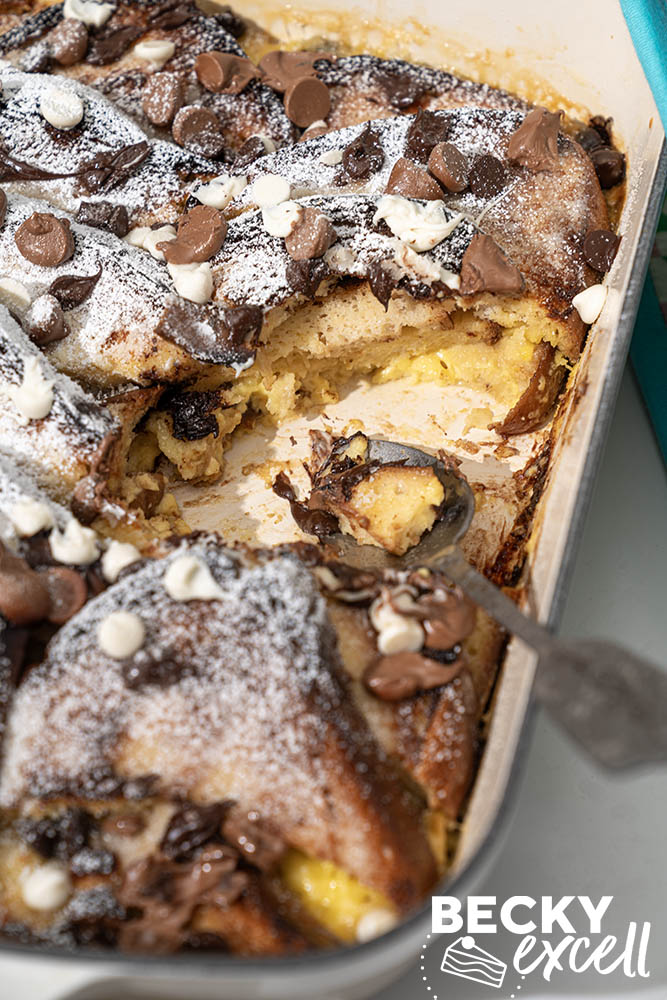
A few tips before you start
Firstly, don’t worry if your gluten-free loaf doesn’t contain exactly 12 slices. A 500g loaf is the most useful measurement to work from, as gluten-free slices vary wildly in size from brand to brand. Just use enough bread to comfortably fill your dish in overlapping layers.
Use a 1.8-litre ovenproof dish, roughly 25-30cm x 15-20cm. The capacity matters more than the exact footprint, so don’t panic if yours isn’t precisely the same dimensions.
When heating the cream and milk, don’t let it boil. You want it hot enough to temper the egg yolks gradually, not furiously bubbling away before you’ve even started making the custard.
Pour the hot dairy mixture into the yolks gradually whilst whisking continuously. Don’t dump the entire saucepan in at once or you risk cooking the eggs before everything is properly combined.
Once the custard is poured over the bread, give it the full 20-30 minutes to soak. Gluten-free bread is particularly good at drinking up custard, but you still want to give the middle of every layer time to soften before it goes into the oven.
Most importantly, don’t overbake it. The bread on top should only be pale golden after 35-40 minutes, as it’ll get plenty more colour beneath the grill. Baking it for too long will make that gorgeous custard underneath firm and grainy instead of keeping it lovely and creamy.
Once the pudding is baked, remove it from the oven before switching over to the grill. Sprinkle the caster sugar over the top whilst the grill heats, then return the dish to an upper shelf once the grill is hot. From there it only needs around 2-3 minutes to caramelise, so keep a close eye on it.
If you’re making either chocolate version, save a few of the chocolate chips for the very end. Scatter them over as soon as the pudding comes out from under the grill and the heat from the pudding will soften them nicely. There’s no need to grill the chocolate itself.
Storage and leftovers
Gluten-free bread and butter pudding is best served warm, around 5-10 minutes after it comes out from under the grill. That’s when the custard is beautifully soft and the caramelised topping is at its crispest.
Keep any leftovers covered in the fridge for up to 3 days. As this contains plenty of eggs, cream and milk, make sure you refrigerate leftovers once they’ve cooled.
Reheat individual portions in the microwave until piping hot throughout, or place them back into a moderate oven until thoroughly warmed. Bear in mind that the caramelised topping will gradually lose some of its crispness once refrigerated.
You can also freeze completely cooled portions for up to 1 month. Defrost overnight in the fridge before reheating until piping hot throughout. The top won’t be quite as crisp after freezing and reheating, but it’ll still taste great!
Recipe tips, swaps and FAQs
Is this recipe gluten-free? Is it suitable for people with coeliac disease?
Yes! This recipe is completely gluten-free and suitable for people with coeliac disease, provided all the ingredients you use are gluten-free too.
If you’re cooking for someone with coeliac disease, you can find Coeliac UK’s advice on avoiding cross-contamination here.
Can I make this dairy-free?
Yes! To make this dairy-free, use:
- A dairy-free alternative to butter
- Dairy-free milk
- Dairy-free double cream with at least 30% fat per 100g
- Dairy-free chocolate chips if making the triple chocolate or raspberry and white chocolate version
- A dairy-free gluten-free white loaf
Can I make this vegan or egg-free?
Unfortunately not as a simple swap. Whilst all of the dairy ingredients can be replaced using the suggestions above, the eight egg yolks are what set the custard.
I don’t have a tested like-for-like egg replacement for them here, so making this vegan or egg-free would need a separately developed custard recipe rather than simply swapping one ingredient.
Can I make this lactose-free? Or low lactose?
Yes! To make this lactose-free, use:
- For lactose-free: Use a lactose-free butter/spread. For low lactose: Butter is incredibly low in lactose so fine as is.
- Lactose-free milk
- Lactose-free cream with at least 30% fat per 100g
- Lactose-free chocolate chips if making either chocolate version
- Ensure that your gluten-free white loaf is lactose-free
Everything else can stay exactly the same.
Is this gluten-free bread and butter pudding low FODMAP?
It can be adapted to be low FODMAP. Use:
- Lactose-free milk
- Lactose-free whipping cream with at least 30% fat per 100g
- A gluten-free white loaf that’s suitable for a low FODMAP diet
- Lactose-free chocolate chips if making either chocolate version
Be wary with the raisins and sultanas version if you’re following a low FODMAP diet, as dried fruit can quickly become high FODMAP depending on the serving size.
Which gluten-free bread should I use for bread and butter pudding?
I used Schär Farmhouse White Made With Sourdough, which comes as a 500g loaf and works perfectly here.
You don’t need an expensive artisan loaf or anything particularly exciting. A standard sliced gluten-free white loaf is exactly what you want once it’s covered in butter and soaked in that creamy vanilla custard!
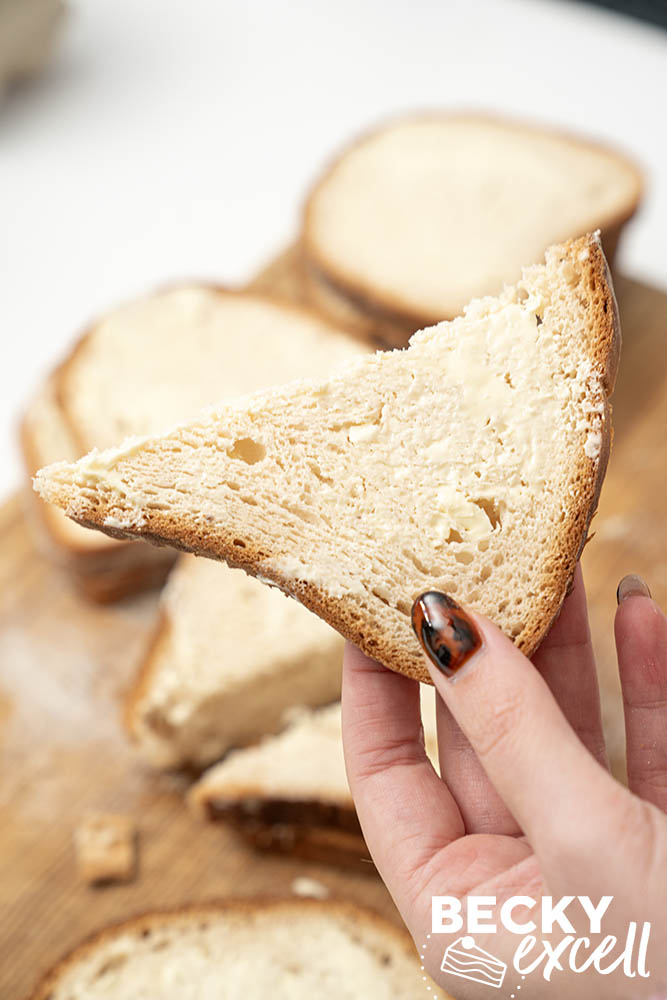
Does the bread need to be stale?
No! Slightly older bread is absolutely fine and will happily soak up the custard, but fresh gluten-free bread works perfectly well too. There’s no need to leave a loaf sitting around specifically for this recipe.
What size dish should I use?
Use a 1.8-litre ovenproof dish, roughly 25-30cm long x 15-20cm wide. Don’t worry if yours has slightly different dimensions – the capacity is much more important than its exact shape.
Can I use frozen raspberries?
I’d recommend fresh raspberries if possible. Frozen raspberries release more liquid as they cook, which can add unnecessary moisture to an already very soft and custardy pudding.
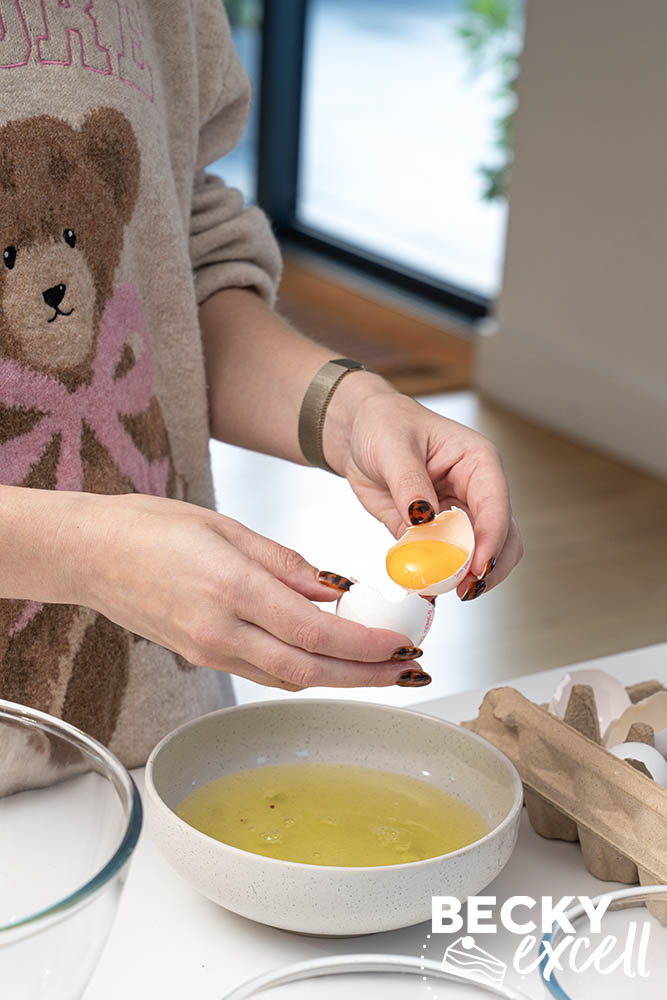
What should I do with the leftover egg whites?
Definitely don’t throw them away! This recipe leaves you with 8 egg whites, so it’s the perfect excuse to make something meringue-based. Try my gluten-free lemon meringue pie, my gluten-free lemon meringue bars or my gluten-free lemon meringue cupcakes.
You can also freeze leftover egg whites in an airtight container and defrost them overnight in the fridge when you need them.
Can I make your gluten-free bread and butter pudding ahead of time?
You can prepare the bread and custard separately a little ahead of time, but I wouldn’t leave the assembled pudding soaking overnight. Give it the specified 20-30 minute soak shortly before baking instead.
You can also bake the whole pudding in advance, allow it to cool and refrigerate it, then reheat until piping hot before serving. However, the caramelised top is at its best freshly grilled, so making and serving it on the same day is definitely my first choice!
Troubleshooting
How do I know when my bread and butter pudding is cooked?
After around 35-40 minutes, the exposed bread on top should be a pale golden colour and look lightly crisp around the edges.
Don’t wait for the bread to become deeply browned in the oven because it’ll get plenty more colour beneath the grill. Overbaking will also make the custard underneath firmer instead of keeping it lovely and creamy.
Why does my custard look like scrambled egg?
This usually means the custard has overcooked. The egg yolks should gently set the custard as it bakes, but too much heat or too much time in the oven can make them tighten up and separate, leaving the custard grainy and scrambled egg-like instead of smooth and creamy.
Make sure you bake the pudding at 140°C fan / 160°C for no longer than 35-40 minutes. If you regularly find bakes cooking faster than expected, it’s also worth checking your oven temperature with an oven thermometer.
If the custard looks curdled before it even goes into the oven, the cream and milk mixture may have been too hot or added to the egg yolks too quickly. Pour it in gradually whilst whisking continuously so the eggs warm up gently.
Why is my bread and butter pudding dry?
It’s most likely been baked for too long or your oven is running hotter than expected. The bread on top only needs to become pale golden during baking because it’ll brown considerably more beneath the grill afterwards.
Stick to 35-40 minutes at 140°C fan / 160°C and don’t be tempted to leave it in until the top is deeply golden. That’s exactly what the grilling step is for!
Gluten-free Bread and Butter Pudding, 3 Ways
Equipment
- 1.8-litre ovenproof dish, roughly 25-30cm x 15-20cm
Ingredients
- 500 g gluten-free white bread (1 loaf) around 12 slices
- 50 g butter softened
- 400 ml double cream
- 400 ml milk
- 2 tsp vanilla extract
- 8 egg yolks
- 175 g caster sugar
- 4 tbsp caster sugar for the top
- 4 tbsp icing sugar (optional) for dusting
For the classic version
- 25 g raisins
- 25 g sultanas
For the triple chocolate version
- 40 g milk chocolate baking chips
- 40 g dark chocolate baking chips
- 40 g white chocolate baking chips
For the raspberry and white chocolate version
- 100 g fresh raspberries
- 75 g white chocolate baking chips
Instructions
- Preheat your oven to 140°C (fan) / 160°C. Lightly grease a 1.8-litre ovenproof dish, roughly 25-30cm x 15-20cm.
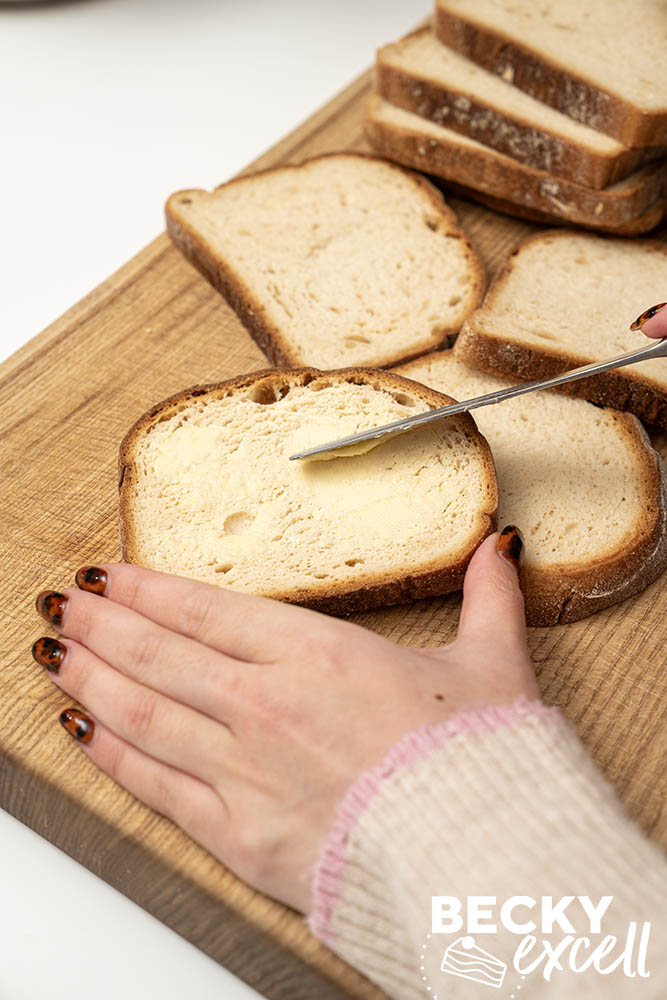
- Butter one side of each slice of gluten-free bread, then cut each slice into triangles.
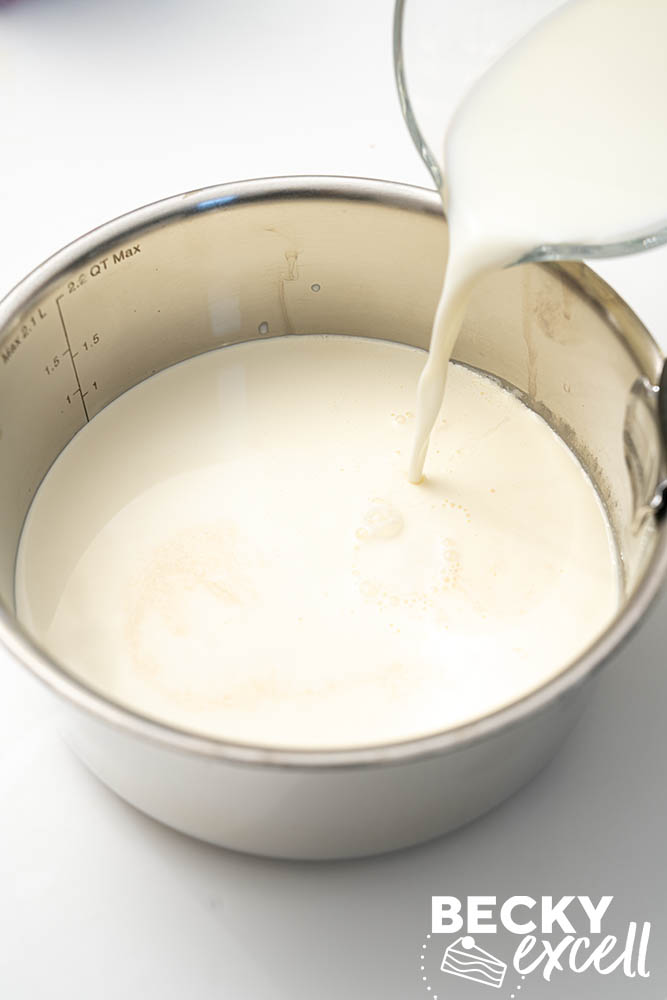
- Add the double cream, milk and vanilla extract to a medium saucepan. Place over a medium-low heat until hot and steaming, but don't allow it to boil.
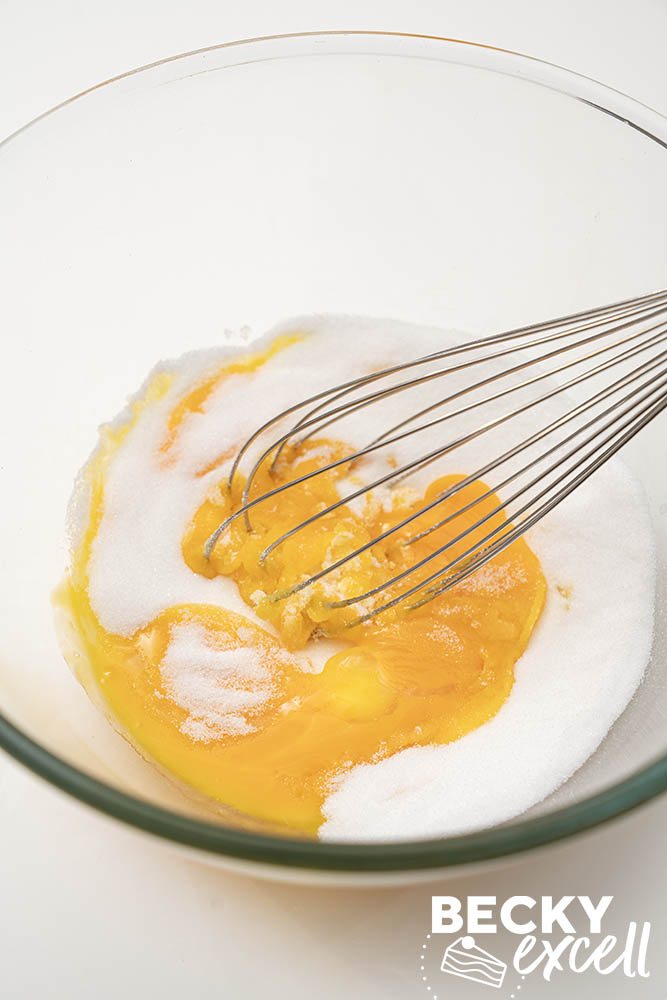
- Meanwhile, add the egg yolks and caster sugar to a large mixing bowl and whisk until well combined.
- Gradually pour in the hot cream mixture whilst constantly whisking until smooth and well combined.
- Arrange a layer of buttered bread in the base of your prepared dish.
- For the classic version, scatter over some of the raisins and sultanas. Add another layer of bread and the remaining dried fruit, then finish with a final layer of bread. Keep the top free from dried fruit so it doesn't burn.
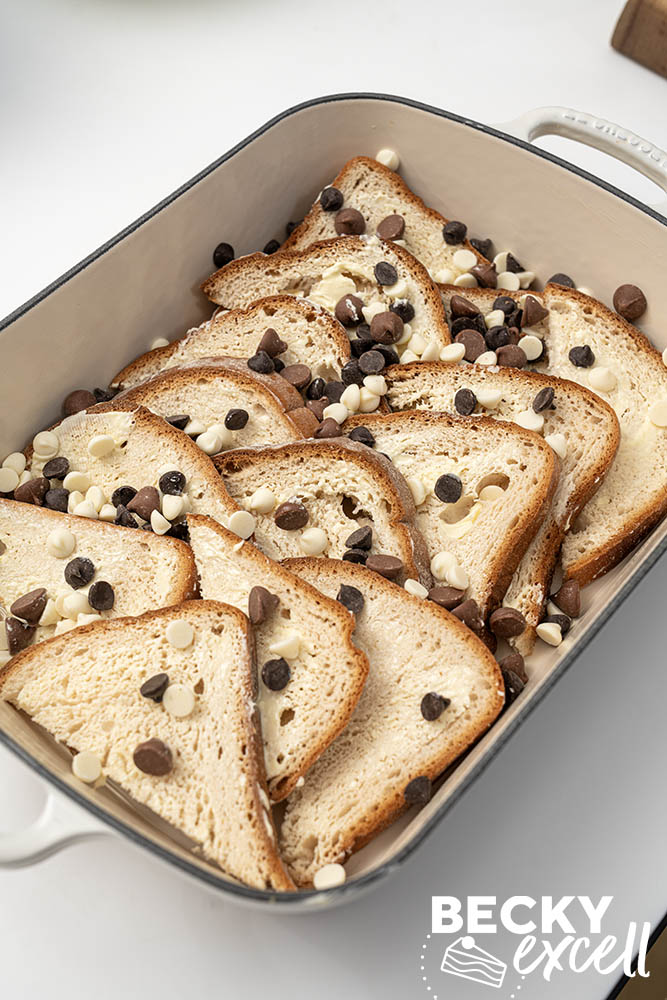
- For the triple chocolate version, add the milk, dark and white chocolate chips to a small bowl and mix together. Scatter 100g of the mixed chocolate chips between the layers of bread, keeping them tucked beneath the top layer. Reserve the remaining 20g for later.
- For the raspberry and white chocolate version, scatter the raspberries and 60g of the white chocolate chips between the layers of bread. Keep the chocolate tucked beneath the top layer and reserve the remaining 15g for later.
- Slowly pour the warm custard evenly over the bread, then gently press the bread down into the custard. Allow to soak for 20-30 minutes, gently pressing the bread down again halfway through if needed.
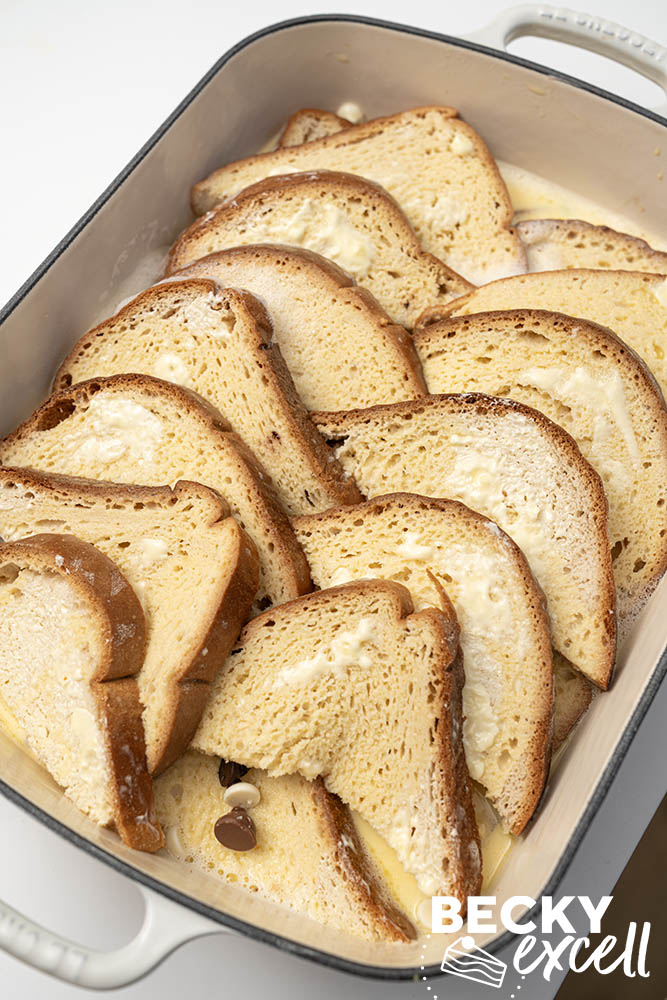
- Place into the preheated oven for 35-40 minutes. The exposed bread on top should be a pale golden colour and lightly crisp around the edges. Don’t keep baking until the top is deeply golden or the custard underneath can become firm and grainy instead of remaining lovely and creamy.
- Remove from the oven and switch your oven to a medium-high grill. Whilst the grill heats up, generously sprinkle an even layer of caster sugar all over the top.
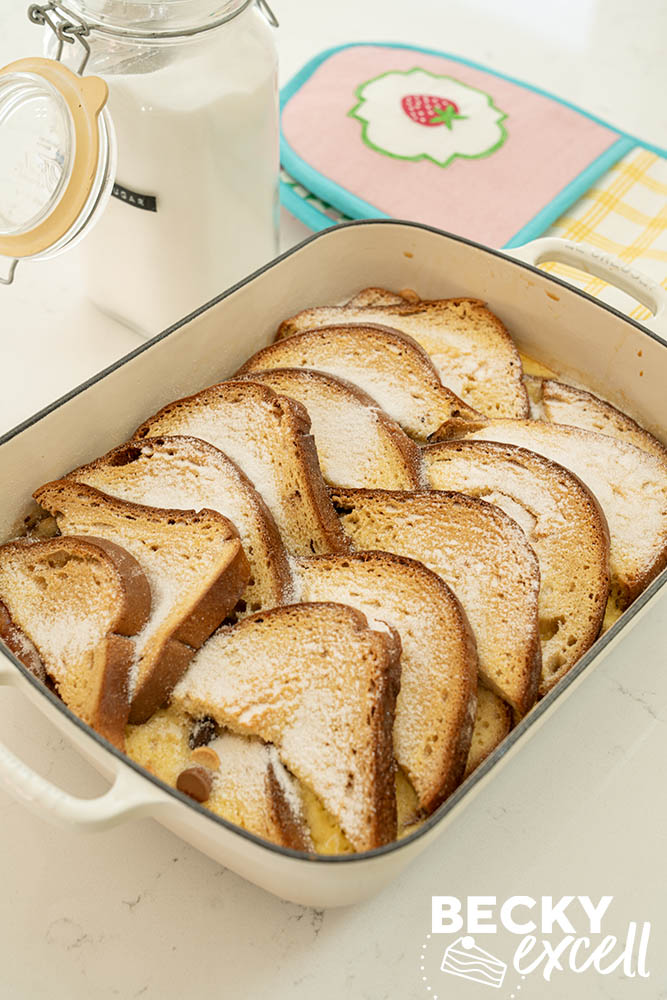
- Once the grill is hot, place the pudding onto an upper shelf for 2-3 minutes until the sugar has melted and the top is golden and caramelised. Keep a close eye on it as it can colour quickly.
- For the triple chocolate version, scatter the reserved 20g of mixed chocolate chips over the top as soon as the pudding comes out from under the grill. The heat from the pudding will soften them slightly.
- For the raspberry and white chocolate version, scatter the reserved 15g of white chocolate chips over the top as soon as the pudding comes out from under the grill. Again, the warmth from the pudding will soften them slightly.
- Allow to stand for 5-10 minutes before serving warm. Sift over the icing sugar, if using. Enjoy!
Nutrition