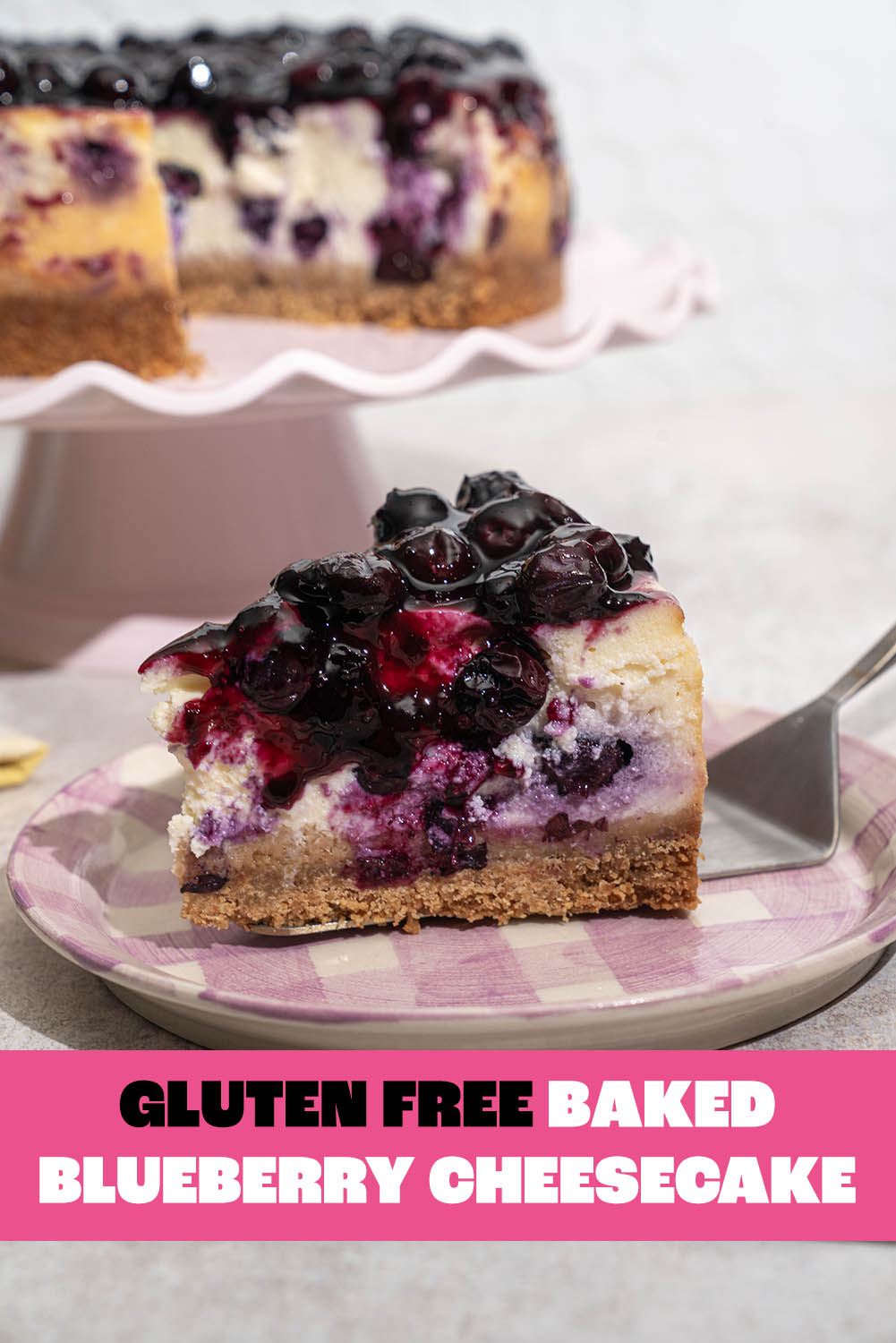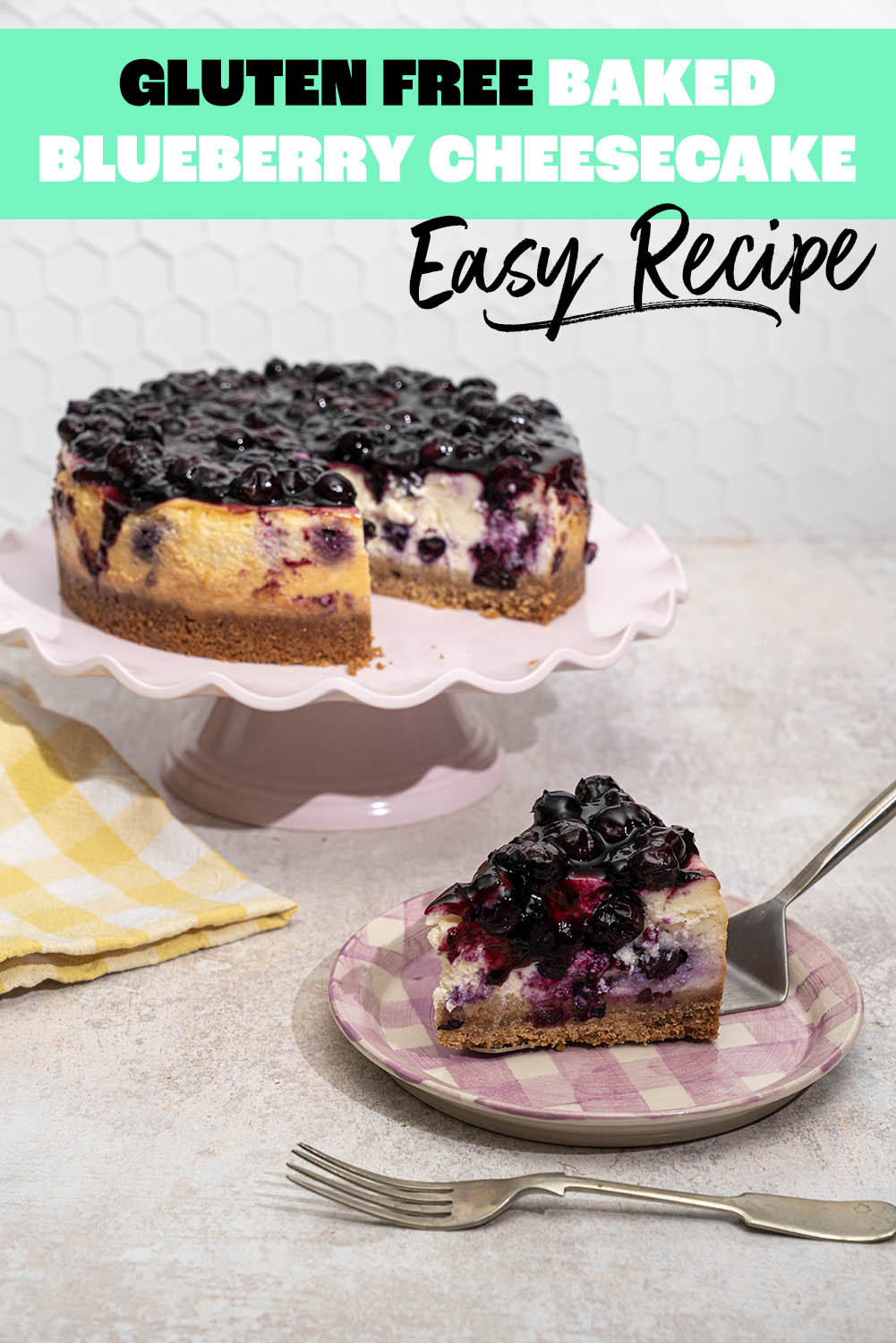

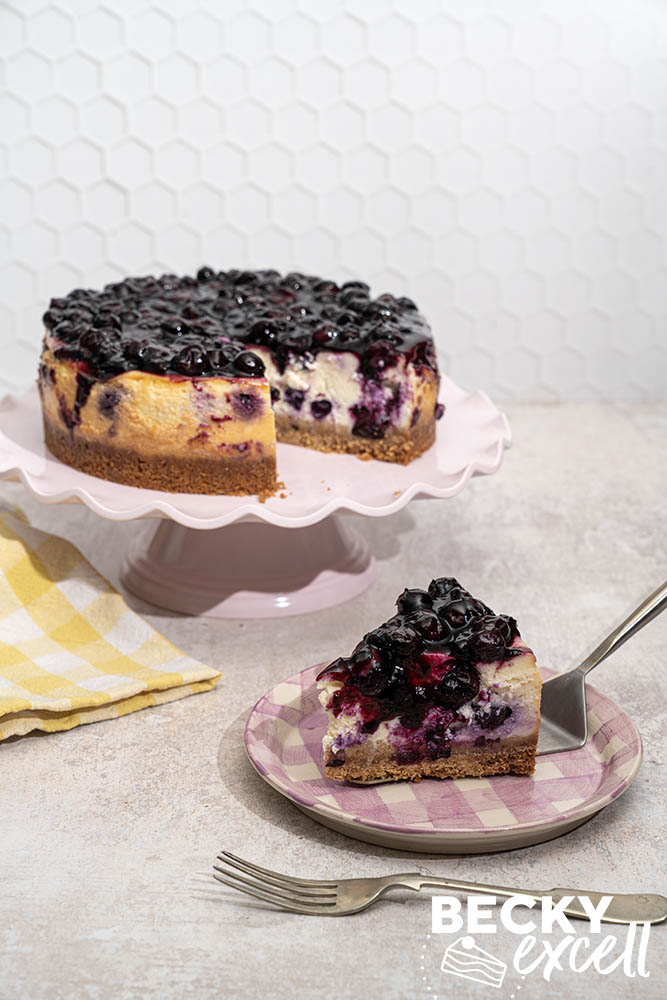
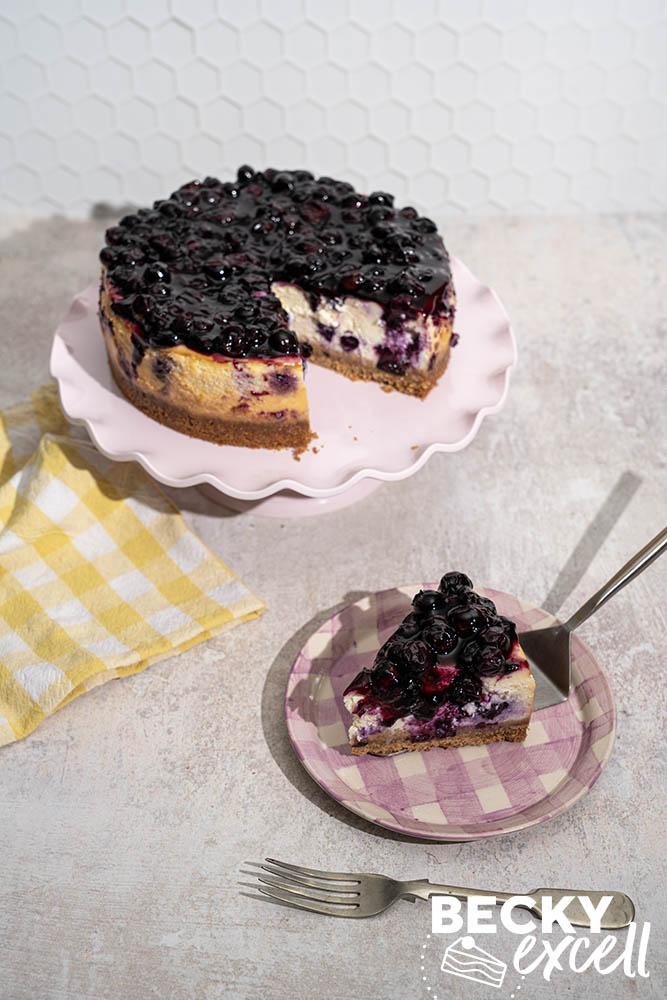
By popular demand, here’s my Gluten-free Baked Blueberry Cheesecake recipe! 100% Coeliac-friendly and wheat-free, but you’d never know…
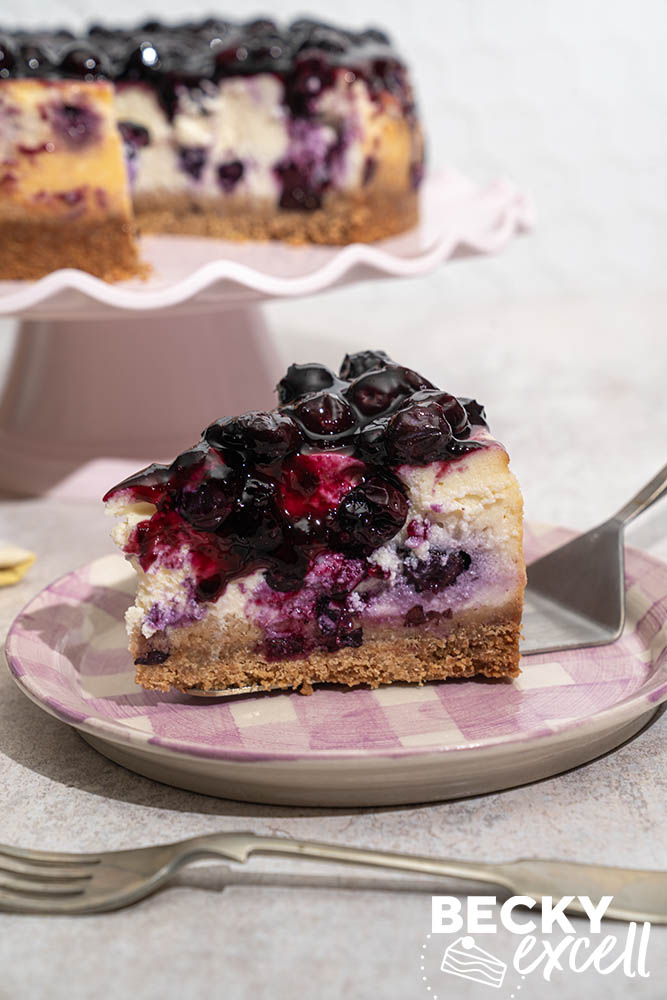
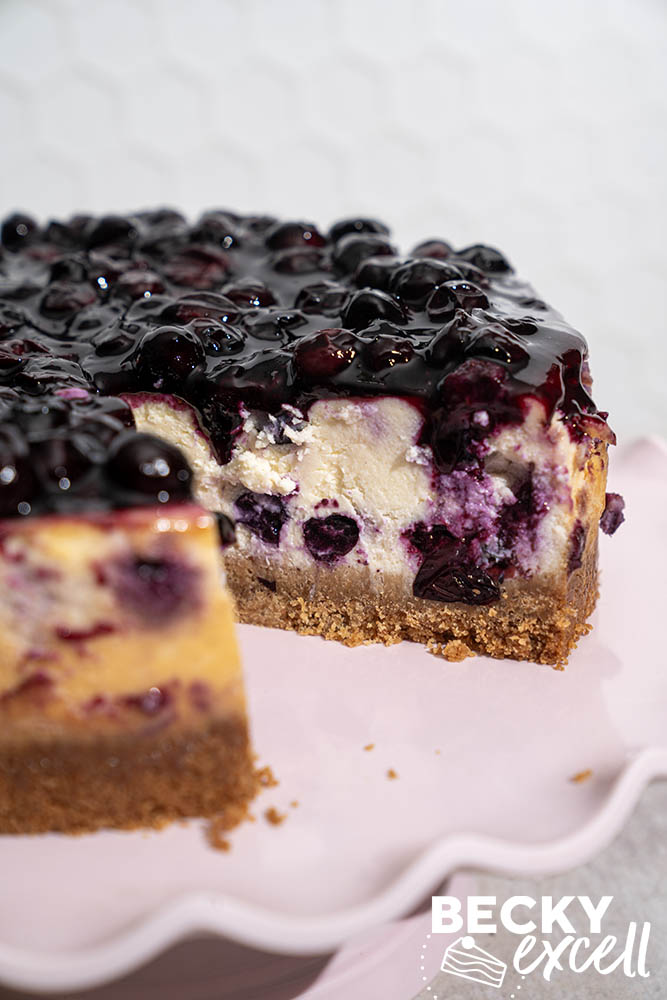
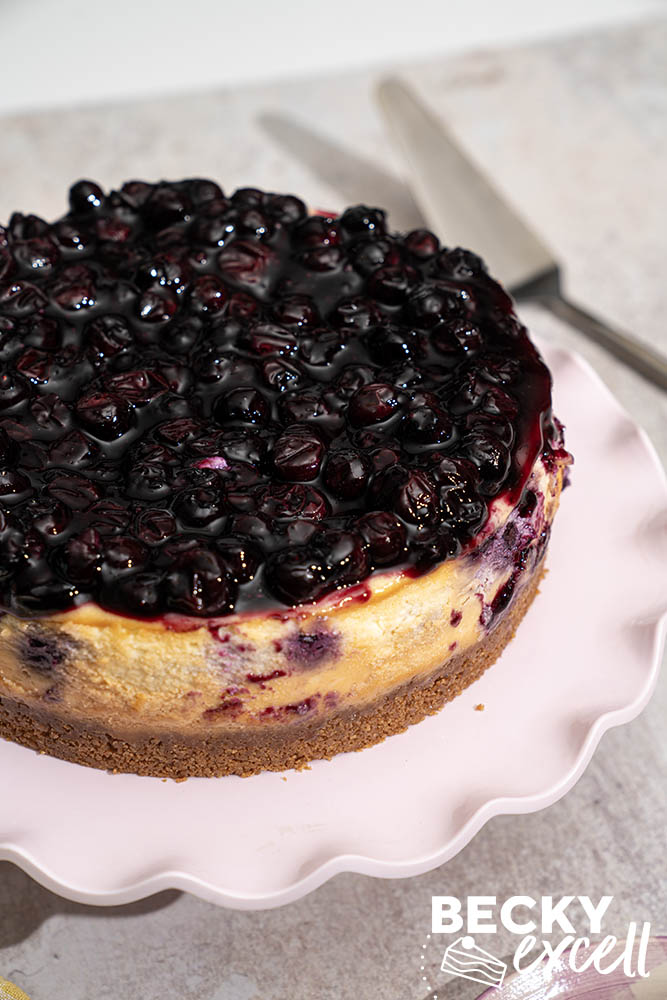
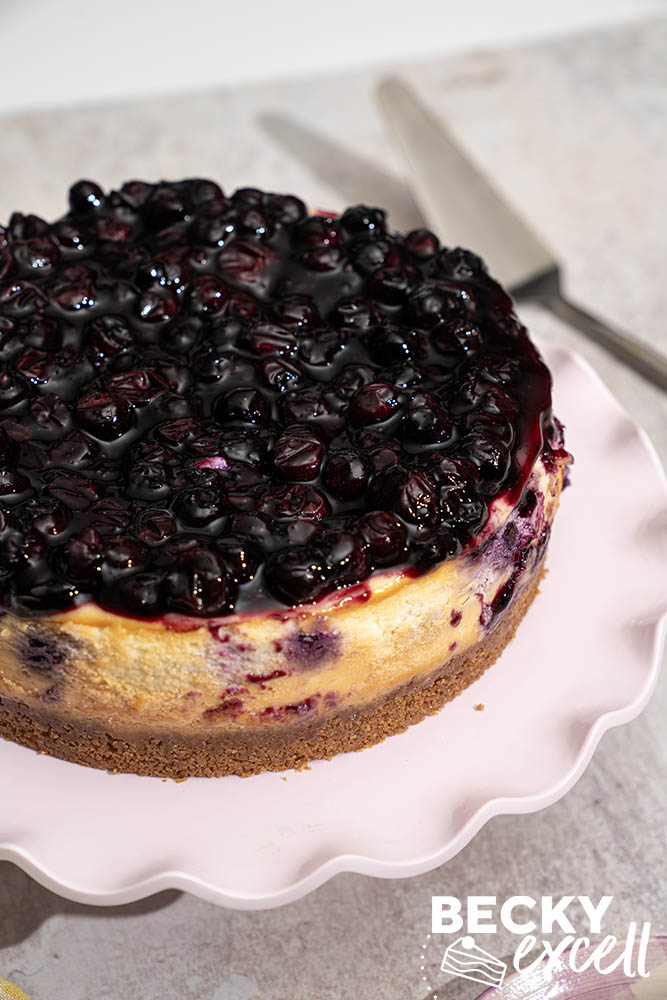
My gluten-free baked blueberry cheesecake has a buttery biscuit base, a thick and creamy vanilla and lemon cheesecake filling packed with juicy blueberries, then even more blueberries on top in the form of a glossy, sticky homemade topping. Basically, if you like blueberry cheesecake, this is the ultimate!
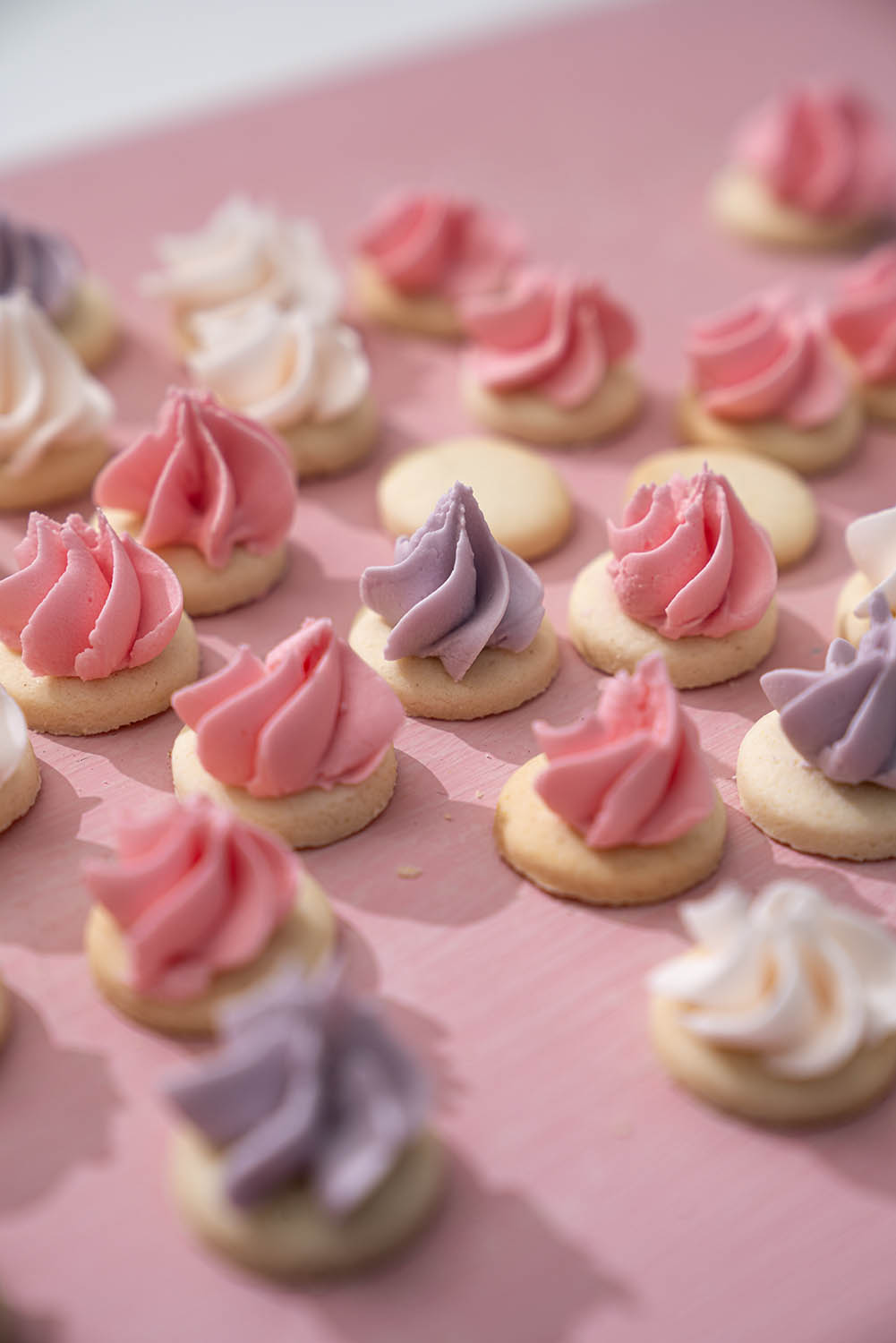
This one was inspired by episode 3 of this year’s Great British Bake Off, which means we’re officially onto week three of my little ‘How To Make Bake Off Gluten-free’ baking series. I started with my gluten-free chocolate stout cake, followed that with gluten-free Iced Gems and now it’s time for a proper baked blueberry cheesecake.
As always, the plan is simple: one bake inspired by each week’s episode, made entirely gluten-free. So yes, I’ll be back again next week with something inspired by episode 4!
And whilst baked cheesecake can have a bit of a reputation for being temperamental, there’s truly nothing particularly scary going on here. There’s no water bath, no weird ingredients and no complicated, mind-bending decorating required at the end.
The result is a rich, smooth and creamy gluten-free blueberry cheesecake with plenty of fresh blueberry flavour, a subtle hint of lemon and that classic buttery digestive biscuit base underneath. Oh, and if you’re looking for a no-bake version of this cheesecake, check out page 233 of my latest book ‘Feel Good Gluten Free’.
This recipe was simply made by adapting my gluten-free baked New York cheesecake in my first book ‘How To Make Anything Gluten Free‘ on page 198. So if you like this recipe, definitely check out that book!
Why you’ll love my Gluten-free Baked Blueberry Cheesecake
- It’s ridiculously creamy. Full-fat cream cheese and sour cream give the filling that thick, smooth baked cheesecake texture without it becoming overly dense or crumbly.
- There are bursting blueberries absolutely everywhere. They’re baked throughout the cheesecake filling and then piled on top in a glossy, sweet and slightly sharp blueberry topping.
- There’s no water bath required. It bakes gently at a low temperature, then cools slowly in the switched-off oven instead. One less thing to faff with!
- Nobody would know it’s gluten-free. Gluten-free digestives work brilliantly for the base and the small amount of gluten-free flour in the filling does exactly the same job as regular plain flour.
Ingredients for my Gluten-free Baked Blueberry Cheesecake
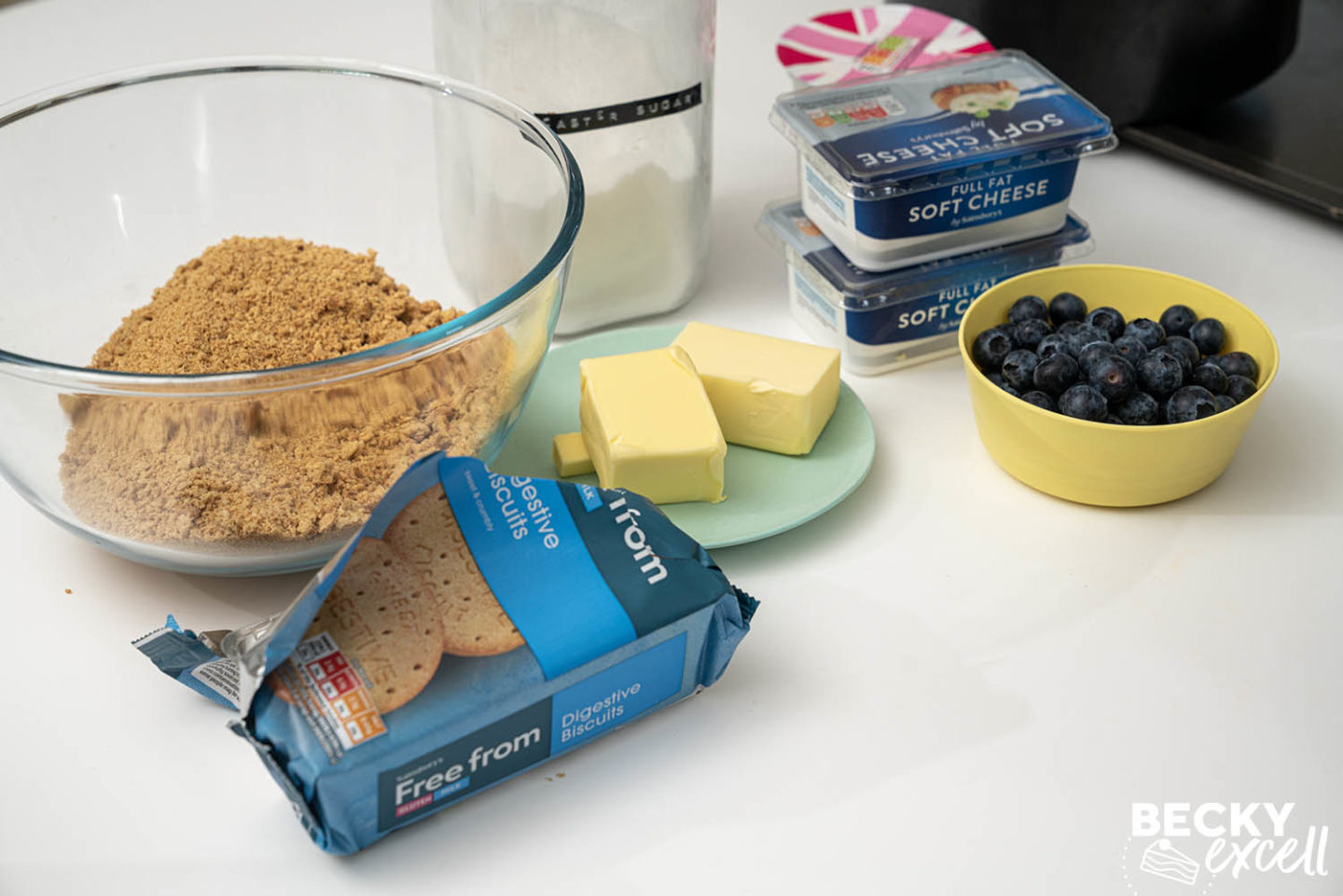
For the biscuit base, you only need gluten-free digestive biscuits from the free from aisle and melted butter.
Gluten-free digestives are perfect here because they give you that familiar buttery, crumbly cheesecake base without needing to do anything complicated. There are plenty of supermarket own-brand options available too.
For the baked blueberry cheesecake filling, you’ll need full-fat cream cheese, gluten-free plain flour, caster sugar, salt, eggs, vanilla extract, lemon zest, lemon juice, sour cream and blueberries.
Make sure the cream cheese and sour cream have been allowed to lose their fridge chill before you start. This makes it much easier to get everything smooth without having to excessively beat the filling.
The lemon isn’t there to turn this into a lemon cheesecake either. It simply adds a little brightness that works brilliantly with the blueberries.
Then for the blueberry topping, you’ll need blueberries, caster sugar, lemon juice and a little cornflour mixed with cold water.
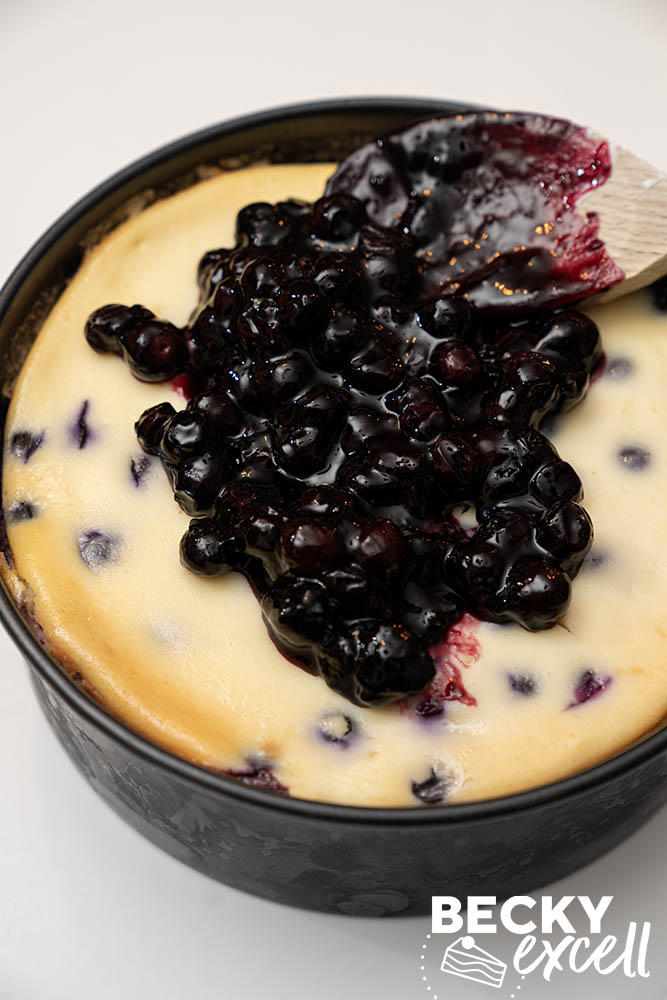
It only takes a few minutes on the hob and creates a glossy, spoonable blueberry sauce with plenty of whole berries remaining. Save that part of the recipe and use it on pancake day… you won’t regret it!
How to make my Gluten-free Baked Blueberry Cheesecake
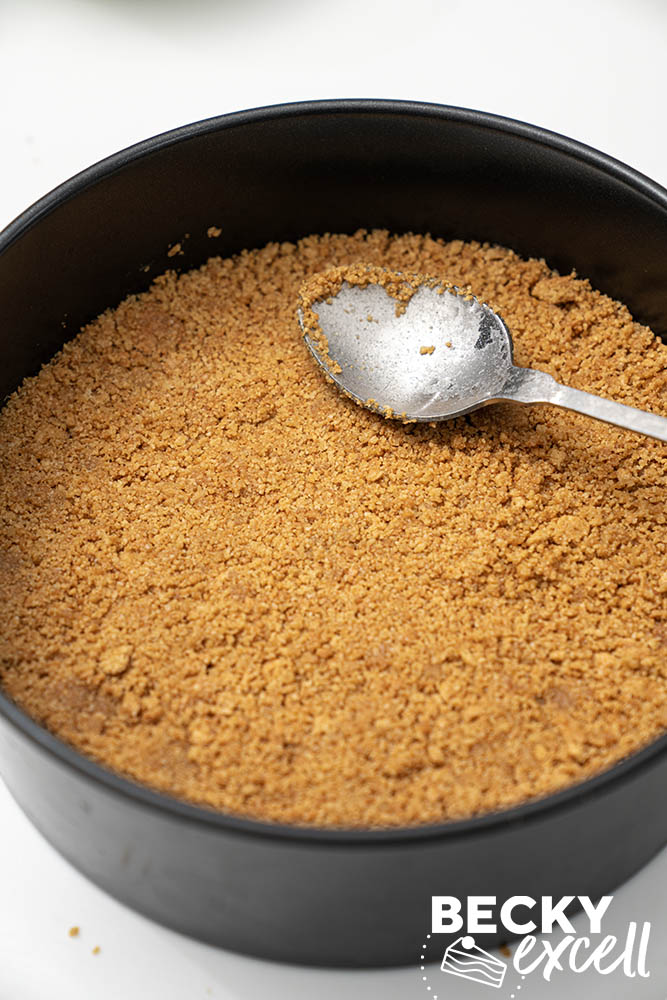
- Start by blitzing the gluten-free digestive biscuits into crumbs, then combine them with melted butter. Firmly compact the mixture into a 20cm loose-bottomed or springform tin and bake for 10 minutes.
- For the filling, mix the cream cheese on a low speed until smooth. Gradually mix in the flour, caster sugar and salt, followed by the eggs one at a time. Add the vanilla, lemon zest and lemon juice, then fold in the sour cream by hand.
- Pour around half of the cheesecake filling onto the biscuit base and scatter over half of the blueberries. Add the remaining filling and blueberries, gently pushing any berries sitting right on top just beneath the surface.
- Bake at 140°C fan / 160°C until the outside is set but the centre still has a gentle wobble. Switch the oven off, leave the door ajar and allow the cheesecake to cool gradually before chilling for at least 6 hours.
- For the topping, cook the blueberries with the sugar and lemon juice until softened. Lightly crush a few berries, stir in the cornflour mixture and allow it to bubble until glossy and slightly thickened. Once completely cold, spoon it over the chilled cheesecake. It’s that simple!
A few tips before you start
Make sure you use full-fat cream cheese. Reduced-fat cream cheese generally contains more water and isn’t what you want when you’re trying to make a rich baked cheesecake that sets properly.
Allow both the cream cheese and sour cream to lose their fridge chill before mixing. If they’re very cold, you’ll have to mix everything much harder to get it smooth, which can introduce more air into the filling.
And speaking of air, keep the mixer on a low speed throughout. Unlike a sponge cake, we’re not trying to whip loads of air into the mixture. Too much air can cause a cheesecake to rise excessively in the oven before sinking or cracking as it cools. Once the eggs go in, mix only until each one is incorporated.
Most importantly, don’t wait for the centre of the cheesecake to become completely firm in the oven. The outer few centimetres should be set but the middle should still wobble gently when the tin is lightly shaken.
That wobble is your friend! The cheesecake will continue setting considerably as it cools and then chills.
Don’t rush the cooling process either. Leaving it inside the switched-off oven with the door ajar allows the temperature to decrease gradually, which also helps reduce the chance of cracking.
Lastly, make sure the blueberry topping is completely cooled before spooning it over the chilled cheesecake.
Storage and leftovers
Keep the baked blueberry cheesecake covered in the fridge for up to 3 days.
Because it contains cream cheese, sour cream and eggs, it needs to remain refrigerated rather than being stored at room temperature.
You can also freeze the cheesecake, though I’d recommend doing so without the blueberry topping. Once completely chilled, wrap the whole cheesecake or individual slices well and freeze for up to 1 month.
Defrost overnight in the fridge, then add the blueberry topping once completely thawed.
The blueberry topping can be stored separately in an airtight container in the fridge for 1–2 days.
Recipe tips, swaps and FAQs
Is this recipe gluten-free? Is it suitable for people with coeliac disease?
Yes! This recipe is completely gluten-free and suitable for people with coeliac disease, provided all the ingredients you use are gluten-free too.
As always, make sure you check ingredient labels for any may contain warnings for wheat, rye, barley or oats that aren’t labelled gluten-free, and take care to avoid cross-contamination when preparing and baking them.
If you’re cooking for someone with coeliac disease, you can find Coeliac UK’s advice on avoiding cross-contamination here.
Can I make this dairy-free?
Unfortunately not. The butter is easy enough to replace, but the filling relies on full-fat cream cheese and sour cream, and dairy-free alternatives can behave very differently when baked.
Can I make this vegan or egg-free?
Unfortunately not. The recipe relies on cream cheese, sour cream and eggs for its structure and texture, so replacing all three would require a separately developed/tested recipe rather than a few simple swaps.
Can I make this lactose-free?
Unfortunately not. Whilst lactose-free cream cheese exists and butter is naturally very low in lactose, there isn’t a reliable like-for-like lactose-free sour cream replacement that I’ve tested here. I would perhaps test lactose-free Greek yoghurt instead of sour cream, but that would be an experiment for the future, not a recommendation!
Is this baked blueberry cheesecake low FODMAP?
Unfortunately not. The cream cheese and sour cream contain lactose, and without a reliable like-for-like replacement for the sour cream, I wouldn’t recommend adapting this recipe for a low FODMAP diet.
What isn’t gluten-free about a traditional baked blueberry cheesecake?
The main sources of gluten are usually the biscuit base and any wheat flour used in the cheesecake filling.
Standard digestive biscuits contain wheat, whilst some baked cheesecake recipes use ordinary plain wheat flour to help stabilise the filling.
In this recipe, those are replaced with gluten-free digestive biscuits and gluten-free plain flour, making the cheesecake suitable for a gluten-free diet.
If you’re making it for someone with coeliac disease, always check every packaged ingredient and avoid cross-contamination during preparation.
Which gluten-free biscuits are best for a cheesecake base?
Gluten-free digestives are ideal because they made exactly to be like the real deal.
In the UK, Tesco, Sainsbury’s and Asda all sell own-brand gluten-free digestives, usually in their Free From aisle or section. Mine were from Sainsbury’s, but they all work just as well.
Why is flour used in a baked cheesecake filling?
A small amount of flour helps stabilise the cheesecake filling as it bakes and gives it enough structure to slice cleanly whilst remaining creamy. Gluten-free plain flour does the same job without the wheat!
Do I need xanthan gum in a gluten-free cheesecake?
No. The filling doesn’t rely on gluten development for its structure, so xanthan gum isn’t necessary in this recipe.
If your gluten-free plain flour blend already contains xanthan gum, that’s absolutely fine, but consider using 5-10g less. Most gluten-free plain flour blends in the UK don’t.
What type of tin should I use for baked cheesecake?
Use a 20cm (8in) loose-bottomed tin or springform tin. Either works well, but each has its own little advantage.
A springform tin is generally easier when it comes to releasing the sides of the cheesecake, as you simply unclasp the tin. However, many springform tins have a slightly recessed base, which can make transferring the cheesecake off the base and onto a serving plate a little trickier.
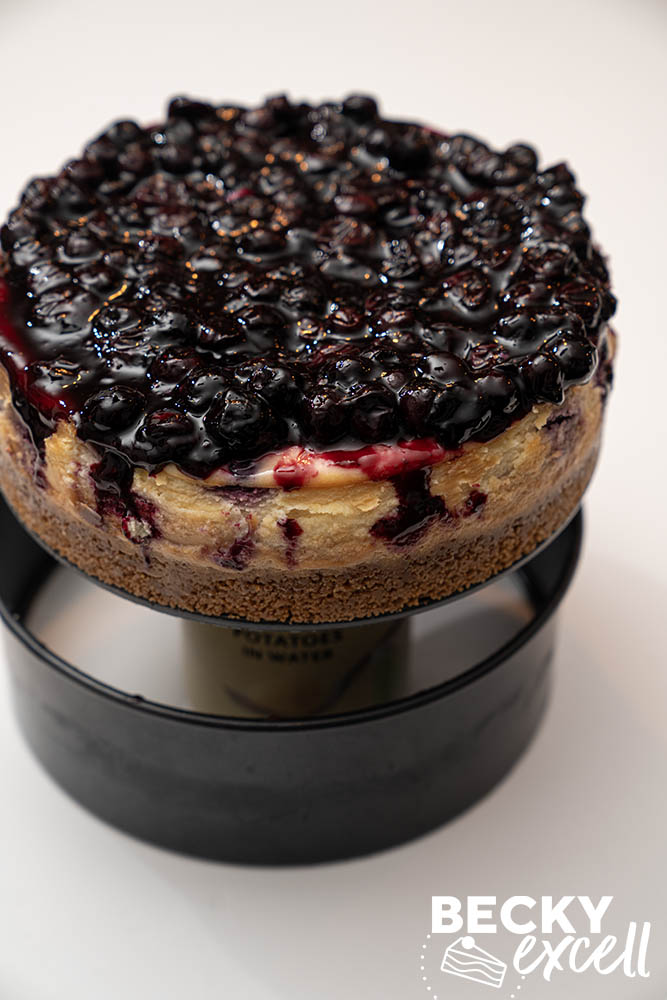
A loose-bottomed tin takes a little more care when initially releasing the cheesecake from the tin, but the completely flat base makes it much easier to slide the finished cheesecake onto a serving plate afterwards. See the tip and photo in the penultimate step of the recipe for an easy kitchen hack to release it.
So if you’re nervous about getting the cheesecake out of the tin, a springform is probably easiest. If you want the easiest transfer onto a serving plate, I’d go for a loose-bottomed tin.
How do I know when a baked blueberry cheesecake is done?
The outer few centimetres should look set and barely move, whilst the centre should still have a gentle wobble when the tin is lightly shaken.
The middle should move as one piece rather than looking liquid or rippling.
Don’t wait for the centre to become completely firm in the oven, as the cheesecake will continue to set as it cools and chills.
Why did my cheesecake crack on top?
Baked cheesecakes can crack if they’re slightly overbaked, too much air is incorporated into the filling or they cool too quickly.
Keep your mixer on a low speed, avoid overmixing once the eggs have been added and stop baking whilst the centre still has a gentle wobble.
Cooling the cheesecake gradually in the switched-off oven also helps reduce the chance of cracking.
And if you do end up with a small crack, don’t panic! It’s purely cosmetic and the blueberry topping will hide it anyway.
Why is my baked cheesecake crumbly instead of creamy?
A slightly crumbly texture usually means the cheesecake has been cooked a little too far.
As the eggs continue to cook, the filling becomes firmer and can lose some of its smooth, creamy texture.
Stop actively baking the cheesecake whilst the centre still has a gentle wobble. It will continue to set considerably as it cools and chills.
Should a baked cheesecake brown on top?
Not particularly. This cheesecake is baked gently at 140°C fan / 160°C, so the top should remain fairly pale, perhaps with a little colour around the edges.
Don’t continue baking simply because you’re waiting for it to turn golden. The wobble in the centre is a much better indication of when it’s ready.
Can I use frozen blueberries in baked blueberry cheesecake?
Yes. Add frozen blueberries straight from frozen rather than defrosting them first.
Defrosted blueberries release considerably more liquid and are more likely to bleed into the cheesecake filling. Fresh blueberries are ideal if available, but both can work.
How long does baked cheesecake need to chill?
Chill the cheesecake for at least 6 hours, though overnight is ideal.
This gives the filling enough time to fully set and makes it much easier to cut into clean slices. Make sure the cheesecake has cooled completely before placing it in the fridge.
Can I make the blueberry topping ahead of time?
Yes. The blueberry topping can be made a day or two in advance and kept covered in the fridge.
Allow it to cool completely before refrigerating, then give it a quick stir before spooning it over the fully chilled cheesecake.
Can I make this baked blueberry cheesecake ahead of time?
Absolutely, and it’s actually one of the best desserts to make ahead.
Bake and cool the cheesecake, then leave it covered in the fridge overnight. The extra chilling time gives the filling plenty of time to completely set and makes it much easier to slice.
The blueberry topping can be made at the same time or the following day, then spooned over once everything is completely cold.
Gluten-free Baked Blueberry Cheesecake Recipe
Equipment
Ingredients
For the base
- 320 g gluten-free digestive biscuits see FAQ section
- 150 g butter melted
For the cheesecake filling
- 600 g full-fat cream cheese at room temperature
- 30 g gluten-free plain flour
- 185 g caster sugar
- 1/4 tsp fine salt
- 3 eggs
- 2 tsp vanilla extract
- 1/2 lemon zest only
- 2 tsp lemon juice
- 175 g sour cream at room temperature
- 200 g blueberries
For the blueberry topping
- 300 g blueberries
- 50 g caster sugar
- 1 tbsp lemon juice
- 1 tsp cornflour
- 1 tbsp cold water
Instructions
Make the cheesecake
- Preheat the oven to 140°C fan / 160°C / 320°F.
- Add the gluten-free digestive biscuits to a food processor and blitz into crumbs. You want fairly fine crumbs, but avoiding blitzing them into dust!
- Transfer the biscuit crumbs to a mixing bowl, pour in the melted butter and mix until everything is well combined.
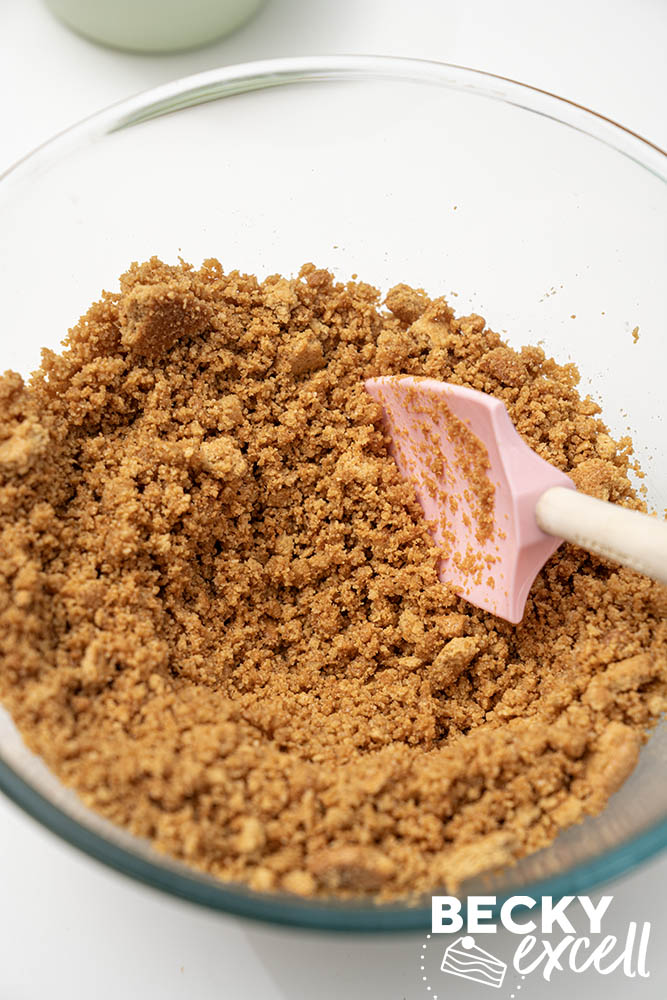
- Spoon the mixture into a 20cm (8in) loose-bottomed or springform tin and firmly compact it into an even layer.
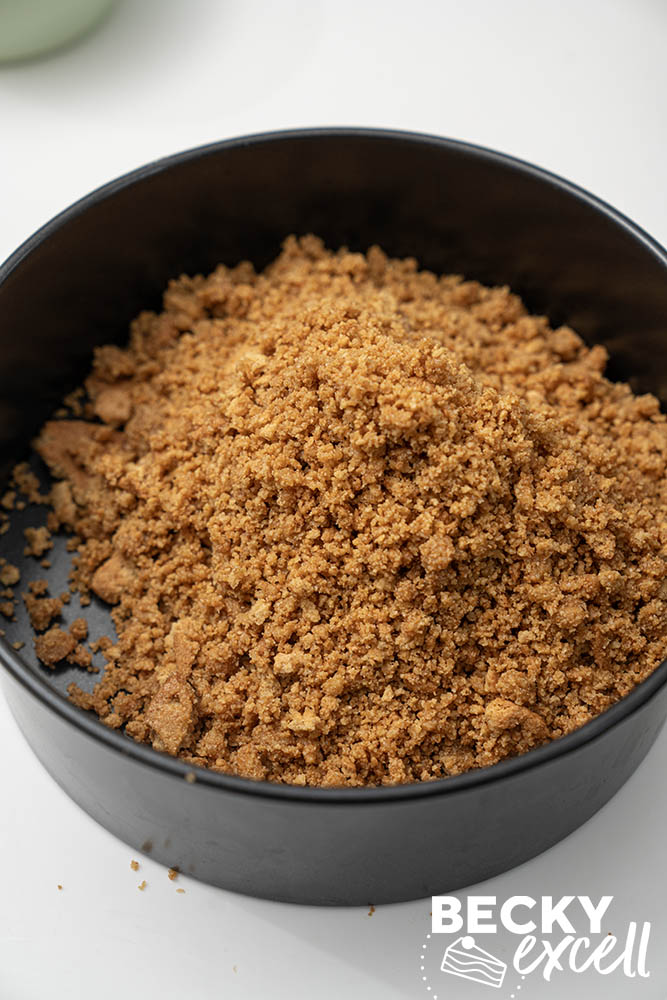
- Bake for 10 minutes, then remove from the oven and allow to cool slightly whilst you make the filling. Keep the oven at 140°C fan / 160°C.
- Fit a stand mixer with the paddle/beater attachment.
- Add the cream cheese and mix on a low speed for around 1 minute, just until smooth.
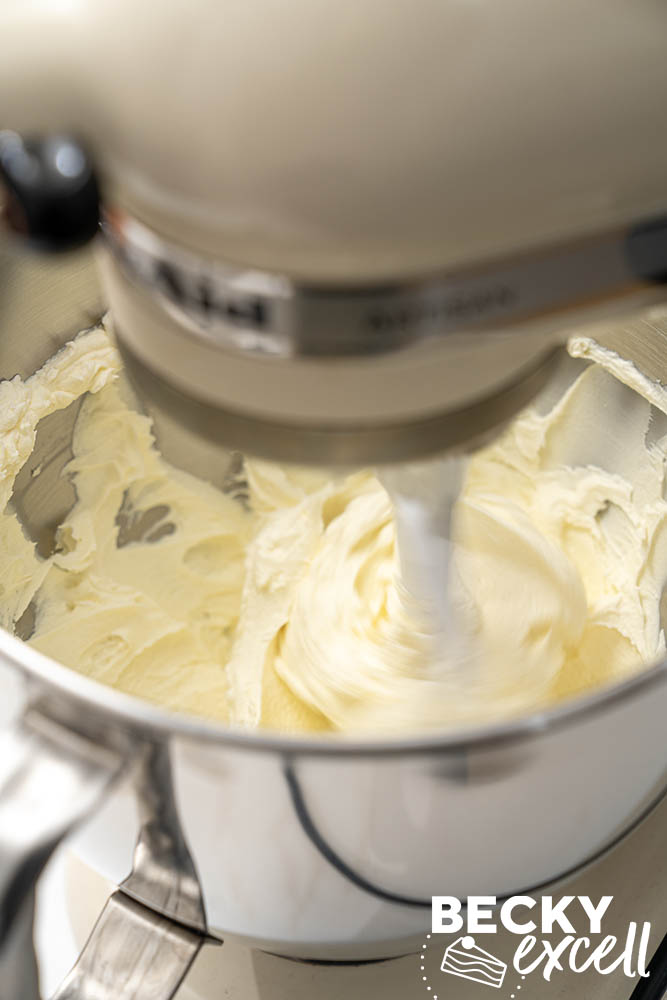
- In a small bowl, mix together the flour, caster sugar and salt. Gradually add this to the cream cheese, mixing on a low speed only until combined.
- Add the eggs one at a time, mixing briefly after each addition.
- Add the vanilla extract, lemon zest and lemon juice and mix again just until incorporated.
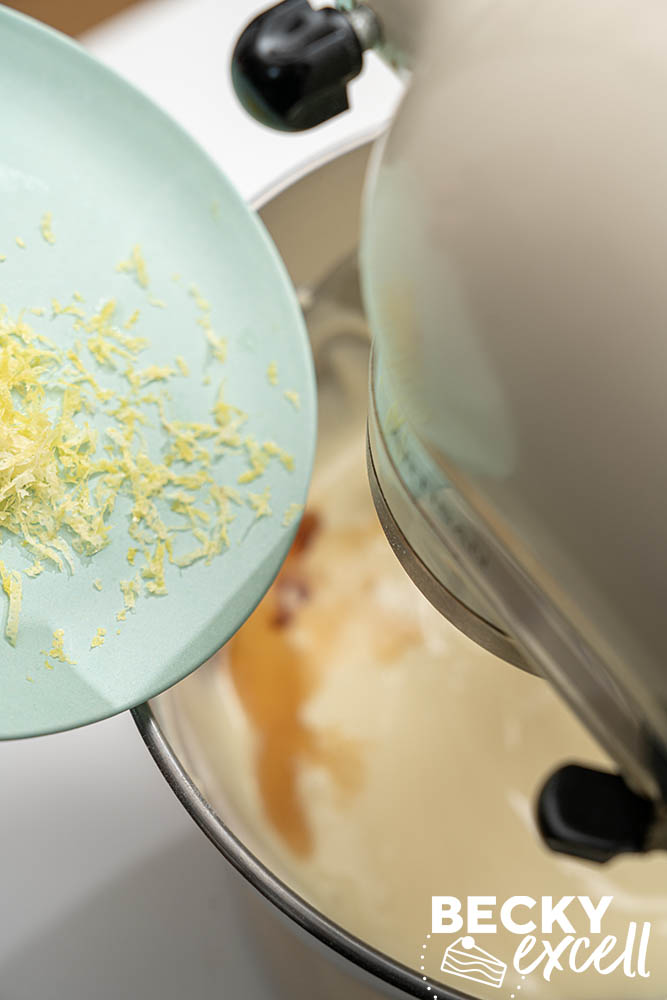
- Turn the mixer off and fold in the sour cream by hand until evenly combined. It should be like the texture of custard that drizzles off of a spatula.
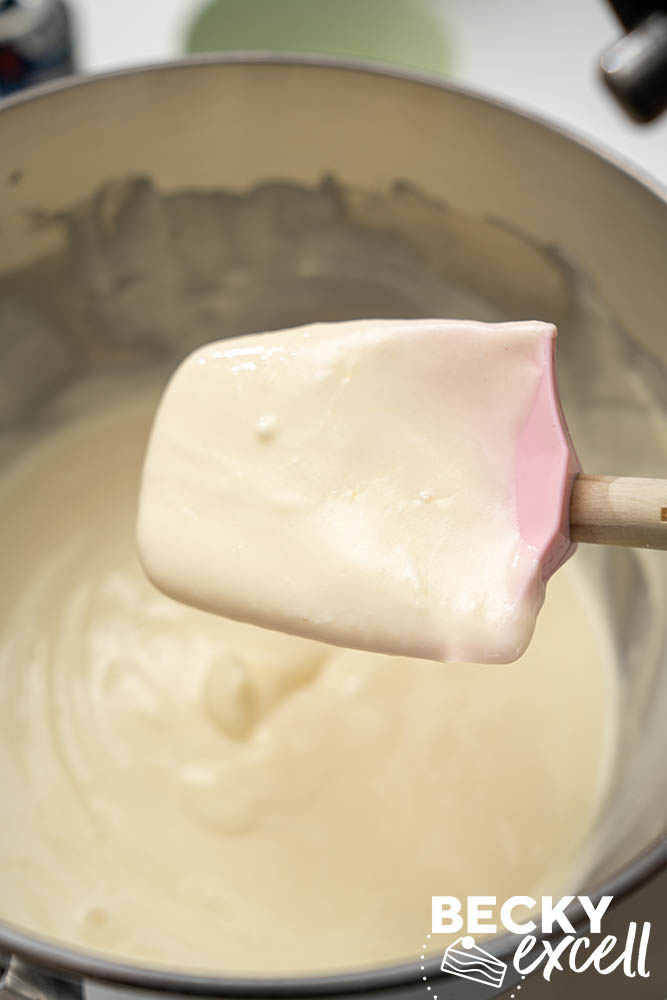
- Pour around half of the cheesecake filling over the pre-baked biscuit base, then scatter over HALF of the blueberries for the cheesecake.
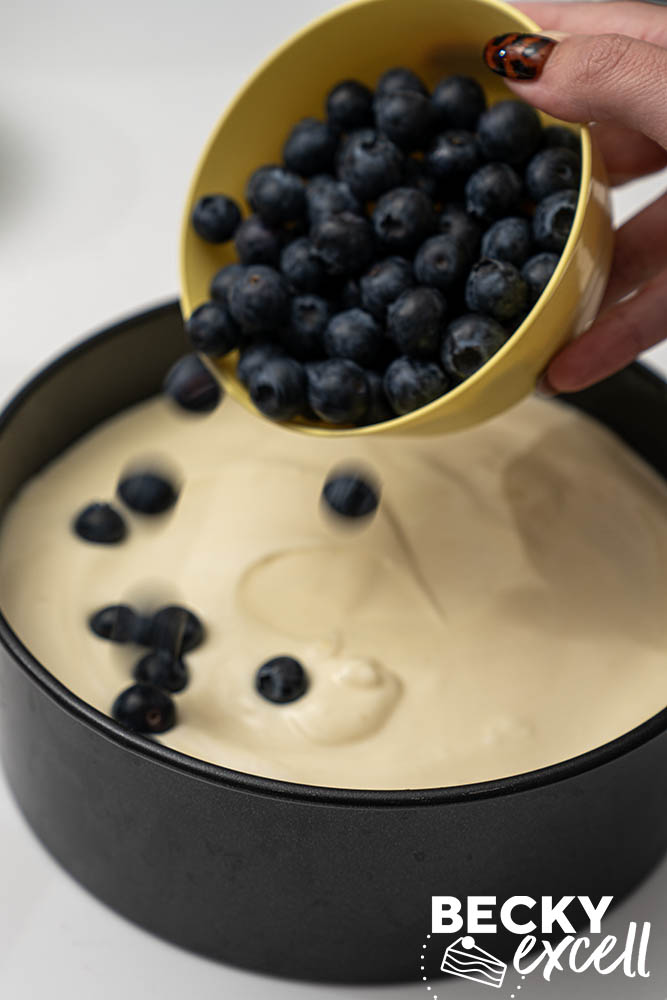
- Pour over the remaining cheesecake filling and scatter over the remaining blueberries. Gently press any blueberries sitting right on the surface just beneath the filling.
- Bake for around 55-60 minutes. The cheesecake is ready when the outer few centimetres are set but the centre still has a gentle wobble when the tin is lightly shaken. The middle shouldn’t look liquid and the top should remain fairly pale.
- Turn the oven off and immediately leave the oven door ajar by around 10–20cm. Leave the cheesecake inside the switched-off oven for around 1 hour.
- Remove from the oven and leave at room temperature until completely cool.
- Cover and refrigerate for at least 6 hours, ideally overnight.
Make the blueberry topping
- Add the blueberries, caster sugar and lemon juice to a small saucepan.
- Place over a medium heat and cook for around 4–5 minutes, stirring occasionally, until the blueberries have softened and started releasing their juices.
- Lightly crush some of the blueberries with the back of a spoon, leaving plenty of them whole.
- Mix the cornflour and cold water together in a small bowl until smooth, then stir it into the blueberries.
- Allow everything to bubble gently for another 1–2 minutes, until glossy and slightly thickened. The topping should still be loose and spoonable rather than thick and jam-like.
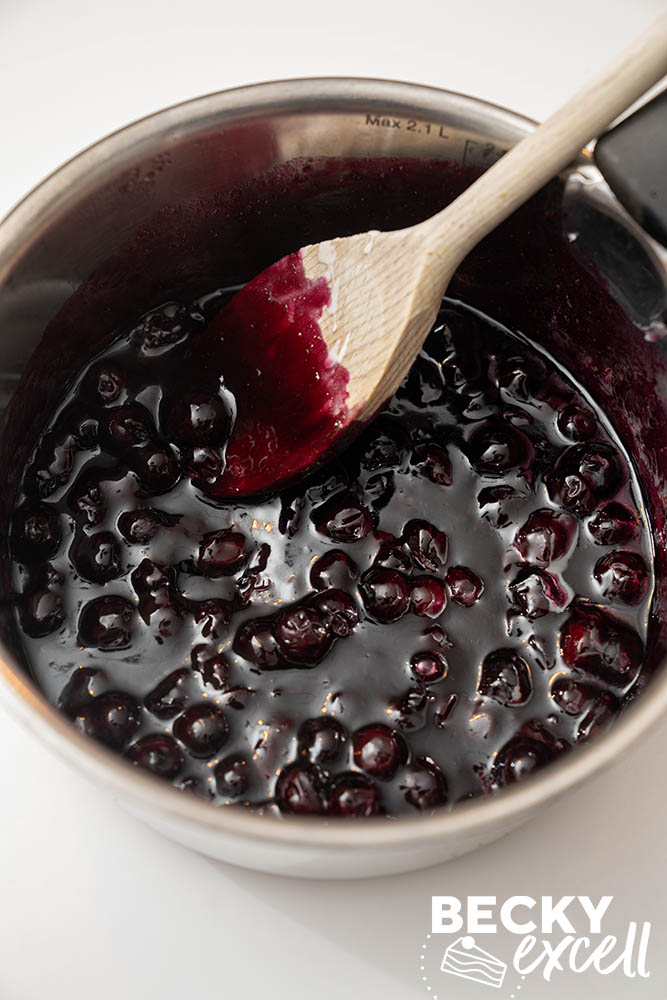
- Remove from the heat and allow to cool completely.
Assemble
- Once the cheesecake is fully chilled, carefully remove it from the tin and transfer to a serving plate.
- Spoon the cooled blueberry topping over the top, allowing a little to naturally tumble towards the edges.
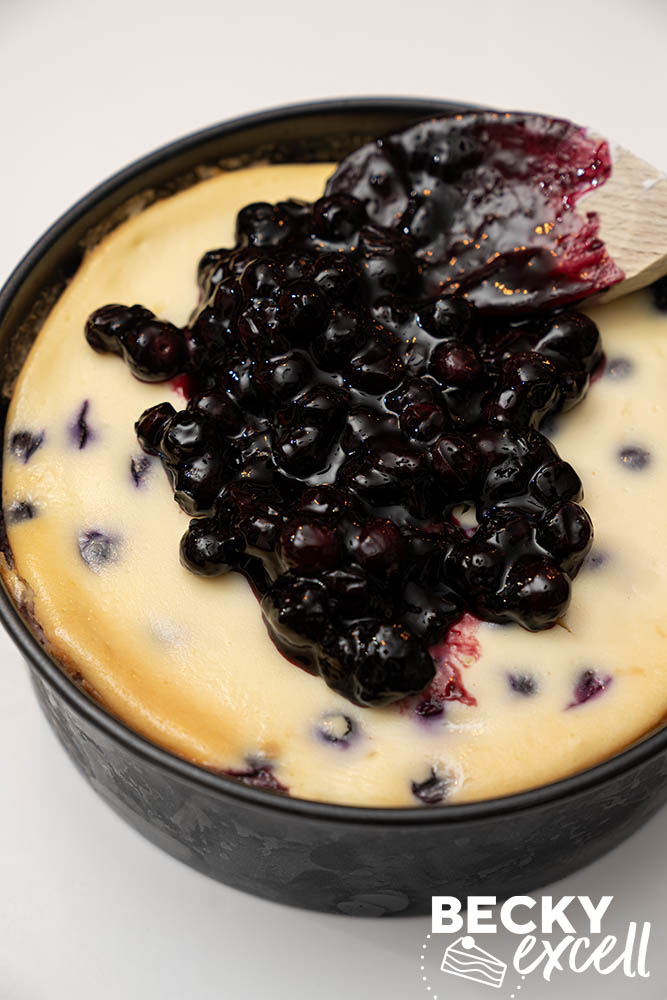
- Remove the cheesecake from the tin. If using a loose-bottomed tin I find it easiest to rest it on a can so I can gently but firmly pull the sides downwards.
- Slice and serve.
Nutrition