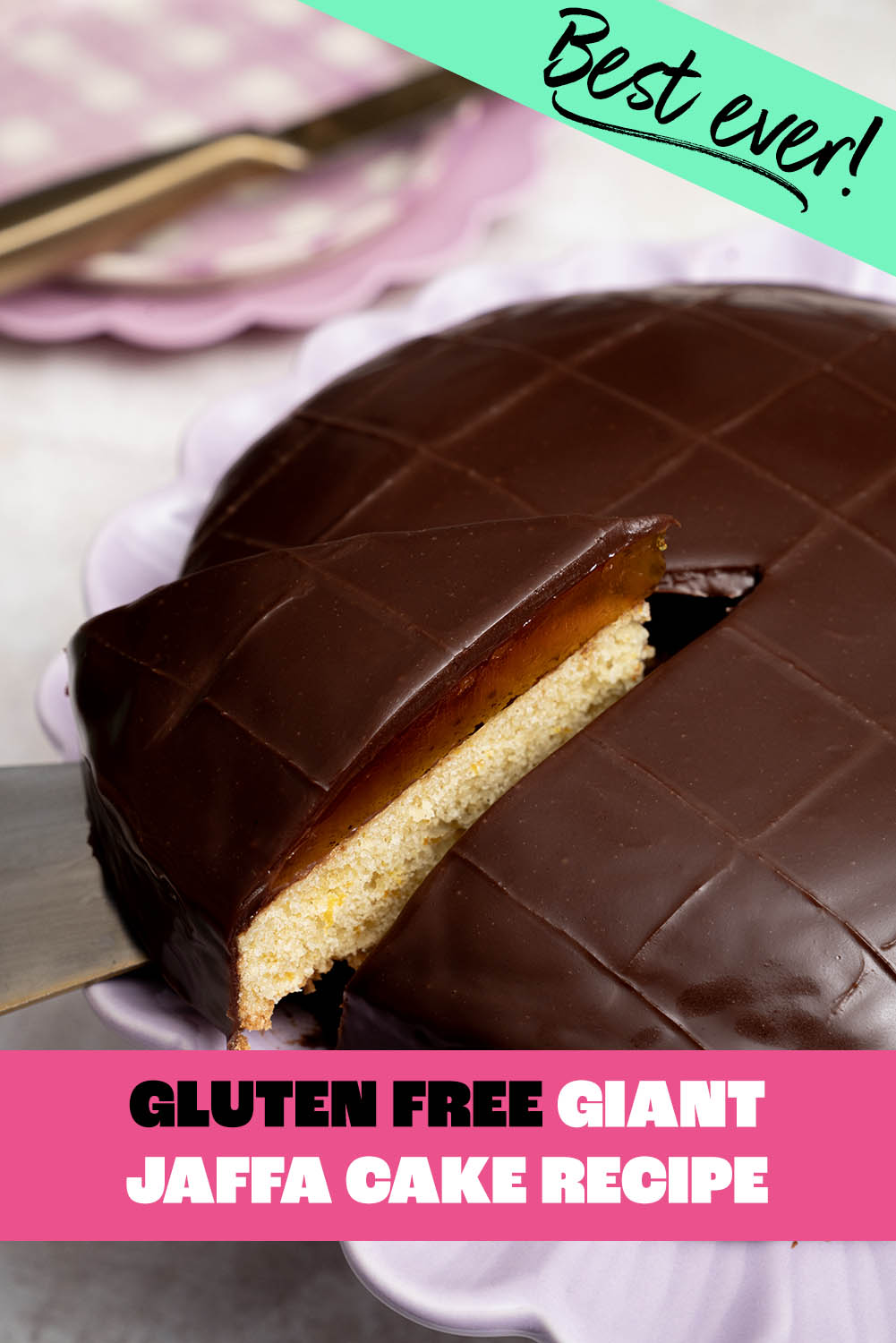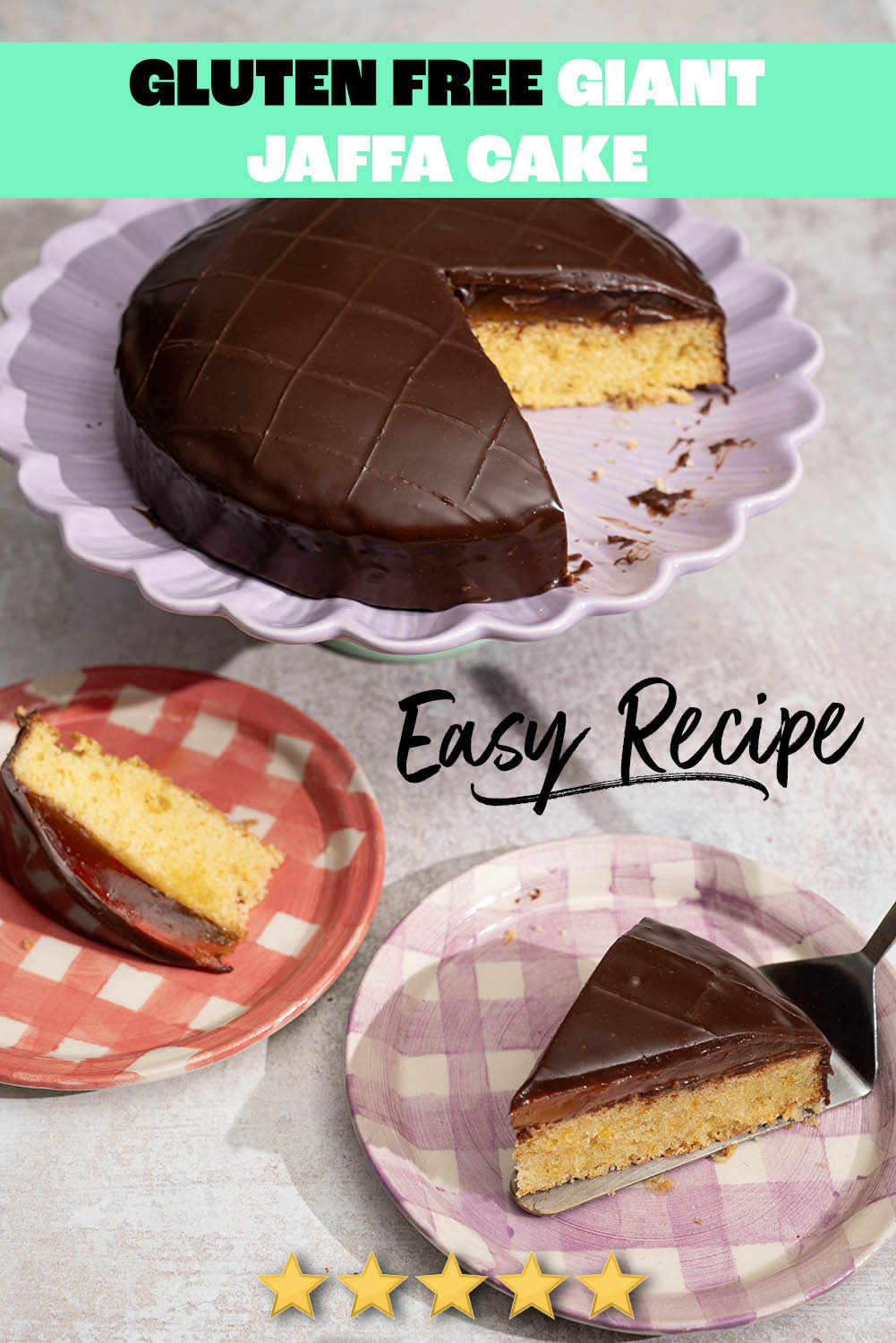

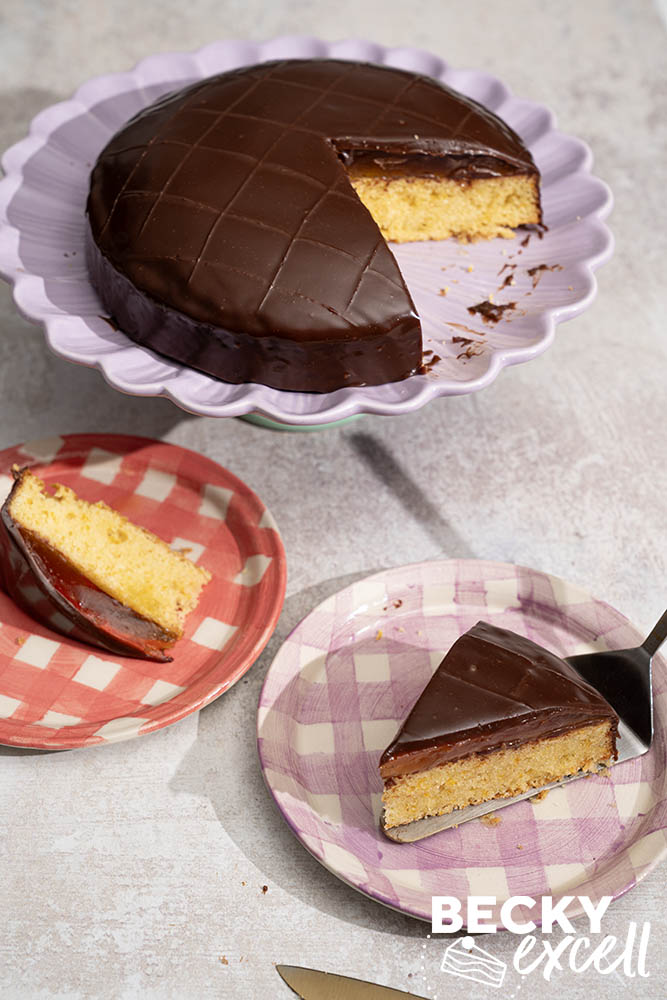
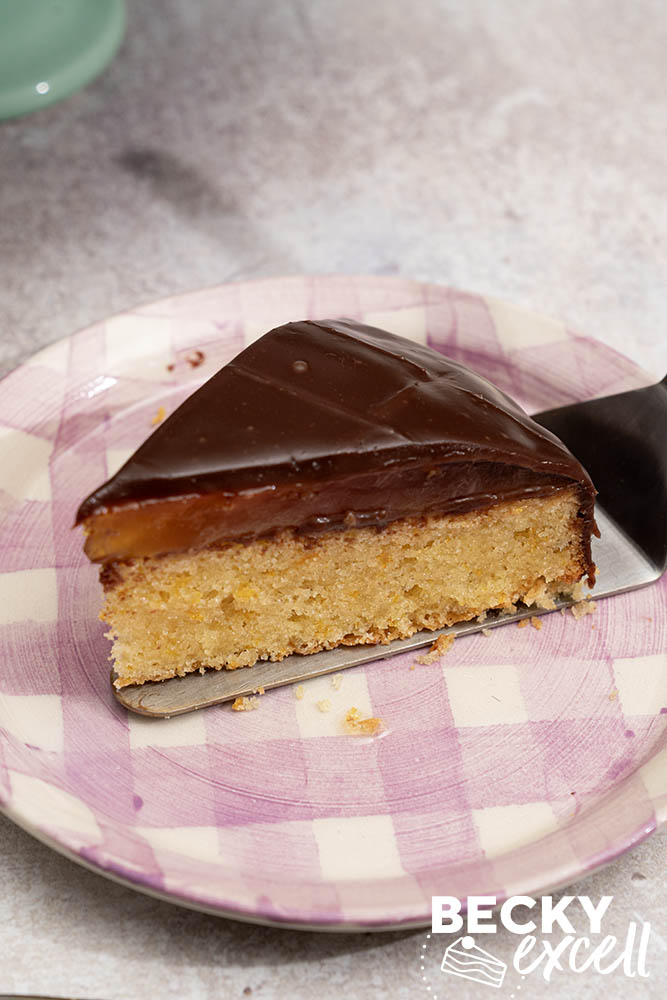
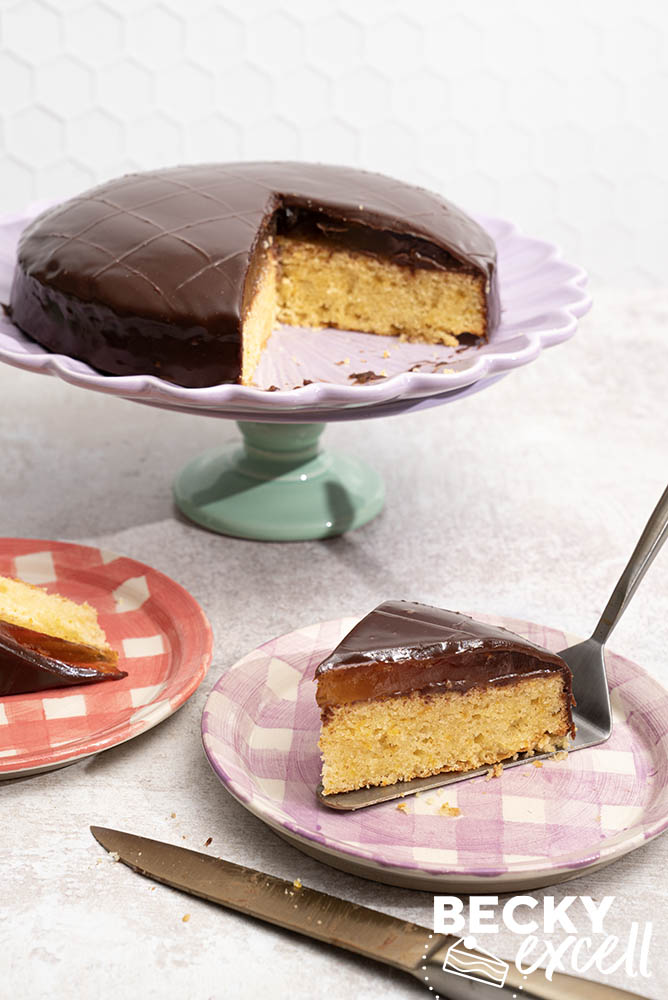
Here’s my gluten-free giant Jaffa Cake recipe! Under that glossy chocolate ganache and orange jelly is a lovely, moist orange and vanilla sponge that won’t fall apart or crumble when you cut a slice. It’s a celebration cake with real wow-factor for just about any occasion, yet it’s incredibly easy to make. Bring this one out for dessert and nobody will care that it’s entirely gluten-free!
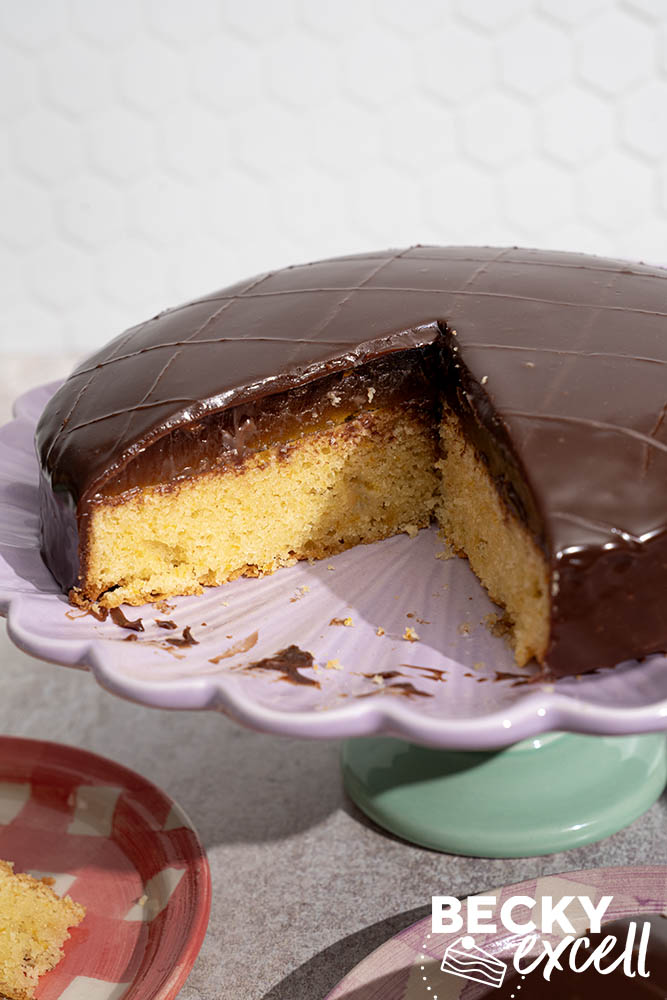
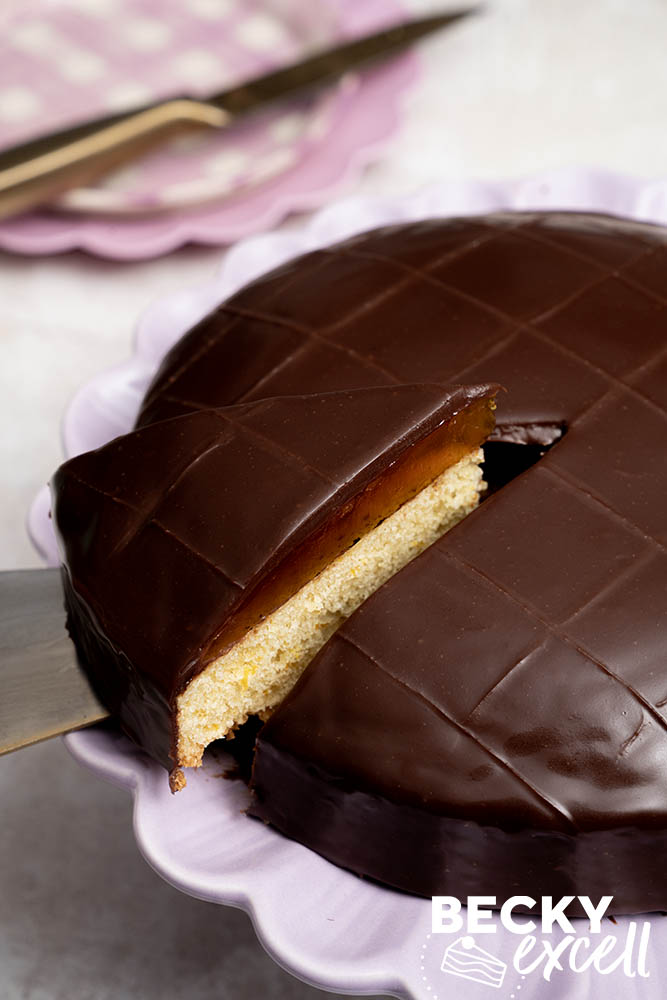
If one regular-sized gluten-free Jaffa Cake just isn’t enough, then surely the obvious solution is to make one absolutely enormous one instead? My favourite bit is cutting the first slice. From the outside you can see the little dome and the criss-cross pattern, but it’s only when you lift that slice out that you see just how much orangey jelly is hiding under the chocolate!
Welcome back to the tenth and FINAL instalment of ‘How To Make Bake Off Gluten-free’! After last week’s gluten-free chocolate gateau, the first challenge of the final was a citrus celebration cake. Now, I’ve already made a lemon cake, a lemon drizzle cake and a chocolate orange cake, with even more citrus bakes in my books… I didn’t think making a three-tiered version of something I’d already shared would be all that groundbreaking!
So for the final I thought I’d go a little bit mad and turn a Jaffa Cake into something you could stick birthday candles in. What better excuse to celebrate such a great series? And wasn’t Nigella fab as a judge?!
The idea came from the gluten-free Jaffa Cakes in my seventh book Budget Gluten-free. The lovely thing about going giant is that you only need to bake one sponge, turn out one disc of jelly and pour the chocolate over the whole lot in one go. There’s no cutting out tiny circles or trying to get chocolate onto a dozen individual cakes. I think I might have accidentally made the easier version for the final!
I went for a mix of milk and dark chocolate with double cream for the topping. It sets firmly enough to keep that classic pattern on top, but you can still get a knife through it without cracking the chocolate and squashing the jelly out of your slice. A pretty important detail when the jelly is the best bit!
Why you’ll love my Gluten-free Giant Jaffa Cake Recipe
- It’s packed with all the tongue-tingling nostalgia that comes with things we can’t ordinarily eat. In case you didn’t know, Jaffa Cakes are a proper old school British sweet treat that have been around since 1927. Of course, they’re not gluten-free… that’s why this cake is!
- It looks the part without any fancy decorating skills. The domed jelly comes from an ordinary mixing bowl and all you need for those little squares on top is a wooden skewer.
- One cake serves 10-12 people. If you’ve ever wished the gluten-free option at a party was the dessert everyone else wanted a slice of, this is the one I’d turn up with! Just add vanilla ice cream.
- You can get the jelly sorted the night before. It’ll be sitting in the fridge ready to turn out by the time your sponge has cooled the next day.
- It’s a cake that everyone will recognise and enjoy, whether they’re gluten-free or not. Everyone knows Jaffa Cakes, therefore everyone will love this cake!
Ingredients for my Gluten-free Giant Jaffa Cake Recipe
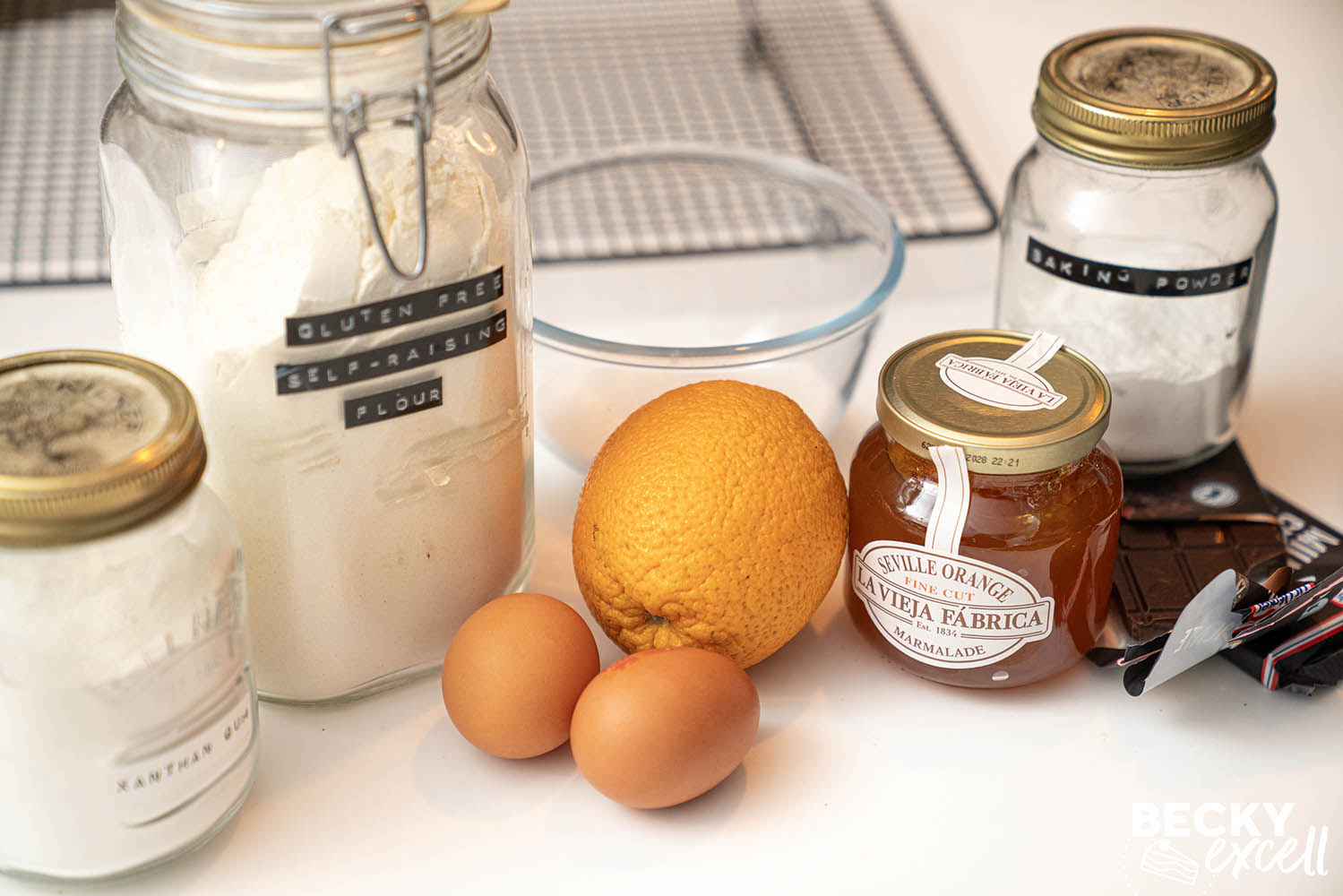
For the jelly, you’ll need a 135g orange jelly block, the kind you cut into little cubes and dissolve in boiling water. I add a little caster sugar and a spoonful of orange marmalade for that familiar Jaffa Cake centre. You only need 150ml water here so the jelly sets firmly enough to lift out in one piece.
Softened butter, caster sugar and two large eggs form the base of the sponge. Take the butter out of the fridge ahead of time so it mixes easily. Everything for the sponge goes into one bowl, so you don’t even need to cream the butter and sugar first.
I use FREEE by Doves Farm gluten-free self-raising white flour, with a little gluten-free baking powder for lift and a pinch of xanthan gum to help the sponge hold together. You want to be able to lift a slice onto a plate with all three layers intact!
The zest of a large orange and a little vanilla extract flavour the buttery sponge. You only need the zest, so you can save the orange itself for something else.
For the ganache, I use equal amounts of milk chocolate and dark chocolate, plus double cream. Chop both bars fairly finely before adding the hot cream. Big chunks take longer to melt, and the smoother the ganache is in the bowl, the nicer it’ll look when you pour it over the jelly.
Shopping list:
Here’s everything you’ll need for one giant Jaffa Cake, including the sponge, jelly and chocolate topping:
- 135g orange jelly block
- 150ml boiling water
- 130g caster sugar (20g for the jelly and 110g for the sponge)
- 1 tbsp orange marmalade
- 110g butter, softened, plus a little extra for greasing
- 2 large eggs
- 110g gluten-free self-raising flour
- ½ tsp gluten-free baking powder
- A pinch of xanthan gum
- 1 large orange, zest only
- 1 tsp vanilla extract
- 75g dark chocolate
- 75g milk chocolate
- 150ml double cream
How to make my Gluten-free Giant Jaffa Cake Recipe
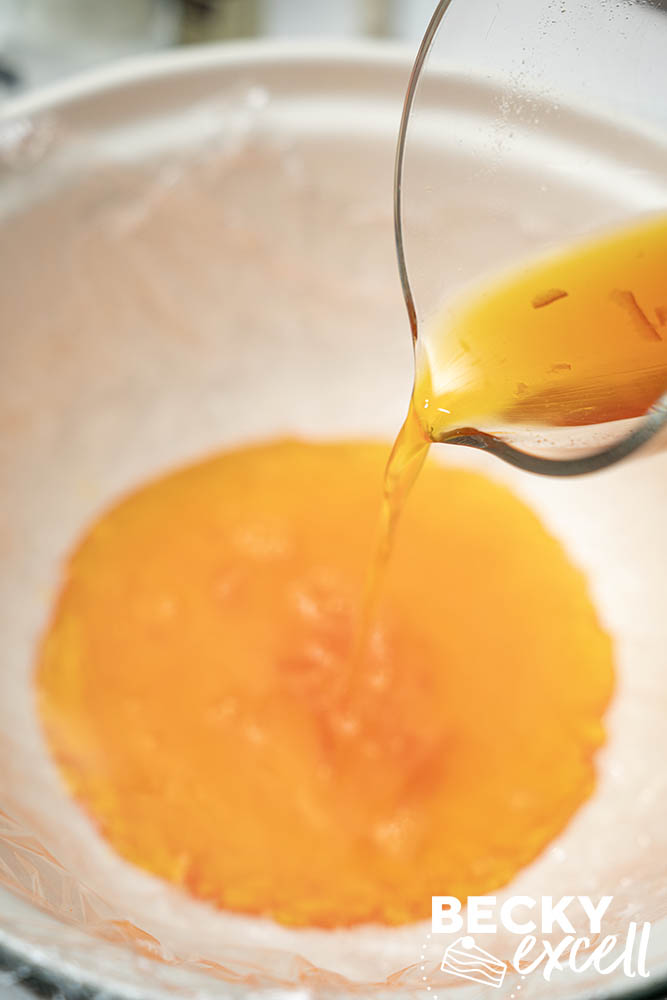
- Lightly grease a large mixing bowl and line it with cling film. Cut the jelly block into small cubes and dissolve them in the boiling water, then stir in the sugar and marmalade. Pour into the lined bowl and place in the fridge for around 4 hours, until completely set.
- After the jelly has had about 3 hours in the fridge, mix all the sponge ingredients together until smooth. Spread evenly in a greased, base-lined 20cm round cake tin and bake at 160°C fan / 180°C conventional for 20-25 minutes, checking from 20 minutes. Leave in the tin for 5-10 minutes, then transfer to a rack to cool completely.
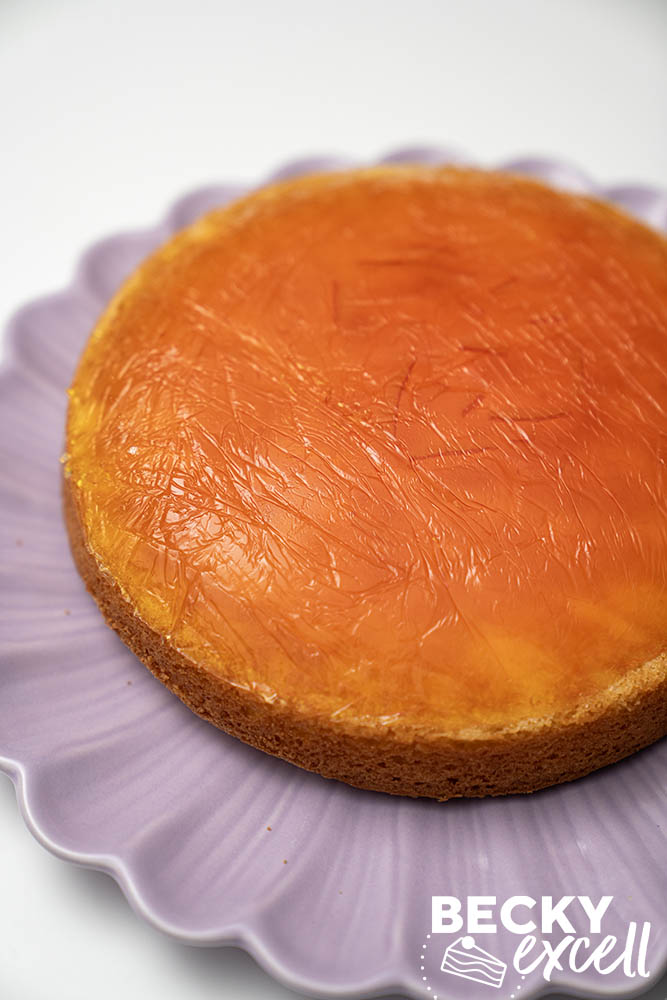
- Place the sponge upside down on your serving plate so the flat base faces upwards. Lift one edge of the set jelly using the cling film, slide your hand underneath to support it and turn it onto the sponge. Peel away the cling film and pop the cake in the fridge while you make the ganache.
- Heat the cream until steaming, pour over the finely chopped chocolate and leave for 2-3 minutes. Stir gently until smooth, then leave to cool for around 15-20 minutes, until slightly thickened but still easy to pour.
- Transfer the ganache to a jug and the chilled cake to a wire rack set over a baking tray. Pour slowly over the centre of the jelly, letting the ganache flow over the top and down the sides. Use a small palette knife to nudge it over any bare patches.
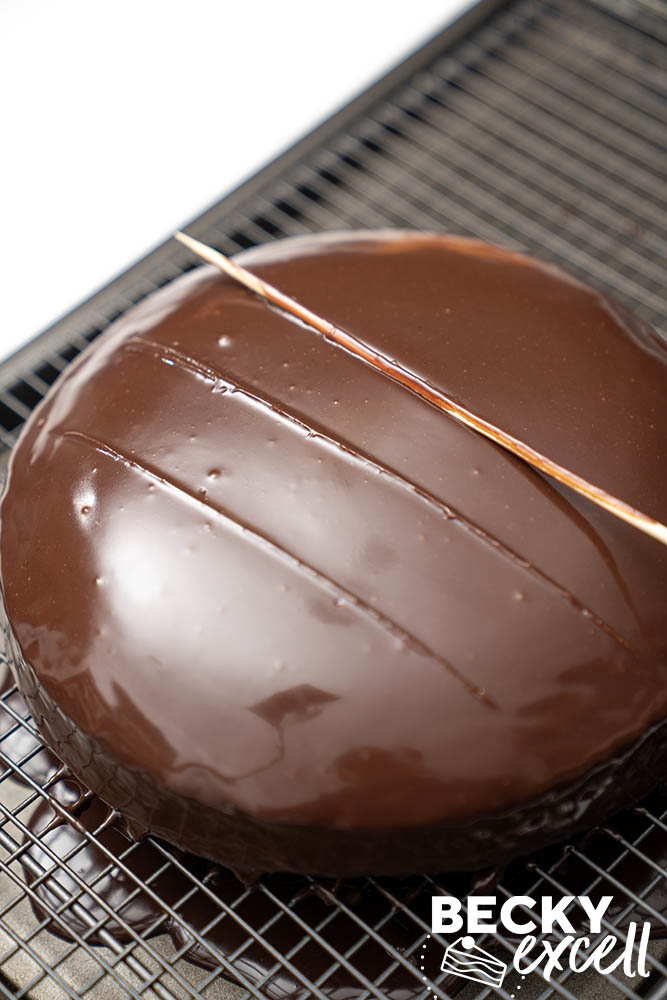
- After around 15-20 minutes, use a wooden skewer to mark the criss-cross pattern. Once the coating has set enough to move the cake, slide a long palette knife underneath the sponge and lift it back onto your serving plate. Chill for 1-2 hours, until the ganache is completely set.
A few tips before you start
Have a look at the bottom of your mixing bowl before you line it. You’re only pouring a small amount of jelly into it, so the bit that matters is the curve at the bottom. You want the jelly to spread out into a wide, shallow dome. Placing your cake tin into the bowl is a great way to check whether a particular bowl is suitable or not – if it goes deep enough so that it’s around 2-3cm from the bottom of the bowl, it’s probably perfect! If all your bowls have narrow bases, there’s an easy cake tin option in the FAQs below.
Give the jug a good stir right down to the bottom. A cube of jelly can look like it’s dissolved when there’s still a lump stuck to the base. I find it much easier to spot those last bits before adding the marmalade.
Use a jug for the ganache too. It’s much easier to aim the spout at the middle of the cake and control the flow than it is to tip a whole mixing bowl over it. Get your rack and tray in place first so you can concentrate on the pour.
Storage and leftovers
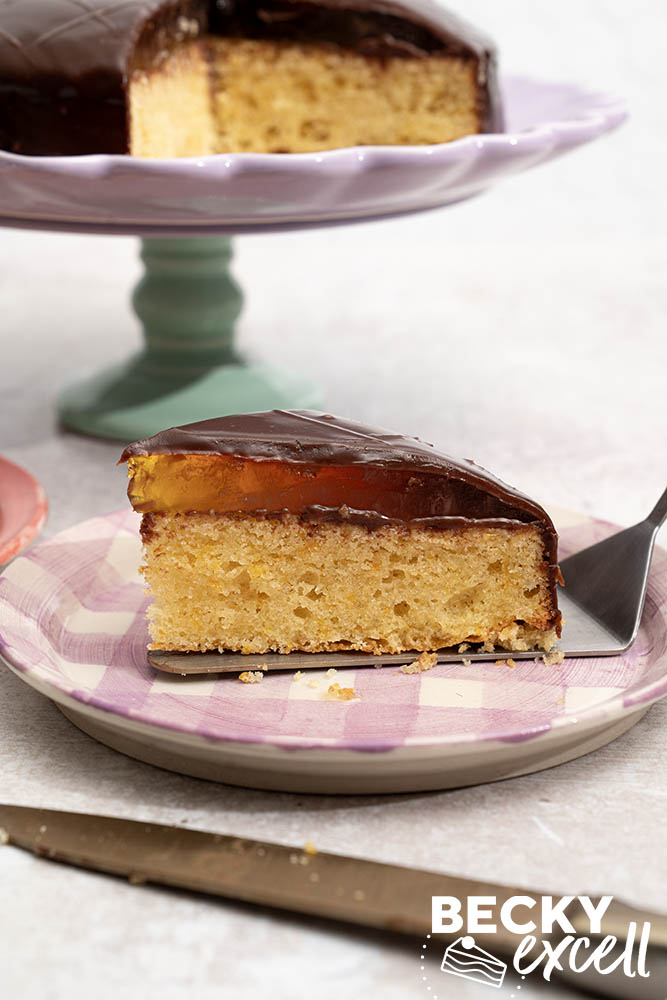
Keep the finished cake covered in the fridge and eat any leftovers within two days. A cake cover is handy here so nothing rests against that lovely chocolate pattern.
Can I freeze it?
I’d freeze the sponge on its own. Let it cool completely, wrap it well and freeze, then defrost it fully before adding the jelly and ganache. The jelly can lose its smooth texture once frozen and thawed, so I’d keep the finished cake in the fridge.
Recipe tips, swaps and FAQs
Is this recipe gluten-free? Is it suitable for people with coeliac disease?
Yes! Provided all the ingredients you use are gluten-free, including the orange jelly and both types of chocolate. If you’re baking for someone with coeliac disease, follow Coeliac UK’s advice on avoiding cross-contamination.
Can I make this dairy-free?
Yes! Use dairy-free margarine in the sponge instead of butter. For the ganache, use a dairy-free milk/dark chocolate and a dairy-free double cream with at least 30% fat. I use Elmlea Plant Double, which has 31g of fat per 100ml.
Can I make this vegan or egg-free?
For an egg-free version, you’d need an egg-free sponge that can hold the jelly when you cut a slice. To make the whole cake vegan, you’d also need the dairy-free swaps above, vegan chocolate and a vegan orange jelly.
If you’re making it for someone who’s vegetarian, the jelly is the only part of my original recipe you need to swap. A standard Hartley’s orange jelly block contains pork gelatine. If your veggie-friendly jelly comes as a powder, follow its own instructions for dissolving it. The 135g in this recipe is the weight of a concentrated jelly block.
Can I make this lactose-free? Or low lactose?
Yes! For a low-lactose cake, you can use regular butter in the sponge as it’s naturally low in lactose. For the ganache, use lactose-free chocolate and lactose-free cream with at least 30% fat. I use Arla LactoFREE cream, which is around 36% fat.
For a lactose-free cake, use lactose-free butter in the sponge too.
Is this gluten-free giant Jaffa Cake low FODMAP?
I’d save this one until after the elimination phase. I couldn’t find a Monash-tested serving size for the orange jelly block, so I can’t give you a confirmed low FODMAP portion unfortunately.
What if I don’t have the right size bowl for the jelly?
Use a spare 20cm (8in) round cake tin. Lightly grease it, line it with cling film and pour in the jelly. You’ll get a flat disc that fits the sponge right to the edge. It’ll taste just as good, though be a bit flatter!
How do I get a dome of jelly the same size as my sponge?
Choose a mixing bowl with a wide, gently curved base like the one I used here. Mine measured 30cm across the top, but it was the shape at the bottom that made it work. The jelly only filled the bottom of the bowl and spread almost exactly to the width of my 20cm sponge. If your bowl curves in more steeply, you’ll get a smaller dome with a little sponge showing around it, which is totally fine. The ganache will cover both when you pour it over.
What equipment do I need to make a giant Jaffa Cake?
- A large mixing bowl and cling film for setting the dome of jelly, or a spare 20cm round cake tin for a flat disc.
- A 20cm (8in) round cake tin and non-stick baking paper for the sponge. Grease the tin and use the paper to line the base.
- An electric hand whisk or stand mixer to mix the sponge, plus a silicone spatula to scrape down the bowl and stir the ganache.
- A heatproof jug, a small saucepan and a heatproof bowl. I use the jug to dissolve the jelly, then wash and dry it ready for pouring the ganache. The saucepan is for heating the cream before pouring it over the chopped chocolate in the bowl.
- A wire cooling rack and a large baking tray. Sit the rack over the tray when you’re ready to pour so there’s somewhere for the excess ganache to go. A small cranked palette knife is handy for nudging the chocolate over any bare patches.
- A wooden skewer and a long palette knife. The skewer makes the criss-cross pattern. Once the coating has set enough to move the cake, I slide the long palette knife underneath the sponge to lift it back onto the serving plate.
Can I use all milk chocolate for the ganache?
You can make an all-milk chocolate ganache, but for this cake I’d stick with 75g milk chocolate and 75g dark chocolate. Swapping the dark chocolate for another 75g milk chocolate while keeping all the cream will give you a softer coating, which makes it trickier to get that criss-cross pattern to hold. If it’s the flavour you’re wondering about, half the chocolate is already milk chocolate and there’s double cream in there too.
Can I make the jelly the night before?
Yes! Leave it in its lined bowl or tin in the fridge overnight. The next day you can bake the sponge and let it cool completely, knowing the jelly will be ready whenever you are. If you’re making everything on the same day, I’d start the sponge after the jelly has had about 3 hours in the fridge.
Can I use this recipe to make individual Jaffa Cakes?
Whilst this recipe is based on the gluten-free Jaffa Cakes recipe in my seventh book, Budget Gluten-free, I’ve adapted it quite considerably to work as one giant Jaffa Cake! It uses a different type of sponge, a different method for setting the jelly and a chocolate ganache instead of melted chocolate. So if you have a copy of the book, I’d definitely recommend using the original recipe for individual Jaffa Cakes.
Troubleshooting
Why did my ganache run straight off the jelly?
It was probably still too warm when you poured it. Some chocolate should run down the sides, but if it rushes into the tray and leaves the orange jelly showing through, give the ganache a little longer to cool. Keep the sponge and jelly in the fridge while you wait.
Start checking the ganache after 15 minutes. Lift a spoonful and let it fall back into the bowl. You want a smooth ribbon that briefly leaves a trail before it settles. Once it does that, transfer it to a jug and pour slowly over the centre of the cold jelly.
Why does my ganache look oily or still have little bits of chocolate in it?
If there are little solid flecks in an otherwise smooth ganache, some chocolate still needs to melt. Set the bowl briefly over a pan of barely simmering water and stir gently until the last pieces melt, then take it off the heat.
If you can see streaks of oil, the ganache has split. Take it off the heat and try stirring in a teaspoon of warm milk until it comes together again. Add another teaspoon only if needed so the coating stays thick enough to pour. For the dairy-free version, use a little warm dairy-free cream.
How do I get the jelly onto the sponge without tearing it?
Leave the jelly in the fridge until it’s firm all the way across. Use the cling film to lift one edge just far enough to get your whole hand underneath. That’s how I supported the middle of mine while I turned it over onto the cooled sponge. Once it’s sitting on the cake, gently peel the cling film away.
Why has my sponge turned out dry?
It may have baked a little longer than it needed. This is quite a shallow sponge, so start checking at 20 minutes. If a skewer comes out without any wet cake mixture on it, take the sponge out then. You don’t need to wait for the full 25 minutes or for the top to turn a deep golden brown.
Why do my criss-cross lines keep disappearing?
The ganache is still a little too runny to hold the pattern. Give it around 15-20 minutes after pouring, then try one line near the edge. Lay the length of the skewer gently across the surface (rocking it to match the contour of the dome) and lift it straight back up. If the line fills itself in, wait another couple of minutes. Once the mark stays put, do the rest, then turn the cake 90 degrees and repeat in the other direction.
Gluten-free Giant Jaffa Cake
Equipment
- Large mixing bowl for setting the jelly – mine was 30cm across the top with a wide, gently curved base
Ingredients
For the jelly
- 135 g orange jelly block
- 150 ml boiling water
- 20 g caster sugar
- 1 tbsp orange marmalade
For the sponge
- 110 g butter softened, plus a little extra for greasing
- 110 g caster sugar
- 2 large eggs
- 110 g gluten-free self-raising flour I use FREEE by Doves Farm
- 1/2 tsp gluten-free baking powder
- 1 pinch xanthan gum
- 1 large orange zest only
- 1 tsp vanilla extract
For the chocolate ganache
- 75 g dark chocolate finely chopped
- 75 g milk chocolate finely chopped
- 150 ml double cream
Instructions
To make the jelly
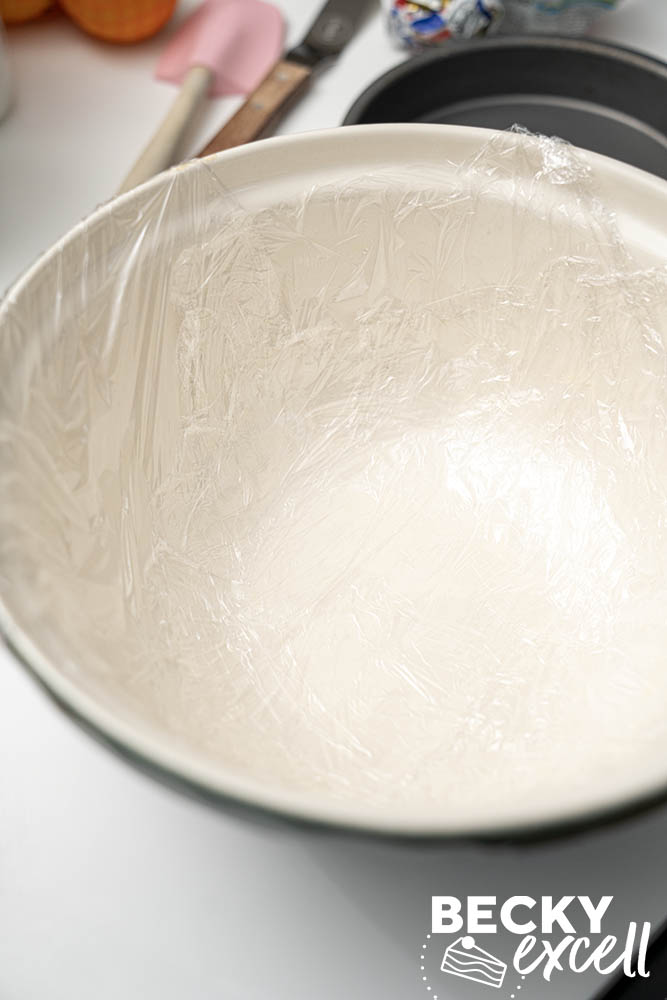
- Lightly grease a large mixing bowl and line it with cling film, smoothing out any big creases. Choose a bowl with a wide, gently curved base so the jelly can spread into a wide, thin disc. Mine measured 30cm across the top and the set jelly was almost exactly the same diameter as my 20cm sponge. You can also use a spare 20cm round cake tin lined with cling film for a flat jelly layer.
- Cut the orange jelly block into small cubes and place in a heatproof jug. Pour over the boiling water and stir thoroughly until the jelly has completely dissolved. Make sure there aren’t any stubborn lumps hiding at the bottom, then add the caster sugar and marmalade and stir again until well combined.
- Pour the jelly mixture into the lined bowl and place in the fridge for around 4 hours, until completely set and firm. After about 3 hours, you can start making the sponge so it has time to bake and cool while the jelly finishes setting.
To make the sponge
- Preheat your oven to 160°C fan / 180°C conventional. Grease a 20cm (8in) round cake tin and line the base with non-stick baking paper.
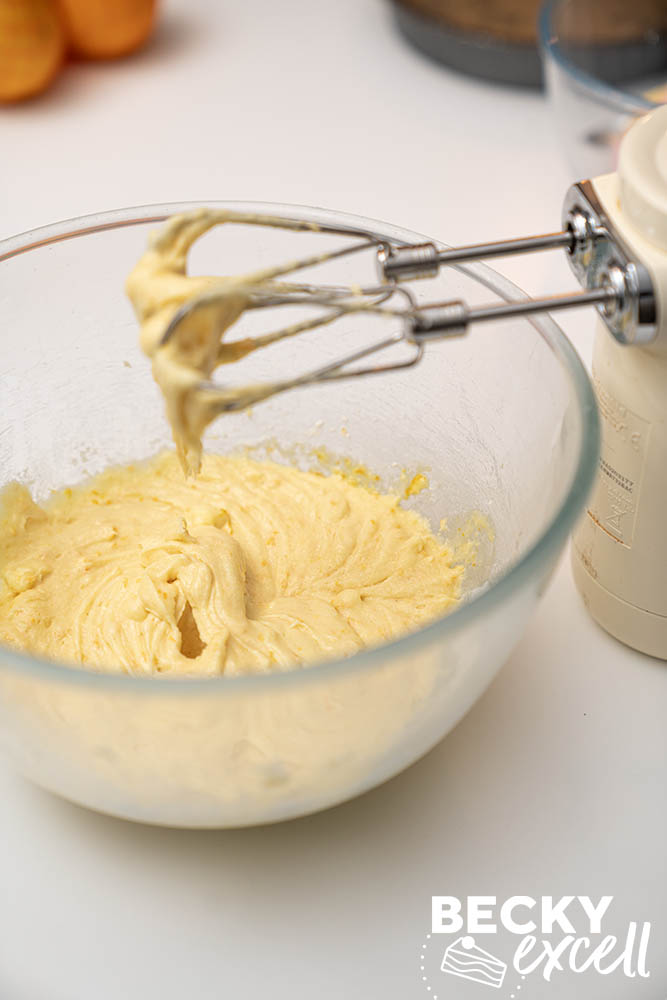
- Place the softened butter, caster sugar, eggs, gluten-free self-raising flour, baking powder, xanthan gum, orange zest and vanilla extract into a large mixing bowl. Mix until smooth and well combined. I prefer to use an electric hand whisk or stand mixer for this. Scrape down the sides of the bowl as needed so there are no hidden pockets of flour.
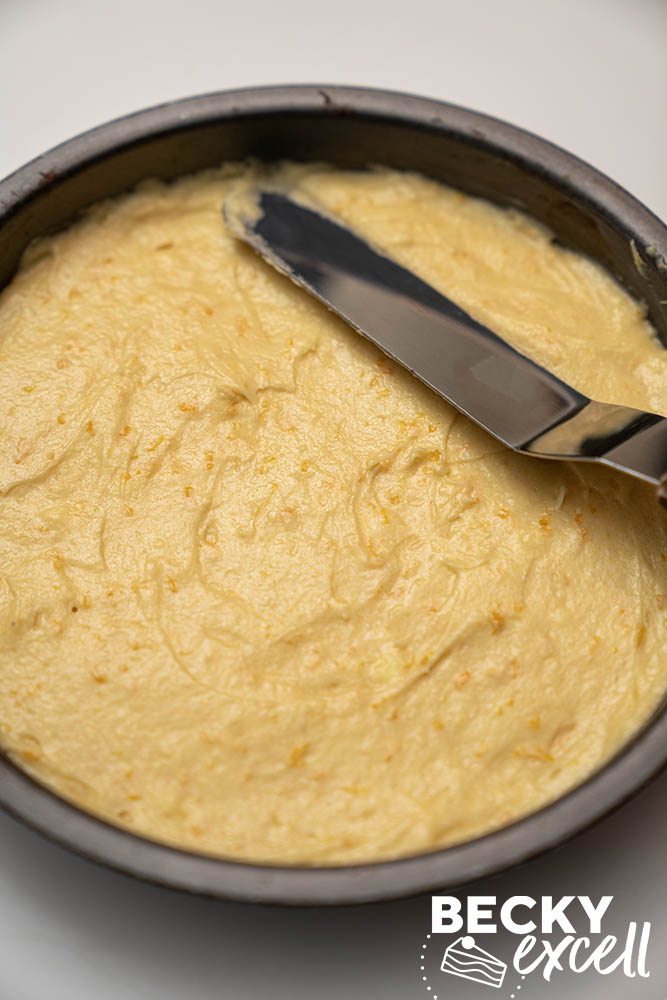
- Spoon the cake mixture into the prepared tin and spread it into a nice, even layer. Bake for 20-25 minutes, checking from 20 minutes. The sponge should be risen, lightly golden and spring back when gently pressed in the centre.
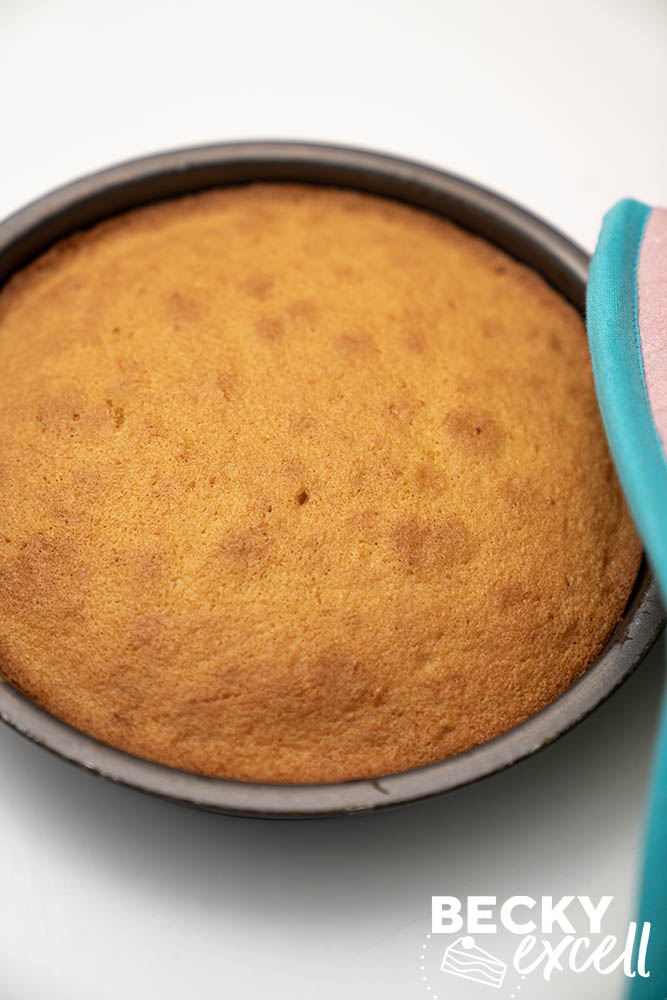
- Push a skewer into the centre. As soon as it comes out without any wet cake mixture on it, remove the sponge from the oven. Allow to cool in the tin for 5-10 minutes before carefully transferring to a cooling rack to cool completely.
To add the jelly
- Once the sponge is completely cool, turn it upside down onto your serving plate so the lovely flat base faces upwards. Take the set jelly out of the fridge and gently loosen it around the edges if needed.
- Use the cling film to lift one edge of the jelly just enough to slide your whole hand underneath. Supporting it from below, carefully turn it onto the centre of the sponge, then gently peel away the cling film. Depending on the shape of your bowl, the jelly may reach almost to the edge, as mine did, or leave a little border of sponge showing. Pop the cake in the fridge on its serving plate while you make the ganache.
To make the ganache
- Place the finely chopped dark and milk chocolate in a medium heatproof bowl. Pour the double cream into a small saucepan and heat gently until steaming and just about to boil. Pour the hot cream over the chocolate and leave untouched for 2-3 minutes. Gently stir until all the chocolate has melted and the ganache is smooth and glossy.
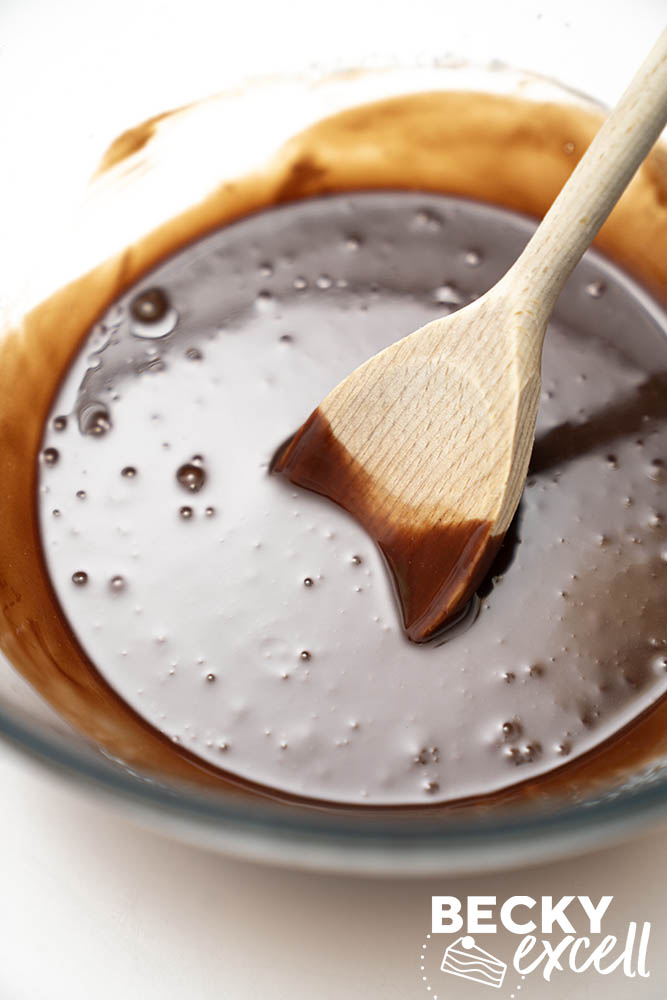
- Leave the ganache to cool for around 15-20 minutes. It should have thickened slightly but still pour easily. If it’s very warm and runny, give it a little longer or it’ll race straight off the cake. Transfer to a jug so you can control the pour.
To finish the cake
- Set a wire cooling rack over a large baking tray to catch the excess ganache. Take the chilled cake out of the fridge and carefully transfer it from the plate to the rack. Slowly pour the ganache over the centre of the jelly, letting it spread across the top and run down the sides.
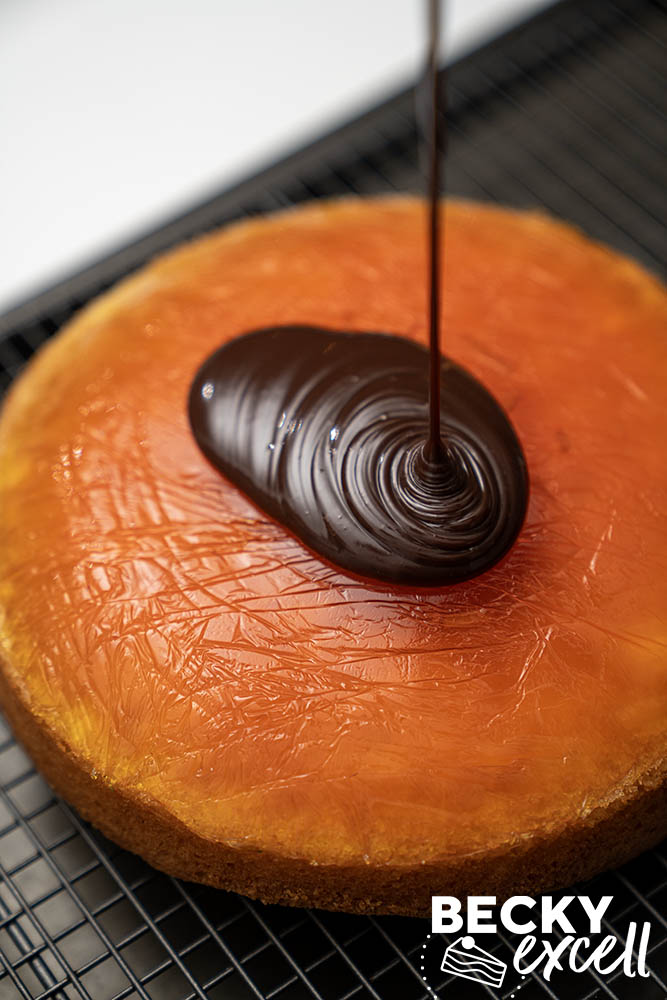
- Continue pouring until the top and sides are covered. If there are any bare patches, gently nudge a little ganache over them with a small palette knife. Leave for around 15-20 minutes, until the surface has started to set but is still soft enough to mark.
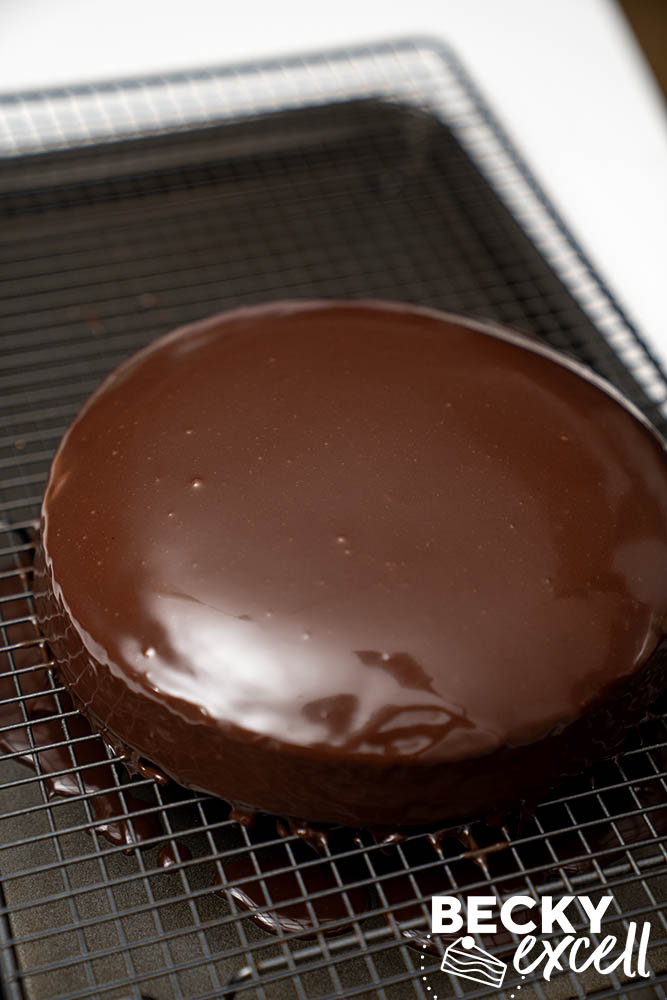
- For the classic Jaffa Cake pattern, lay a wooden skewer gently across the surface of the ganache, then lift it straight back up to leave a line. Repeat to make evenly spaced parallel lines across the top. Turn the cake 90 degrees and repeat in the other direction to make small squares. Use a light touch so the skewer doesn’t reach the jelly underneath.
- Once the coating has set enough to move the cake, slide a long palette knife underneath the sponge and carefully lift it back onto your serving plate. Chill on the plate for 1-2 hours, or until the ganache is completely set. Slice and enjoy!
Notes
Nutrition