Gluten-free Cornish Pasty Recipe
Golden, buttery gluten-free pastry packed with beef skirt, potato, swede and onion. These generously filled homemade pasties use my tried-and-tested gluten-free shortcrust pastry, with a simple fork-sealed edge or a traditional side crimp. Make and chill the pastry before starting this recipe.
Servings 2 large pasties
Calories 994kcal
Ingredients
- 1 quantity gluten-free shortcrust pastry see link in first step for the recipe
For the filling
- 160 g beef skirt trimmed weight, cut across the grain and then into 1cm pieces
- 120 g potato peeled weight, cut into 5mm cubes; use a firm salad potato
- 60 g swede peeled weight, cut into 5mm cubes
- 60 g onion peeled weight, finely diced into approximately 5mm pieces
- 1/4 tsp fine salt
- generous pinch ground black pepper
To glaze
- 1 egg
- 1 tsp water
Instructions
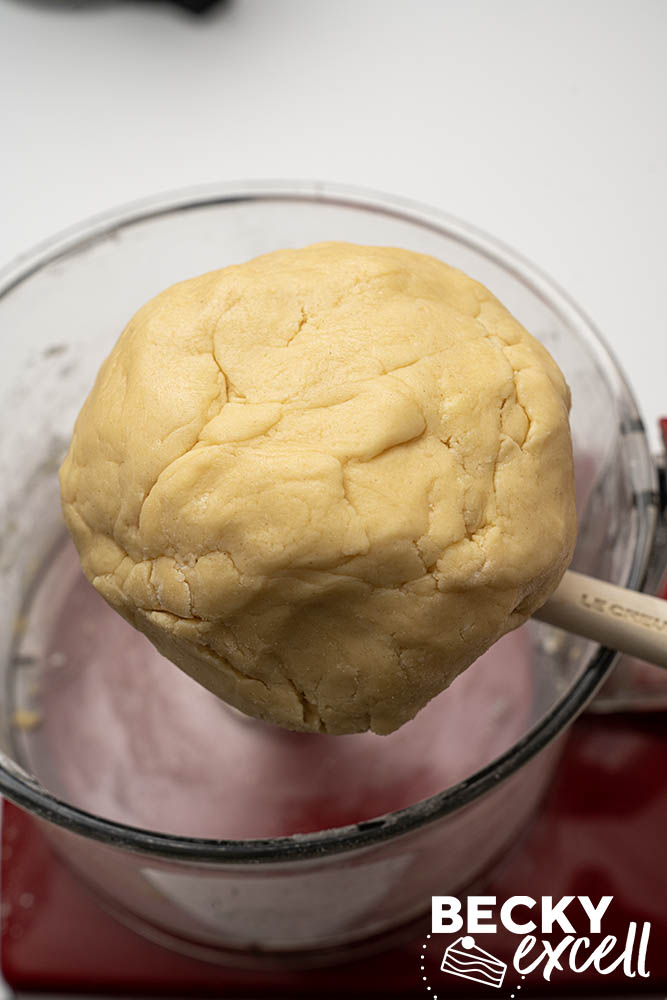
- Before starting, make one quantity of my gluten-free shortcrust pastry using the savoury option and chill as directed. Follow the dough-making instructions only - there's no need to make a tart case or blind bake anything.
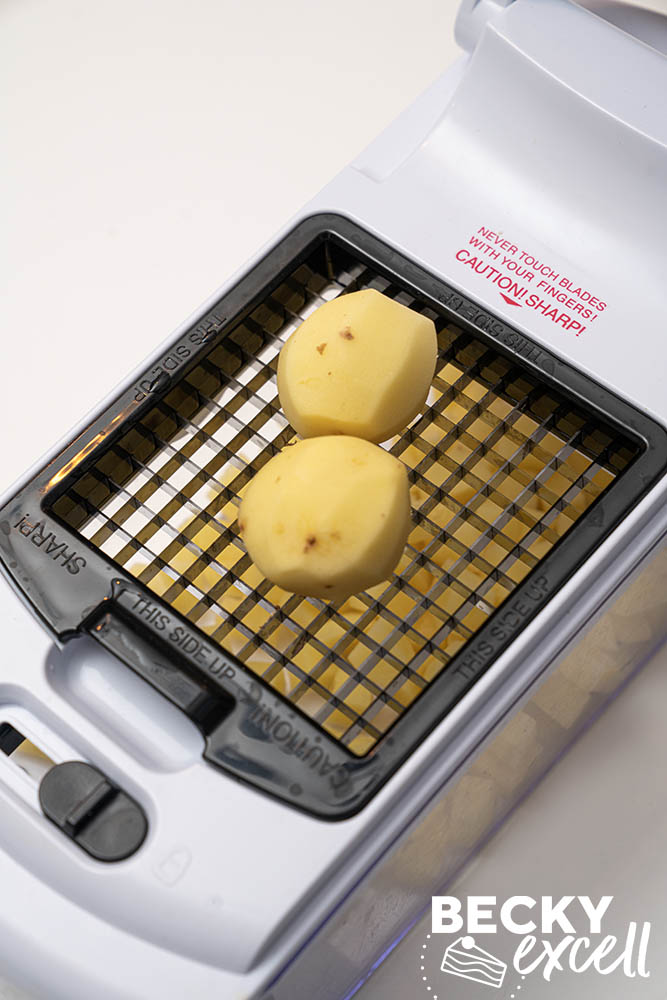
- Prepare a large baking tray with non-stick baking paper. Chop the beef and veg as described in the ingredients - I use a veg speed chopper to ensure consistent size for the veg.
- If your chilled pastry dough is quite firm, leaving it out at room temp ahead of time is definitely advised. If that's the case, remove your pastry dough from the fridge now and place to one side. It should be cool but pliable enough to roll.
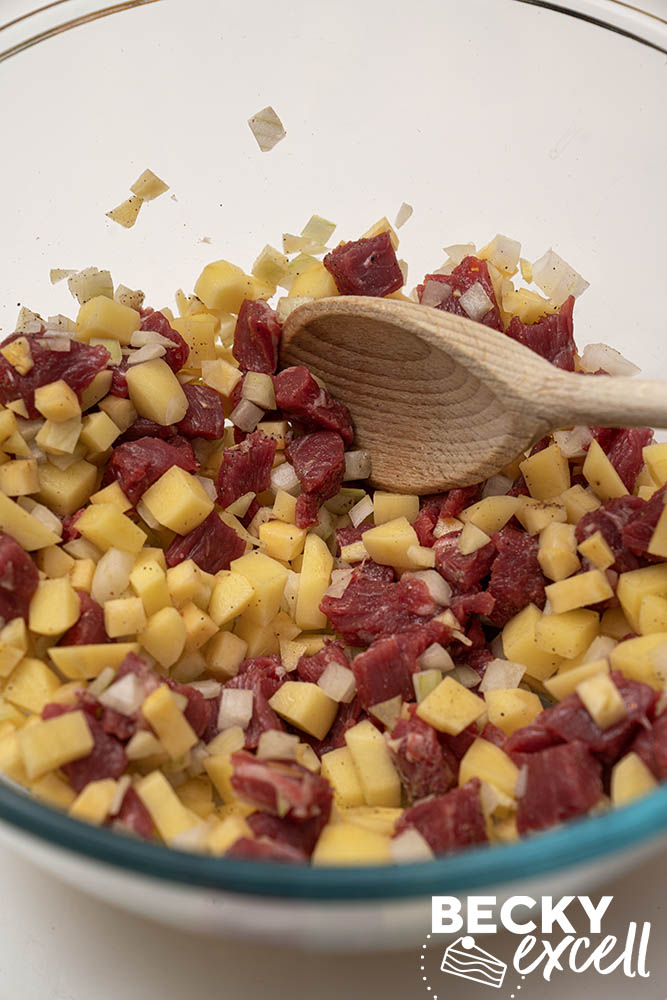
- Add all of the raw vegetables to a mixing bowl, along with your raw beef. Season with salt and pepper and give it a stir.
- Cut your pastry ball in half, take one portion and cover the other in clingfilm, then lightly flour your rolling pin with gluten-free flour. Remember not to excessively handle your dough from this point onwards as this will warm it up and make it more fragile.
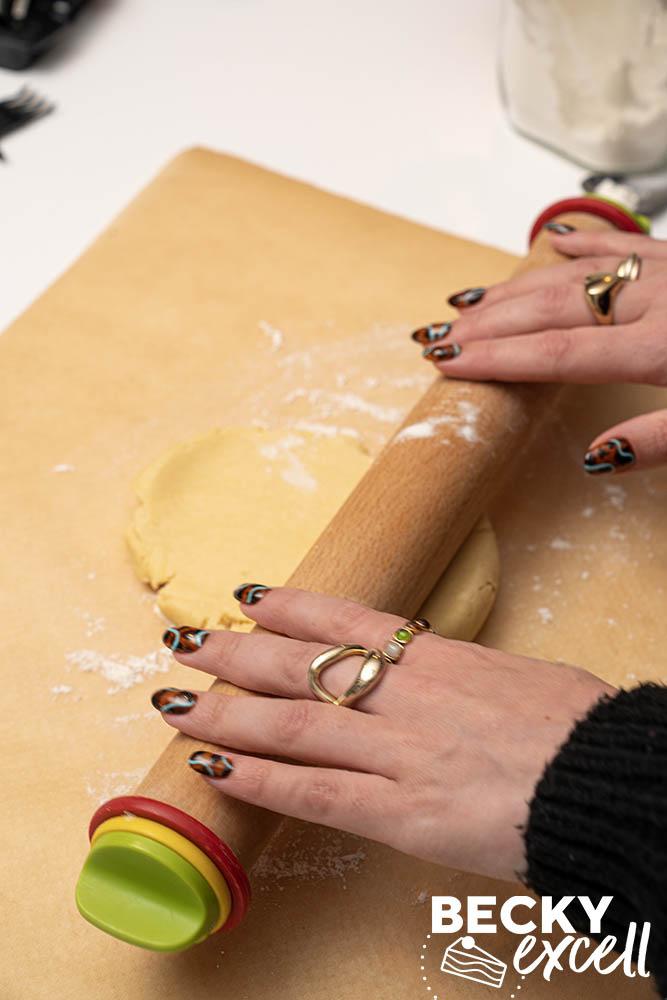
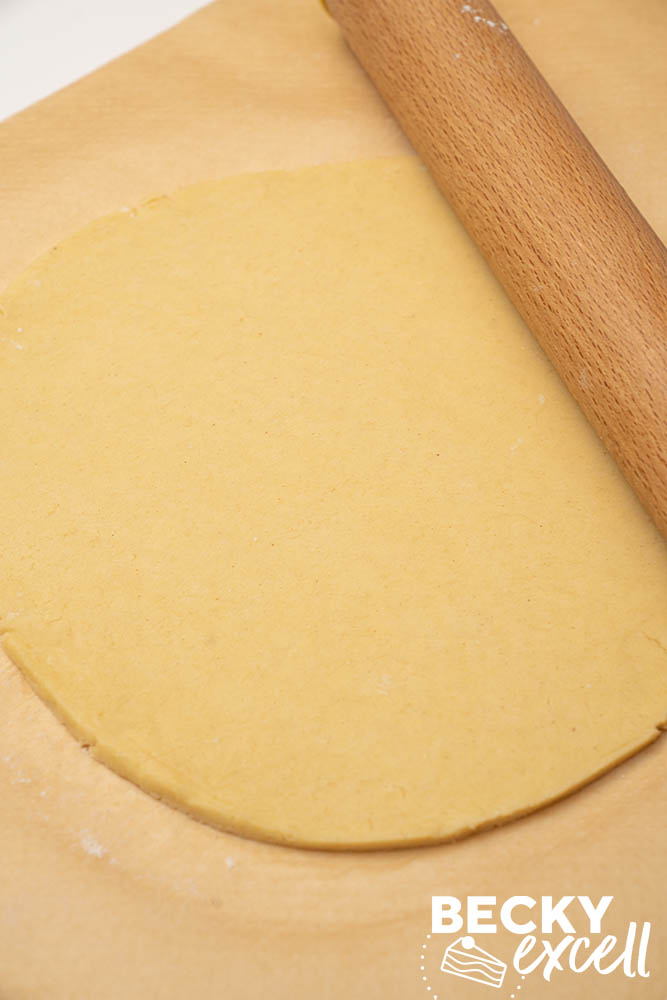
- On a sheet of non-stick baking paper, roll out the dough portion to a large, round circle, around 4mm thick. Once rolled out, cut out a circle that's 25cm in diameter. I find that cutting around a plate is the easiest way to do this. Brush away any excess flour. Avoid pulling or stretching the rolled pastry as it doesn't have the elasticity of pastry made with wheat flour.
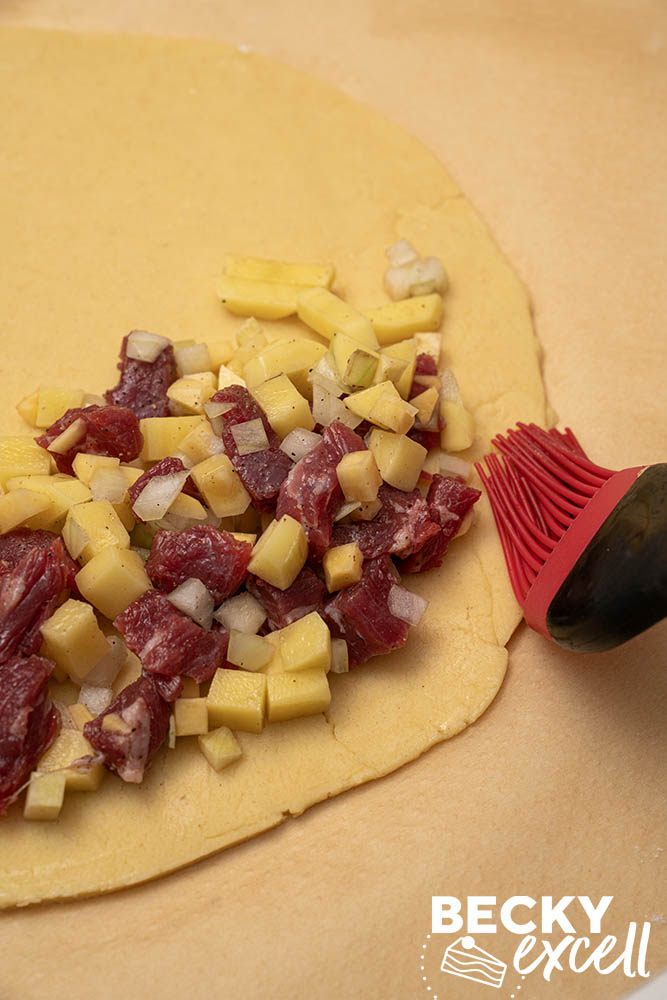
- Spoon half the filling onto one side of the pastry circle, leaving a 2cm gap between the filling and the edge. Lightly brush all around the edge with water. Lift the baking paper underneath the unfilled half and use it to support the pastry as you fold it over the filling, bringing the edges together without pulling or stretching the dough. Gently peel back the paper.
- Seal the pasty shut by pressing the pastry edges firmly together, then use a fork to press along the curved edge to create a neat seal.
- Alternatively, for a traditional crimp as shown in the photos, start at one corner, pinch a small section of the sealed edge between your thumb and forefinger, then fold it diagonally towards the filling. Repeat along the curved edge, overlapping each fold slightly to create a rope-like crimp. Tuck the final end underneath. If the pastry tears as you crimp, simply use a very lightly damp finger to gently press it back together and tidy things up.
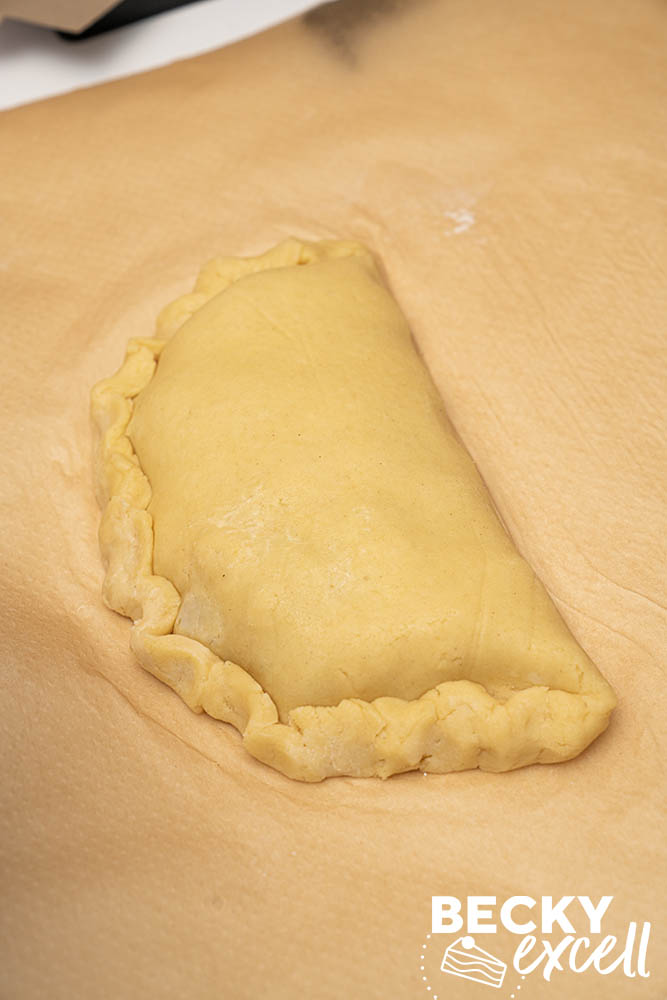
- After crimping, use a finger lightly dipped in water to gently smooth out any noticeable surface cracks.
- Cut around the baking paper, leaving enough around the pasty to help lift it onto the prepared baking tray. Leave the pasty on its piece of paper for baking. Repeat with the remaining pastry and filling on a fresh sheet of baking paper, then transfer the second pasty to the tray. Chill both pasties for 20-30 minutes. Meanwhile, preheat your oven to 160°C fan.
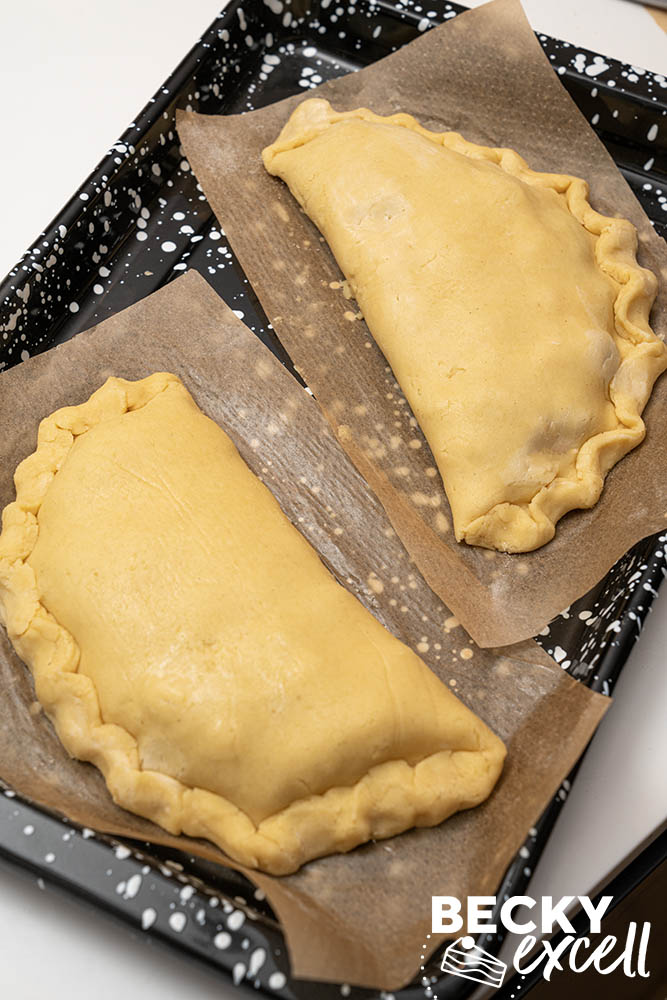
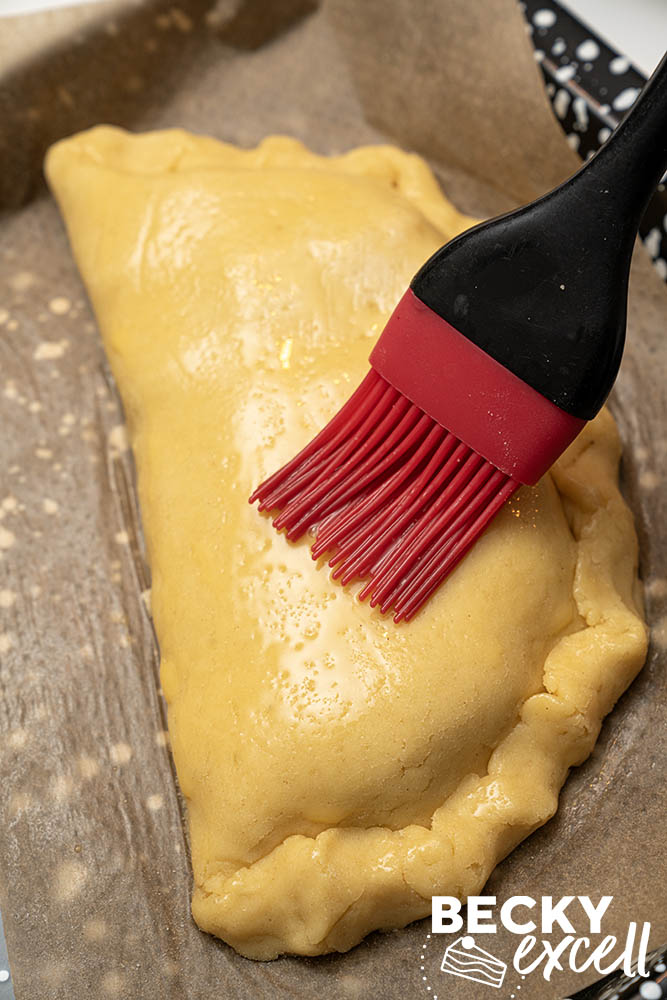
- Beat the egg and 1 tsp water together thoroughly. If you like, pass through a small sieve to remove stringy bits of egg white for a smoother, more even glaze. Brush a thin, even coat over both pasties, including the crimp, avoiding puddles in the folds or around the base.
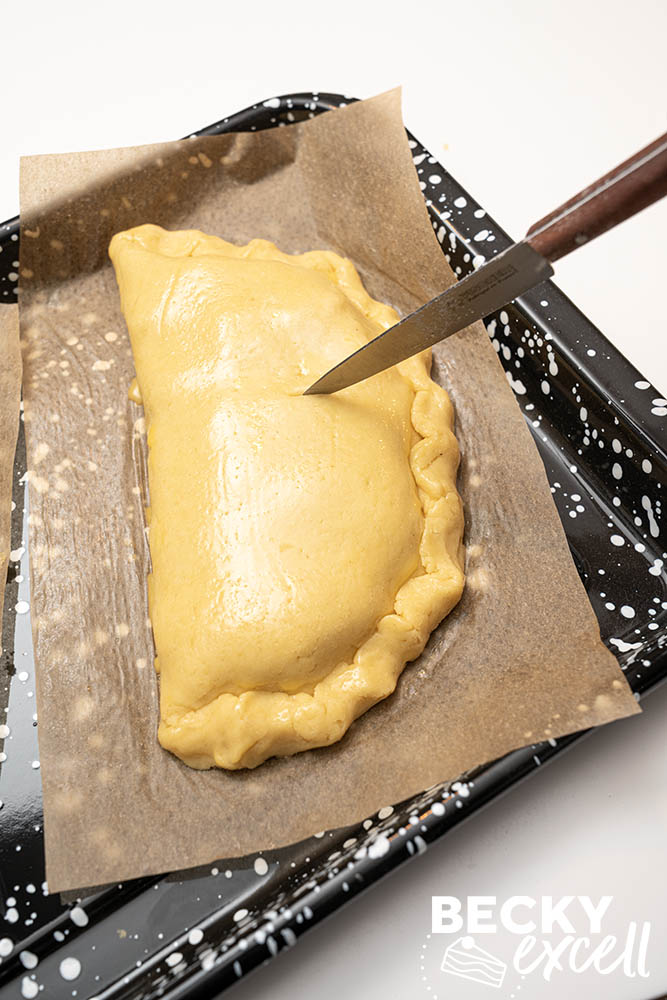
- Using a sharp knife, cut a 1cm slit through the pastry at the highest point of each pasty, away from the crimp, to allow steam to escape.
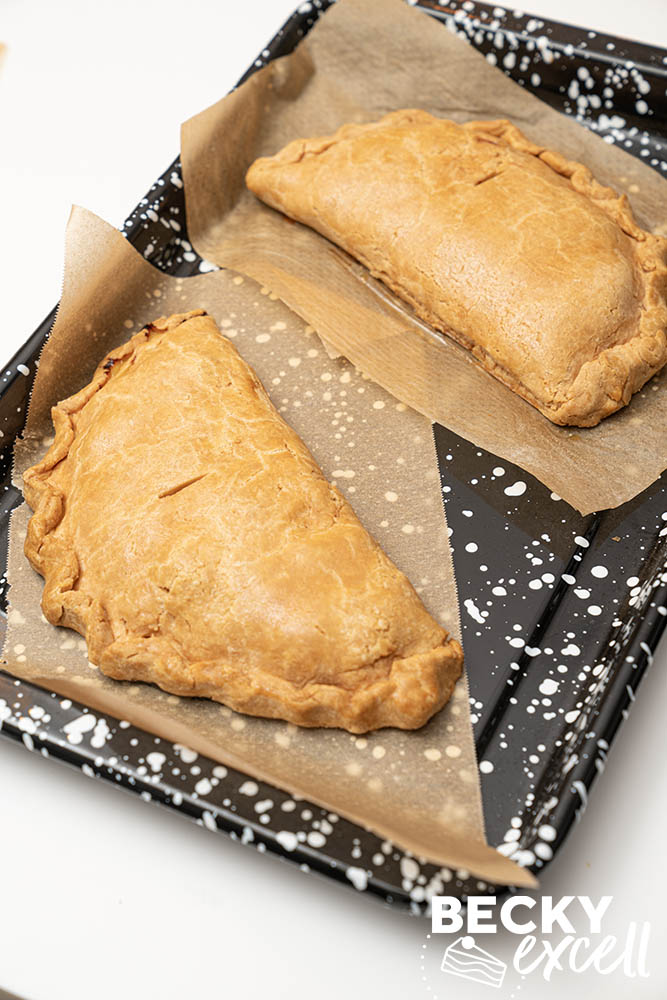
- Place into the preheated oven for 60-65 minutes, until the pastry is golden, the vegetables are tender and the beef is cooked through and tender. For added colour, increase the oven to 180°C fan and bake for a further 5 minutes, if needed.
- Remove from the oven and allow to rest for 10 minutes before enjoying warm.
Notes
The approximate total time excludes preparing and chilling the pastry dough and the optional extra 5 minutes for colour.
Storage: Cool and refrigerate leftovers in an airtight container within 2 hours. Eat within 48 hours or freeze for up to 2-3 months. Defrost overnight in the fridge and reheat until piping hot throughout. Reheat only once.
Nutrition: Approximate per large pasty, using unsalted butter and including the full pastry quantity (minus off-cuts) and unused egg wash.
Nutrition
Serving: 1serving | Calories: 994kcal | Carbohydrates: 98g | Protein: 35g | Fat: 56g | Saturated Fat: 30g | Polyunsaturated Fat: 4g | Monounsaturated Fat: 16g | Trans Fat: 2g | Cholesterol: 356mg | Sodium: 1629mg | Potassium: 712mg | Fiber: 4g | Sugar: 4g | Vitamin A: 1562IU | Vitamin C: 22mg | Calcium: 136mg | Iron: 6mg